
Loading...
Loading...
Tooba Asad • 28 Oct 2026
In a competitive market, the smallest details can make a big difference in how customers perceive your brand. While high-quality design and printing are essential, the finish applied to printed materials can take their appearance to another level. From smooth matte surfaces to eye-catching metallic accents, printing finishes help businesses create memorable packaging, premium business cards, brochures, and promotional materials.
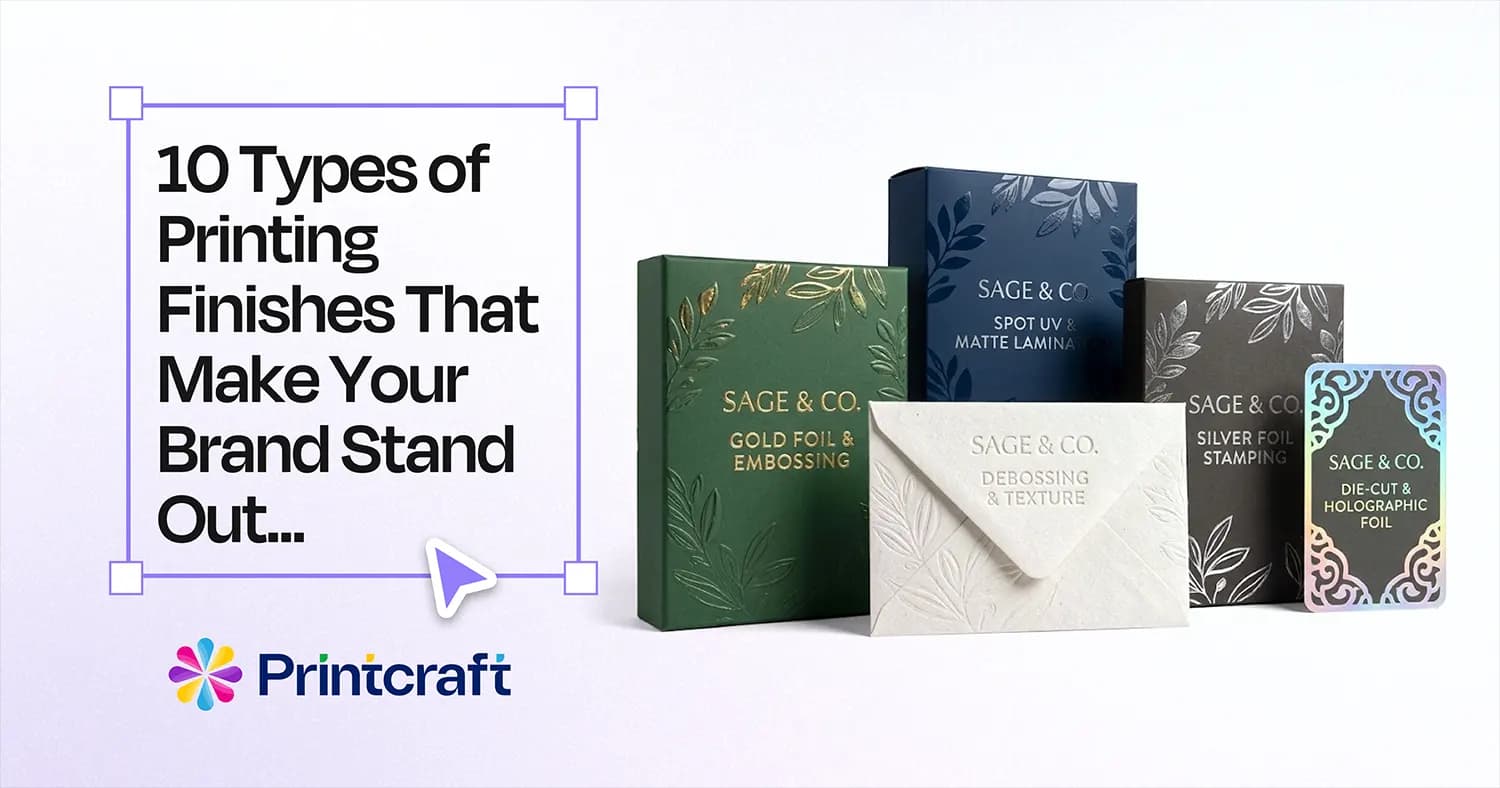
The right finish does more than improve visual appeal. It can add texture, protect printed surfaces, highlight important design elements, and communicate the personality of your brand. For example, a luxury product may benefit from elegant foil stamping, while a modern business might prefer a clean matte finish for its corporate stationery.
Understanding the different types of printing finishes can help you select the right option for your marketing and packaging needs. Here are ten popular printing finishes that can help your brand make a lasting impression.
Matte lamination creates a smooth, non-glossy surface that gives printed materials a refined and understated appearance. It reduces reflections and creates a sophisticated look that works particularly well for premium packaging, business cards, brochures, and product labels.
Unlike glossy finishes, matte lamination does not produce a shiny surface. This makes it a suitable choice for businesses that prefer minimalistic designs and subtle branding.
Another advantage is that lamination adds a protective layer to printed materials, helping reduce everyday wear and minor surface damage.
Best applications: Luxury packaging, corporate brochures, business cards, presentation folders, and product boxes.
Why choose it: Matte lamination gives printed materials a professional appearance without distracting from the design.
Gloss lamination creates a shiny surface that enhances colours and makes images appear more vibrant. It is an excellent option for designs that rely on bold graphics, high-resolution photography, and strong visual contrast.
This finish can help printed materials attract attention, especially in retail environments where products compete for visibility. Like matte lamination, it also adds a protective layer that helps printed surfaces withstand regular handling.
However, the reflective surface may produce glare under certain lighting conditions and can make fingerprints more noticeable on some materials.
Best applications: Product packaging, promotional flyers, colourful brochures, magazine covers, and retail displays.
Why choose it: Gloss lamination helps create a bright, polished appearance that makes colourful designs stand out.
Soft-touch lamination gives printed materials a smooth, velvety feel. It adds a tactile dimension to packaging and printed products, encouraging customers to interact with the material rather than simply look at it.
This finish is often associated with premium products because it creates a distinctive sensory experience. It works particularly well when combined with minimalist artwork, elegant typography, or metallic accents.
Soft-touch lamination is generally more expensive than standard lamination, so businesses should consider their budget and the intended positioning of the product.
Best applications: Premium business cards, luxury product boxes, cosmetic packaging, presentation folders, and high-end brochures.
Why choose it: Soft-touch lamination creates a distinctive texture that can make printed materials feel more luxurious.
Foil stamping uses heat and pressure to apply a thin metallic or specialty foil to selected areas of a printed surface. Gold and silver are popular choices, although other colours and effects may also be available.
This finish is particularly effective for highlighting logos, brand names, borders, and decorative elements. A small amount of foil can create a striking contrast without overwhelming the overall design.
Foil stamping is widely used by brands that want their packaging or stationery to communicate elegance and exclusivity. It is important to account for the additional production requirements when preparing artwork for this finish.
Best applications: Luxury packaging, invitations, business cards, product labels, gift boxes, and premium stationery.
Why choose it: Foil stamping draws attention to important design elements and adds a distinctive metallic effect.
Spot UV is a printing finish that applies a glossy coating to specific areas of a design rather than covering the entire surface. This allows businesses to create contrast between glossy and uncoated or matte areas.
For example, a company can use matte lamination across a business card and apply spot UV to its logo. The logo then becomes more noticeable through its shine and texture.
Spot UV works best when used strategically. Applying it to too many elements can reduce the contrast that makes this finish effective.
Best applications: Business cards, brochures, premium packaging, presentation folders, and promotional materials.
Why choose it: Spot UV highlights selected details and creates visual contrast without requiring an entirely glossy finish.
Embossing creates a raised design on paper or another suitable material by pressing it with a specially prepared die. The raised area can be felt by touch, giving printed materials a more dimensional appearance.
Businesses often use embossing to emphasize logos, initials, patterns, and decorative details. It can be especially effective on thicker paper stocks and premium packaging materials.
Embossing can also be combined with foil stamping to create a raised metallic design, depending on the production method and material.
Best applications: Business cards, luxury invitations, corporate stationery, packaging boxes, and premium folders.
Why choose it: Embossing adds depth and texture, making brand elements more distinctive.
Debossing is the opposite of embossing. Instead of raising a design above the surface, it presses the selected element into the material to create an indented effect.
This finish offers a subtle and sophisticated appearance, especially when used with simple logos, understated typography, or minimalist patterns. Because the design is pressed into the material, it can create an elegant result without relying on additional colours or glossy coatings.
The final effect depends on the thickness, texture, and suitability of the material.
Best applications: Premium business cards, luxury packaging, stationery, leather-like presentation covers, and branded folders.
Why choose it: Debossing creates a tactile impression that communicates attention to detail through a clean, understated design.
Textured finishes add a distinctive surface feel to printed materials. Depending on the chosen stock or finishing technique, the surface may feel linen-like, lightly patterned, grainy, or otherwise tactile.
Unlike finishes that rely primarily on shine, textured materials create interest through their physical characteristics. They can make a simple design feel more distinctive and help printed products stand apart from standard smooth paper.
Choosing the right texture is important because it should complement the design and remain practical for the intended use.
Best applications: Premium stationery, business cards, invitations, branded folders, and specialty packaging.
Why choose it: Textured finishes provide a tactile experience that can make printed materials feel more individual and memorable.
Die-cutting shapes printed materials into specific outlines using a cutting die or an appropriate digital cutting process. Rather than restricting a design to a standard rectangle, businesses can create custom shapes, decorative edges, windows, and distinctive packaging structures.
This technique is particularly useful when a brand wants its printed materials to look different from conventional designs. For example, custom-shaped product tags or packaging windows can help products attract attention on retail shelves.
Die-cutting is not a surface coating like lamination or UV. It is a finishing process that changes the shape or structure of the printed item, making it an important part of creative print production.
Best applications: Custom packaging, product tags, promotional cards, stickers, folders, and branded displays.
Why choose it: Die-cutting gives printed materials a distinctive shape that can strengthen brand recognition.
Varnishing involves applying a clear coating to a printed surface to improve its appearance or provide a degree of protection. Depending on the selected varnish, the result can be glossy, matte, or another specified effect.
Unlike lamination, varnish is generally applied as a coating rather than as a separate film. It can be used across an entire printed surface or selectively, depending on the printing process.
Varnishing is suitable for businesses looking to improve the finish of printed materials while maintaining their original design. The appropriate varnish depends on the material, printing method, and desired result.
Best applications: Brochures, catalogues, packaging, flyers, and other commercial print materials.
Why choose it: Varnishing can enhance the appearance of printed surfaces and provide additional protection against everyday handling.
With so many options available, selecting the right printing finish requires more than choosing the most attractive effect. The finish should support your brand identity, product requirements, and budget.
Consider the following factors before making a decision.
Your finish should reflect how you want customers to perceive your business. Matte lamination and debossing may suit brands with a minimalist identity, while foil stamping and soft-touch lamination may complement premium products.
Different products have different requirements. Business cards may benefit from embossing or spot UV, while packaging boxes may need durable lamination and carefully selected structural finishes.
Always confirm that the material is compatible with your preferred technique.
Consider the expectations of the people who will interact with your printed materials. Luxury customers may appreciate tactile details, while promotional campaigns may benefit more from bright colours and eye-catching glossy finishes.
Some finishing techniques require additional equipment, materials, setup, or production time. Foil stamping, embossing, and custom die-cutting may increase costs, particularly for small orders.
Choose finishes that make a meaningful difference instead of adding multiple effects without a clear purpose.
Finishes can look different on screen compared with their appearance on actual printed materials. A physical sample allows you to evaluate colour, texture, readability, and overall quality before committing to a large order.
It also helps identify potential issues with small text, fine details, and the placement of special finishes.
Printing finishes help businesses communicate quality through both appearance and texture. When applied thoughtfully, they can make logos more noticeable, improve the presentation of packaging, and create a memorable experience for customers.
However, the best results come from combining a strong design with appropriate materials and reliable printing. A finish should support the message your brand wants to communicate rather than distract from it.
For example, a simple business card with carefully positioned foil stamping may look more professional than a card overloaded with several decorative effects. Similarly, durable lamination can be more valuable for frequently handled materials than an elaborate finish that offers little practical benefit.
Consistency is equally important. Using compatible finishes across business cards, brochures, packaging, and other branded materials helps create a unified visual identity.
The right printing finish can transform an ordinary printed item into a professional representation of your brand. Whether you need elegant business cards, attractive product packaging, high-quality brochures, or promotional materials, the combination of design, materials, and finishing can influence how customers perceive your business.
Printcraft offers printing solutions for businesses looking to present their brands professionally. By selecting suitable materials and finishes, you can create printed products that align with your brand identity and make a stronger impression.
Before placing your next print order, consider the purpose of the material, the experience you want to create, and the finishing technique that best supports your design.
Contact Printcraft to explore printing solutions that help your brand stand out through quality, creativity, and professional presentation.
1. What are printing finishes?
Printing finishes are processes applied to printed materials to improve their appearance, texture, durability, or structure. Examples include matte lamination, gloss lamination, foil stamping, embossing, debossing, spot UV, and die-cutting.
2. Which printing finish is best for luxury packaging?
Foil stamping, soft-touch lamination, embossing, and debossing are popular choices for luxury packaging. The best option depends on the product, brand identity, packaging material, and budget.
3. What is the difference between matte and gloss lamination?
Matte lamination creates a smooth, non-reflective surface with a subtle appearance, while gloss lamination produces a shiny surface that can make colours and images appear more vibrant. Both can help protect printed materials.
4. What is the difference between embossing and debossing?
Embossing raises a design above the material's surface, while debossing presses the design into the material. Both techniques add texture and can make logos or other brand elements more distinctive.
5. What is spot UV printing used for?
Spot UV applies a glossy coating to selected areas of a printed design. It is commonly used to highlight logos, text, patterns, or other elements against a matte or less glossy background.
6. Does foil stamping improve brand perception?
Foil stamping can create a premium appearance by adding metallic or specialty accents to logos and other design elements. When used appropriately, it can help communicate elegance and attention to detail.
7. Are printing finishes suitable for business cards?
Yes. Business cards can benefit from matte or gloss lamination, soft-touch lamination, foil stamping, spot UV, embossing, and debossing. The right finish depends on the desired appearance, material, and intended budget.
8. Which printing finish is best for product packaging?
Lamination can provide a polished appearance and an added protective layer, while foil stamping, spot UV, embossing, and debossing can emphasize branding. The best combination depends on the product and packaging requirements.
9. Do printing finishes increase production costs?
Many finishing techniques add to production costs because they may require extra materials, equipment, setup, or processing time. Costs vary according to the technique, quantity, material, and complexity of the design.
10. How can I choose the right printing finish for my business?
Start by identifying your brand identity, target audience, printed material, and budget. Compare suitable finishing options and request physical samples before approving a bulk order to ensure the final result meets your expectations.
At printcraft.ae, we help businesses in Dubai create professional printed materials with suitable finishes, materials, and custom branding. Get a Quote Today and give your brand a distinctive, professional look.
Email: hello@printcraft.ae / Quote: Get A Quote