
Loading...
Loading...
Tooba Asad • 04 Sep 2026
Discover how foiling printing can give your printed materials a premium and luxurious finish. From gold and silver foil business cards to packaging, invitations, labels, and brochures, this guide covers the types of foil, benefits, applications, design tips, and everything you need to know to create impressive foil-finished prints.
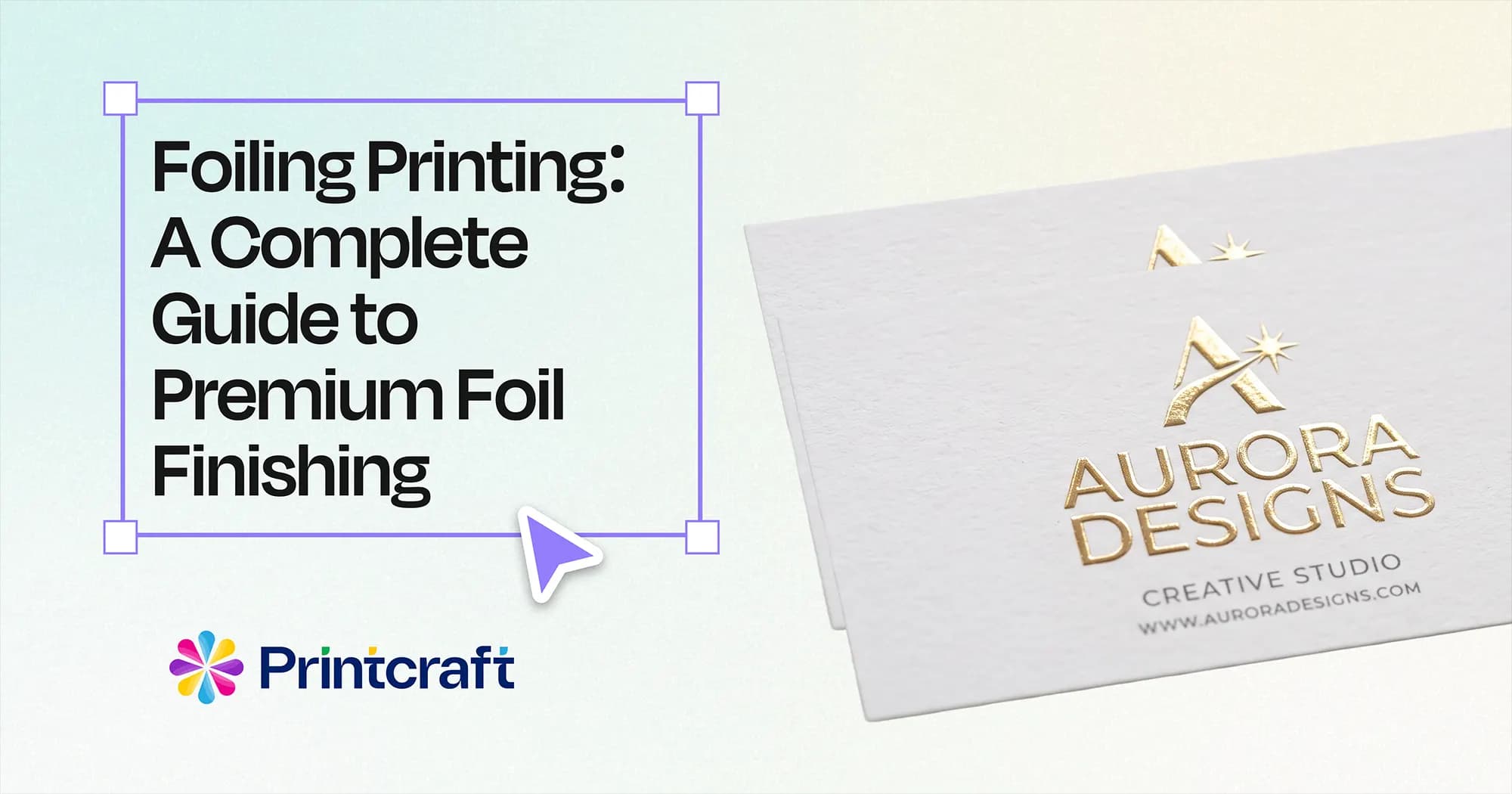
When it comes to printed materials, the right finishing technique can transform a simple design into something that looks premium and luxurious. One of the most popular finishing options used to achieve this effect is foiling printing.
Foiling adds a distinctive metallic, coloured, or specialty finish to selected areas of printed materials. It is commonly used to highlight logos, text, patterns, borders, and other design elements that need extra attention.
From elegant business cards and invitations to luxury packaging, brochures, certificates, labels, and promotional materials, foil finishing can make printed products more eye-catching and memorable.
But what exactly is foiling, how does it work, and which type is right for your project?
This guide explains everything you need to know about foiling printing, including its benefits, types, applications, design tips, and the difference between foiling and other popular printing finishes.
Foiling printing is a print-finishing technique in which a thin layer of foil is transferred onto a printed surface to create a decorative or metallic effect.
Unlike conventional printing, where ink is used to reproduce colours and graphics, foiling uses a specialised foil material to create a reflective or distinctive finish.
Gold and silver are among the most popular foil options, but modern printing can also use a wide range of colours and specialty finishes.
Foiling can be applied to specific parts of a design rather than the entire printed surface. For example, a company may choose to apply gold foil only to its logo and business name while leaving the rest of the card in a matte finish.
This selective approach creates contrast and allows important elements to stand out.
The exact process depends on the type of foiling being used, but traditional foil stamping generally involves heat, pressure, a stamping die, and foil.
The first step is preparing the design. The areas that need foil are identified so the printer can create the necessary setup for the finishing process.
This could include a logo, heading, border, pattern, name, or other design element.
For traditional hot foil stamping, a specialised die is created based on the artwork.
The die contains the design that will be transferred to the printed surface.
A sheet or roll of foil is positioned between the heated die and the material.
The heated die presses against the foil and substrate. The combination of heat and pressure transfers the foil onto the selected area.
Once the process is complete, the unwanted foil is removed, leaving the desired design with a striking foil finish.
Modern digital foiling methods can use different processes and may not require a traditional stamping die, making them suitable for certain short-run or personalised projects.
There are several types of foiling available, and the right choice depends on your design, material, quantity, and desired appearance.
Gold foil is one of the most popular choices for premium printing.
It can create an elegant and luxurious appearance and is commonly used for:
Gold foil works particularly well with dark backgrounds, neutral colours, and minimalist designs.
Silver foil creates a sleek and modern metallic effect.
It is often used for corporate stationery, technology-related brands, product packaging, invitations, and contemporary designs.
Silver can work particularly well with black, white, blue, grey, and other cool colour palettes.
Foiling is not limited to gold and silver.
Depending on the printing provider and available materials, coloured foils can be used to match a company's branding or create a specific visual effect.
Coloured foils are useful when the goal is to create a distinctive design without relying on traditional metallic finishes.
Holographic foil creates a reflective effect that can appear to change as the viewing angle changes.
This type of foil can be used for:
It is particularly useful when you want printed materials to have a more dynamic appearance.
While metallic foils are typically associated with shine, matte foil options can provide a more subtle appearance.
Matte foil can be useful for brands that want a sophisticated finish without the strong reflection of traditional metallic foil.
Depending on the printer and project requirements, specialty foils may include textured, patterned, coloured, or other decorative finishes.
These options can help create a unique appearance for premium print products.
One of the biggest advantages of foil finishing is its ability to make printed materials look more luxurious.
A simple logo printed with metallic foil can instantly become a focal point on a business card, brochure, invitation, or package.
Foil catches light differently from standard ink.
This makes foiled elements more noticeable, especially when they are placed against a contrasting background.
A well-executed foil finish can reinforce a premium brand identity.
Businesses in industries such as fashion, jewellery, cosmetics, hospitality, real estate, and luxury retail can use foil to create a more sophisticated visual identity.
Foiling can create a strong contrast between finished and unfinished areas.
For example, gold foil on a dark matte background can create a dramatic effect without requiring a complicated design.
Foiling does not require a complex layout.
A minimalist business card containing only a logo, name, and contact information can become much more visually appealing when the logo or name is finished with foil.
Traditional foil stamping can create a slight impression in the material depending on the production process.
This gives the printed product a physical quality that customers can see and feel.
Foiling is particularly useful when printed materials need to communicate quality, exclusivity, or luxury.
It can be used to elevate packaging, stationery, promotional materials, and branded products.
Foil finishing can be incorporated into many different printed products.
Business cards are one of the most popular applications for foil printing.
You can use gold, silver, coloured, or specialty foil to highlight:
For a luxury business, a black card with gold foil can create a sophisticated first impression.
Packaging is another major application for foiling.
Brands can use foil to highlight logos, product names, decorative graphics, or other important elements.
Foil packaging is particularly common in:
The metallic finish can make products more noticeable on shelves and improve the perceived value of the packaging.
Wedding invitations, corporate invitations, event invitations, and special announcements can benefit from foil finishing.
Gold or silver foil can be used for names, dates, borders, monograms, or decorative patterns.
Foil can be used selectively on brochure covers to highlight the company logo or headline.
Since brochures often represent a business during meetings and events, premium finishing can help strengthen the overall presentation.
Certificates and awards can use gold or silver foil to create an elegant and prestigious appearance.
Foiling can be applied to logos, titles, borders, seals, or other important details.
Product labels and stickers can also benefit from foil finishing.
A foiled logo or product name can make packaging more attractive while helping a product stand out from competitors.
Publishers and designers can use foil on book covers to highlight titles, author names, patterns, illustrations, or decorative elements.
The effect can be particularly impressive when combined with textured or matte materials.
Corporate presentation folders with a foiled logo can create a professional appearance during meetings, conferences, and client presentations.
Traditional printing uses ink to reproduce colours, images, text, and graphics.
Foiling, on the other hand, adds a separate decorative finish to selected areas.
For example, a business card might use standard printing for contact information and branding colours while using gold foil for the company logo.
The two techniques can work together rather than being alternatives.
Both foiling and Spot UV can create premium-looking printed products, but their visual effects are different.
Foiling creates a metallic, coloured, or specialty finish.
Spot UV creates a clear glossy coating over selected areas.
For example:
The right option depends on the style and purpose of your design.
These finishes can also sometimes be combined for an even more distinctive result.
Foiling and embossing are often used together, but they perform different functions.
Foiling adds colour, metallic shine, or another decorative surface finish.
Embossing physically raises part of the material to create a three-dimensional effect.
Combining foil with embossing can create an especially premium result because the design becomes both visually striking and tactile.
For example, a company logo can be embossed and then finished with gold foil.
Good artwork preparation is essential for achieving a professional foil finish.
Foiling is often most effective when used selectively.
Instead of applying foil to every part of the design, choose the elements that deserve emphasis.
A logo is one of the best elements to enhance with foil.
A foiled logo can become a distinctive brand feature while keeping the rest of the design relatively simple.
Foil generally stands out more when placed against a contrasting background.
Dark colours such as black, navy, deep green, or burgundy can work particularly well with metallic foil.
However, the final result depends on the specific foil and substrate being used.
Very thin lines and tiny design elements may not reproduce as intended depending on the foil process and material.
Before finalizing your artwork, discuss minimum detail requirements with your printing provider.
The substrate plays an important role in the final appearance.
Different papers and card stocks can produce different results with foil finishing. Textured, coated, uncoated, and specialty stocks may each create a different visual and tactile experience.
Foiling is most effective when it has a clear purpose.
If too many elements are foiled, the design can lose its visual hierarchy and become overwhelming.
Before sending your design to print, make sure the foil elements are clearly identified.
Depending on the printing method, your printer may require a dedicated foil layer or specific spot colour.
Artwork requirements may include:
Printing companies may have different file preparation requirements, so always check their artwork guidelines before submitting your final design.
If you are unsure how to prepare a foil layer, ask your printing provider for the preferred setup.
Adding foil everywhere can reduce its impact.
Use it to emphasize the most important design elements.
If the foil does not contrast sufficiently with the background, its visual impact may be reduced.
The same foil can look different on different substrates.
Always consider the paper or card stock when planning the finish.
Tiny details may not reproduce accurately depending on the chosen foil process.
Foiling should enhance the design, not become the entire design.
A strong layout, readable typography, and consistent branding should come first.
The cost of foil printing depends on the specifications of your project.
Factors that can influence the price include:
Traditional hot foil stamping may involve setup costs for creating a die, while certain digital foiling processes may be more suitable for smaller quantities or variable designs.
For an accurate quotation, provide your printer with the product size, quantity, preferred material, foil type, and artwork requirements.
Foiling can be a worthwhile investment when printed materials need to make a strong impression.
It is especially suitable for projects where presentation and perceived quality are important, including:
For basic promotional materials that are intended for short-term use, standard printing may be sufficient.
The best approach is to consider the purpose of the printed material and whether a premium finish will add meaningful value.
Choosing the right foil depends on the brand identity, design, material, and desired result.
The right foil should complement the overall design rather than compete with it.
In a competitive market, printed materials need to do more than simply communicate information. They can also reinforce a brand's identity and create an experience for the customer.
Foiling offers a practical way to add visual interest without redesigning an entire product.
A small amount of foil on a logo, product name, or decorative element can create a noticeable difference.
For businesses looking for foil printing in Dubai, choosing the right printer is equally important. Professional artwork preparation, suitable paper selection, accurate finishing, and quality control all contribute to the final result.
Foiling printing is an effective way to give printed materials a more luxurious and distinctive appearance. From gold foil business cards and silver corporate stationery to premium packaging and elegant invitations, the finish can be adapted to a wide range of applications.
The key to successful foiling is not simply adding as much foil as possible. Instead, it is about choosing the right elements, material, colour, and finishing method to complement the overall design.
When used strategically, foil can highlight your brand, attract attention, create contrast, and make your printed materials more memorable.
If your next printing project needs an elegant and premium finishing touch, foiling is an option worth considering.
What is foiling in printing?
Foiling is a finishing technique that transfers a thin layer of foil onto selected areas of a printed material. It is commonly used to create metallic, coloured, or specialty effects.
Is foil printing the same as foil stamping?
The terms are often used interchangeably, although they can refer to different production methods. Traditional foil stamping generally uses heat, pressure, and a die, while modern digital methods may use different technologies.
What colours are available for foil printing?
Gold and silver are common options, but coloured, holographic, matte, and other specialty foils may also be available depending on the printing provider.
Can foil be used on business cards?
Yes. Foiling is widely used on business cards to highlight logos, names, patterns, borders, and other design elements.
Can foil printing be used on packaging?
Yes. Foiling is frequently used on premium packaging for cosmetics, skincare, jewellery, food, fashion, and other products.
Is gold foil better than silver foil?
Neither is universally better. Gold creates a warmer, more luxurious appearance, while silver often produces a cooler and more modern look. The best option depends on your branding and design.
Can foiling and embossing be combined?
Yes. Foiling and embossing can be combined to create a finish that is both visually striking and tactile.
Can foiling be combined with Spot UV?
In some printing applications, multiple finishing techniques can be combined. The feasibility depends on the material, production process, and artwork.
Does foiling make printing more expensive?
Foiling generally adds a finishing cost to standard printing. The final price depends on factors such as quantity, foil type, coverage, material, and production method.
Is foil printing suitable for small quantities?
It can be, but the most suitable process depends on the quantity and project specifications. Digital foiling may be an option for certain short-run projects, while traditional foil stamping can involve additional setup.