
Loading...
Loading...
Tooba Asad • 04 Sep 2026
Printed materials need to look good, but appearance is not the only consideration. Business cards, brochures, menus, packaging, flyers, folders, and other printed products are often handled, transported, displayed, and exposed to everyday wear.
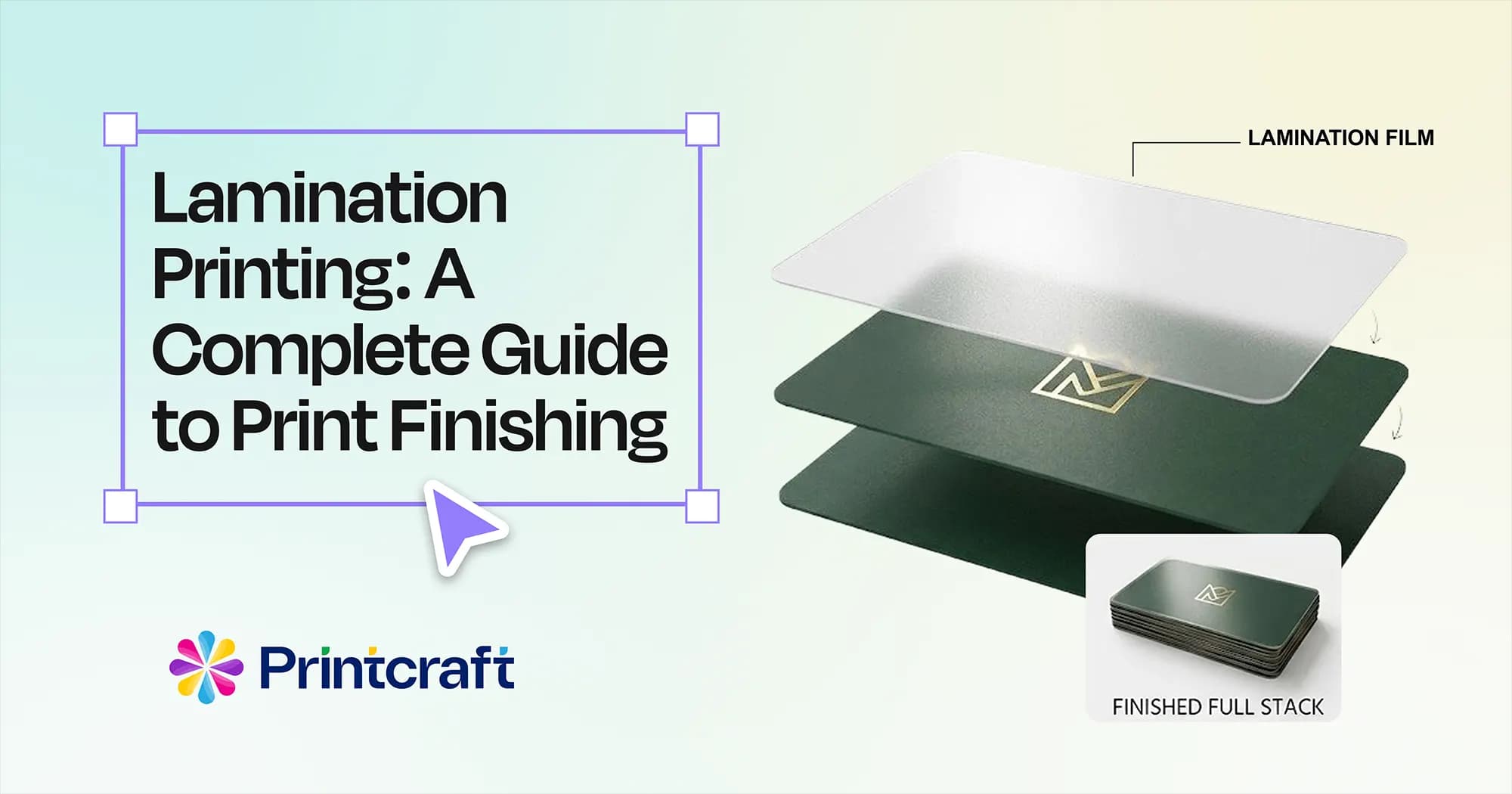
Lamination printing is one of the most popular finishing techniques used to improve both the appearance and durability of printed materials.
Lamination involves applying a thin protective film to the surface of a printed product. Depending on the type of laminate selected, it can create a glossy, matte, or soft-touch appearance while helping protect the underlying print from everyday handling.
From professional business cards to restaurant menus and premium packaging, lamination can be used across a wide range of printing applications.
In this guide, we will explain what lamination is, how the process works, the different types of lamination, its benefits, common applications, design considerations, and how to choose the right finish for your project.
Lamination printing is a finishing process in which a thin layer of film is applied over a printed surface.
The laminate acts as an additional layer between the printed design and the outside environment. Depending on the film used, it can change the look and feel of the material while providing additional protection against everyday handling.
Lamination is available in several finishes, with glossy and matte lamination being two of the most common choices.
For example, a business card can be laminated with a matte film for a sophisticated, non-reflective appearance, while a promotional flyer can use glossy lamination to make colours and images appear more vibrant.
The lamination process generally involves applying a thin film to the surface of a printed sheet using heat, pressure, adhesive, or a combination of these methods, depending on the lamination system.
The artwork is first printed onto the selected paper or card stock.
The printing method and material are chosen based on the product, design, quantity, and desired quality.
The appropriate lamination film is selected.
This could be:
The film is applied to the printed surface using a commercial laminating machine.
The machine uses the required temperature, pressure, and application method to bond the film to the material.
Once the film has been applied, the laminated sheets are trimmed, cut, folded, creased, or otherwise finished according to the product requirements.
The result is a printed product with an additional protective and decorative layer.
Different lamination finishes can create very different visual and tactile results.
Gloss lamination creates a shiny, reflective surface.
It can make colours and images appear vibrant and can give printed materials a clean, polished appearance.
Gloss lamination is commonly used for:
It can be particularly useful for designs containing photographs or colourful graphics.
Matte lamination creates a smooth surface with minimal reflection.
It provides a more subtle and sophisticated appearance compared with gloss.
Matte lamination is commonly used for:
It can also make printed materials more comfortable to view under strong lighting because of its reduced glare.
Soft-touch lamination is designed to provide a smooth, velvety surface that feels softer than standard matte lamination.
The tactile experience makes it a popular choice for premium printed products.
It can be used for:
Soft-touch lamination can also be combined with other finishing techniques, such as Spot UV, to create a contrast between soft matte areas and glossy highlighted elements.
Some printing projects may require specialty films that create specific visual or functional effects.
Availability depends on the printing provider, material, and production requirements.
One of the main purposes of lamination is protection.
The film creates an additional surface layer that can help protect the print from everyday handling, minor scuffs, moisture exposure, and general wear.
The actual level of protection depends on the film and application.
Laminated materials can generally withstand handling better than unprotected printed sheets.
This makes lamination useful for products that are repeatedly used, such as menus, reference cards, instructional materials, and frequently handled promotional products.
Lamination can significantly change how a printed product looks.
Gloss lamination adds shine and can enhance the visual impact of colours and images, while matte lamination creates a more understated and professional appearance.
Certain lamination finishes, particularly matte and soft-touch, can make printed materials feel more refined.
This is especially useful for brands that want their printed products to communicate quality and professionalism.
Printed materials can experience scratches, fingerprints, scuffing, and other signs of handling.
Lamination provides an additional surface layer that can help reduce the visible effects of everyday use.
Laminated surfaces can often be wiped more easily than unlaminated paper, depending on the material and film.
This makes lamination particularly useful for products that may need regular cleaning.
Lamination is not simply about protection.
The selected finish can become an important part of the design. Gloss, matte, and soft-touch films each create a different customer experience.
Lamination is suitable for a wide range of printed products.
Business cards are frequently handled and carried, making durability important.
Matte or soft-touch lamination can create a sophisticated appearance, while gloss lamination can provide a brighter and more vibrant finish.
Lamination can also help protect the printed information from everyday wear.
Brochures often contain detailed graphics, photographs, product information, and branding.
Laminating a brochure can help protect the printed surface while giving the brochure a more polished appearance.
Restaurant menus are handled repeatedly and may be exposed to spills, moisture, and frequent cleaning.
Lamination can provide an additional protective layer, making it a practical finishing option for certain menu formats.
Gloss lamination can also make food photography more vibrant, while matte finishes can create a more sophisticated appearance.
Flyers are usually produced for marketing and promotional purposes.
While not every flyer requires lamination, it can be useful when a premium appearance or additional durability is important.
Packaging is one of the most important areas where lamination can make a difference.
A laminated package can have a more refined appearance while gaining additional surface protection.
Depending on the product, matte, gloss, or soft-touch finishes can be used.
Presentation folders represent a business during meetings and client interactions.
Matte or soft-touch lamination can create a professional appearance while helping protect the folder from everyday handling.
Wedding invitations, corporate invitations, event cards, and special announcements can benefit from lamination when the desired look requires a durable and polished finish.
Matte and soft-touch finishes are particularly suitable for elegant designs.
Books are frequently handled, stored, transported, and displayed.
Lamination can help protect book covers while providing the desired visual finish.
Gloss can work well with colourful imagery, while matte can provide a more sophisticated appearance.
Certificates and awards can be laminated when long-term preservation and durability are important.
The choice of finish should match the overall appearance and purpose of the certificate.
Foiling adds a metallic, coloured, or specialty finish to selected areas, while lamination generally covers the surface with a protective film.
For example:
These techniques can sometimes be combined to create more elaborate premium print products.
Consider how your colours, photographs, typography, and graphics will look under the selected laminate.
Gloss can enhance vibrant imagery, while matte can provide a more understated appearance.
A restaurant menu that will be handled repeatedly has different requirements from a luxury business card.
Choose the laminate based on how the finished product will be used.
Luxury and professional brands may prefer matte or soft-touch finishes, while promotional brands may benefit from the visual impact of gloss.
However, there is no universal rule. Your brand style should guide the decision.
Lamination can be combined with finishing techniques such as Spot UV and foiling.
When combining multiple finishes, make sure each technique has a clear purpose.
The paper or card stock underneath the laminate affects the final appearance and feel.
Discuss your preferred substrate with your printer to determine which combination is appropriate for your project.
Artwork preparation for lamination is generally similar to preparing artwork for standard printing, but there are still important production considerations.
Make sure your artwork includes:
If the product will be folded or creased after lamination, the printer may also recommend specific production techniques to reduce the possibility of cracking along folds.
Always follow the printing provider's artwork guidelines before submitting the final file.
A glossy finish may not always be the best choice for a minimalist corporate design, just as matte may not always maximize the impact of a photographic promotional piece.
Gloss lamination can create reflections under certain lighting conditions.
If the printed material needs to be read under strong lights, consider whether a matte finish would be more practical.
Not every printed product needs lamination.
For short-term flyers or inexpensive promotional materials, standard printing may be sufficient.
If a laminated product needs to be folded, the construction and finishing method should be planned carefully.
Improper handling of folds can affect the final appearance.
Different projects may require different film thicknesses.
A business card, packaging box, and brochure do not necessarily need the same lamination specification.
Discuss the intended use with your printer before selecting the film.
The cost of lamination depends on the specifications of the printing project.
Factors that can influence the final price include:
For an accurate quotation, provide your printer with the product dimensions, quantity, material preference, lamination type, and any additional finishing requirements.
Lamination can be a valuable finishing option when you want your printed products to look better and withstand regular handling.
It is particularly useful for products such as:
For temporary marketing materials that are used once and discarded, lamination may not always be necessary.
The best choice depends on the purpose, expected lifespan, budget, and appearance you want to achieve.
Printed materials are an important part of many businesses' branding and customer experience.
A professionally laminated product can provide a combination of appearance, durability, and surface protection that standard unlaminated printing may not offer.
Whether you need laminated business cards, brochures, menus, packaging, invitations, or presentation folders, the right laminate can help create a finished product that looks professional and performs well in everyday use.
For businesses looking for lamination printing in Dubai, working with an experienced printing provider can help ensure the right combination of paper stock, printing method, laminate, and finishing is selected for the project.
Lamination printing is a practical and versatile finishing technique that can improve both the appearance and durability of printed materials.
From glossy promotional flyers and vibrant brochures to matte business cards and soft-touch luxury packaging, different lamination options allow businesses to create a finish that matches their brand and purpose.
The key is to choose the right combination of paper stock, laminate type, design, and intended use.
When selected carefully, lamination can help protect your printed materials while giving them the professional finish needed to make a lasting impression.
What is lamination in printing?
Lamination is a finishing process where a thin protective film is applied over a printed surface to improve its appearance and provide additional protection against everyday handling and wear.
What are the main types of lamination?
The most common types are gloss, matte, and soft-touch lamination. Specialty films may also be available depending on the printer and project.
Is matte or gloss lamination better?
Neither is universally better. Gloss creates a shiny and vibrant appearance, while matte provides a more subtle, low-reflection finish. The right option depends on the design and intended use.
Is lamination waterproof?
Lamination can provide additional resistance to moisture, but a laminated paper product should not automatically be considered completely waterproof. The level of moisture resistance depends on the material, film, edges, and production method.
Can business cards be laminated?
Yes. Lamination is commonly used on business cards to provide additional durability and create a professional surface finish.
Can lamination be used on menus?
Yes. Laminated menus can be useful in restaurants and cafés because they are repeatedly handled and may need regular cleaning.
Can lamination be combined with Spot UV?
Yes, in suitable applications. Matte lamination combined with Spot UV is a popular premium finishing combination because it creates a contrast between matte and glossy areas.
Can lamination be combined with foil printing?
Depending on the printing process and material, lamination and foiling can be combined. Your printer can recommend the appropriate production sequence.
Does lamination make paper thicker?
Yes. Applying a film adds an additional layer to the printed material and can increase its overall thickness and stiffness.
Is soft-touch lamination worth it?
Soft-touch lamination can be a good choice when tactile experience is important. It provides a smooth, velvety feel and is often selected for premium business cards, packaging, folders, and invitations.
How long does laminated printing last?
The lifespan depends on the material, laminate, usage, storage conditions, and exposure to environmental factors. Lamination generally improves resistance to everyday wear but does not make printed products indestructible.