
Loading...
Loading...
Tooba Asad • 04 Sep 2026
Discover how Spot UV printing can transform ordinary printed materials into premium, eye-catching designs. In this guide, we explain what Spot UV is, how it works, its benefits, popular applications, design tips, and how to prepare your artwork for the best printing results.
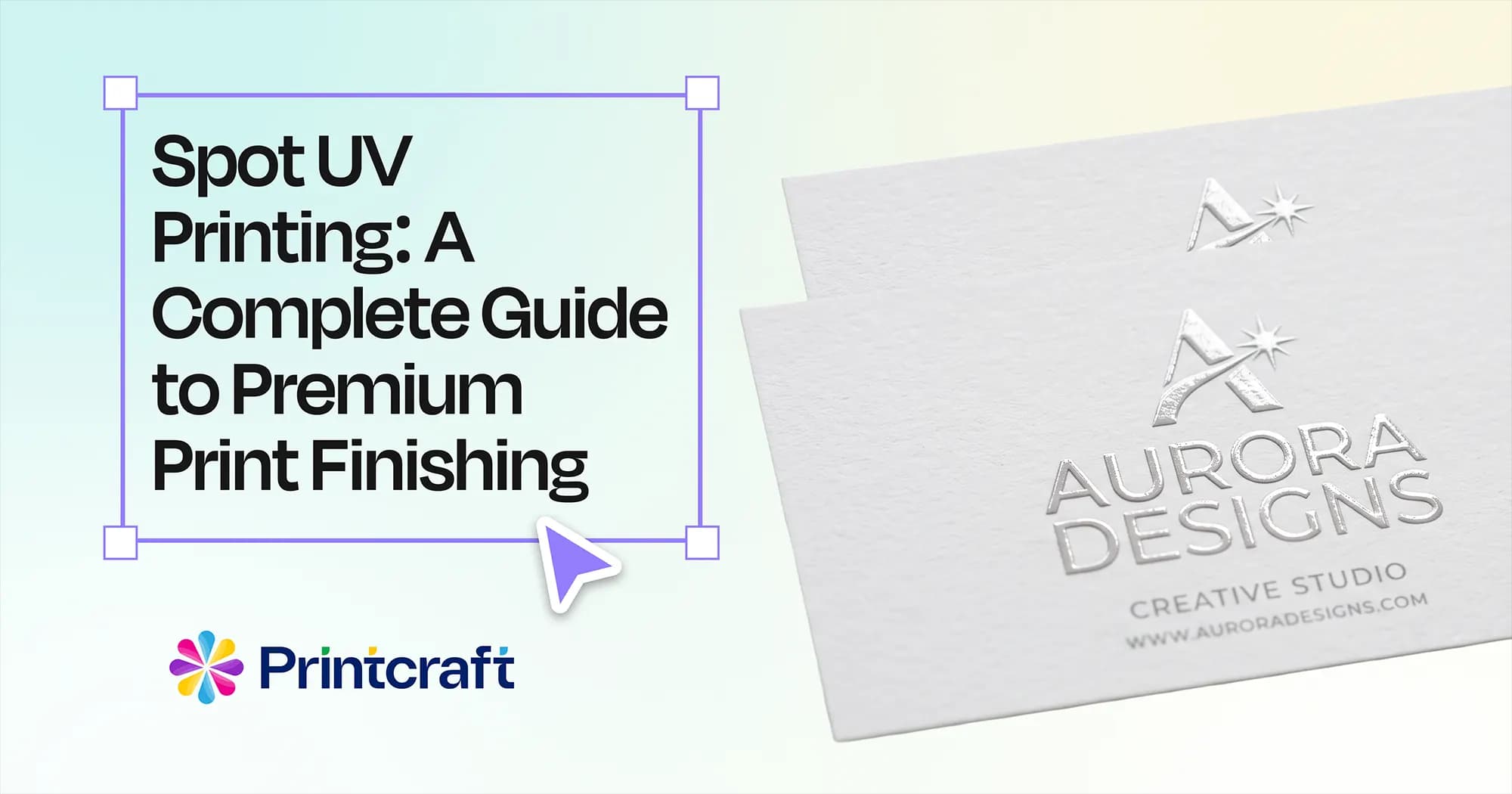
When it comes to printed materials, small finishing details can make a major difference. A well-designed business card, brochure, packaging box, or invitation can look even more impressive when selected areas of the design have a smooth, glossy finish that catches the light.
This is where Spot UV printing comes in.
Spot UV is a premium finishing technique used to highlight specific elements of a printed design with a clear, glossy UV-cured coating. Instead of covering the entire surface, the coating is applied only to selected areas such as logos, text, patterns, images, or other important design elements.
The result is an attractive contrast between glossy and matte surfaces that can make printed materials look more professional, luxurious, and memorable.
In this guide, we will explain what Spot UV printing is, how it works, where it can be used, its benefits, design considerations, and why it can be a valuable finishing option for your next printing project.
Spot UV printing is a print finishing process in which a clear UV-curable coating is applied to specific areas of an already printed surface.
The word "spot" refers to the selective application of the coating. Rather than making the entire printed piece glossy, only the areas chosen in the design receive the UV coating.
For example, a business card could have a matte black background with a company logo finished in glossy Spot UV. When the card is tilted under light, the logo reflects the light and immediately becomes more noticeable.
Spot UV is particularly effective when combined with matte or soft-touch finishes because the difference between the glossy and non-glossy surfaces creates strong visual contrast.
The process can also provide a subtle tactile effect, depending on the coating and production method used.
Spot UV involves several stages to achieve a precise and professional finish.
First, the artwork is printed using the required printing process and selected paper or card stock. The colours, images, text, and other design elements are produced before the Spot UV finish is applied.
A separate layer or mask is prepared to identify exactly where the UV coating should appear. This could include a logo, product name, pattern, photograph, or other design element.
Accurate registration is important because the coating needs to align correctly with the underlying artwork.
A clear UV varnish is applied only to the selected areas of the printed material. Depending on the production method and equipment, the coating can be applied using different commercial techniques.
Ultraviolet light is then used to cure the coating. This rapidly hardens the varnish and creates the characteristic glossy finish associated with Spot UV.
The finished piece has two distinct surface effects: the original finish surrounding the design and the glossy UV-treated areas.
Modern brands compete for attention through every customer touchpoint, including printed marketing materials and packaging. Spot UV gives designers another way to create visual hierarchy without adding additional colours or complicated artwork.
Instead of making every part of a design equally prominent, Spot UV allows you to decide exactly which elements should attract attention.
For example, you can use it to emphasize:
This makes Spot UV particularly useful for businesses that want their printed materials to communicate quality and attention to detail.
One of the biggest advantages of Spot UV is its ability to give printed materials a sophisticated appearance.
A simple design can look significantly more refined when glossy details are combined with a matte background. This is especially useful for brands positioned in premium or luxury markets.
Spot UV naturally attracts attention because glossy areas reflect light differently from the surrounding surface.
Applying it to a logo, brand name, image, or pattern can make that element visually prominent without making the entire design overwhelming.
The contrast between a glossy Spot UV area and a matte background is one of the most recognizable effects of this finishing technique.
For example, a dark matte business card with a glossy black logo can create a subtle effect that becomes visible when the card moves under light.
Professional-looking printed materials can contribute to how customers perceive a business.
Spot UV can help communicate attention to detail and create a more distinctive brand experience, particularly on materials that customers physically handle.
Depending on the type and application of the coating, Spot UV can add a noticeable surface texture.
This gives the customer another way to interact with the printed material rather than relying solely on colour and graphics.
Spot UV does not require an elaborate design.
In fact, it can be particularly effective on minimalist designs where only one or two elements are highlighted. A simple logo or pattern can become much more noticeable when it catches the light against a matte surface.
UV coatings can also add a degree of surface protection to treated areas. The coating can help improve resistance to everyday handling, although the level of protection depends on the material, coating, and production method.
Spot UV is suitable for a wide range of printed products. Some of its most popular applications include business cards, packaging, brochures, invitations, book covers, and presentation materials.
Business cards are one of the most popular applications for Spot UV.
A company can use Spot UV on its logo, name, icon, or even a subtle background pattern. Since business cards are physically exchanged and handled, the glossy finish can make the card more memorable.
For a luxury or corporate brand, a matte card with a glossy logo can create a polished and professional first impression.
Product packaging is another excellent application.
Brands can apply Spot UV to:
For cosmetics, skincare, electronics, fashion, food, and premium retail products, Spot UV can help packaging stand out while maintaining a sophisticated appearance.
Brochures often contain multiple images, headlines, and brand elements. Applying Spot UV selectively can help create a visual hierarchy.
For example, a company could apply Spot UV to its logo and a main product image while keeping the rest of the brochure matte.
For promotional materials, Spot UV can help emphasize a campaign headline, product image, logo, or special offer.
However, it is generally more effective when used selectively rather than covering large areas unnecessarily.
Wedding invitations, event cards, corporate invitations, and greeting cards can benefit from Spot UV when the goal is to create an elegant and distinctive appearance.
Names, monograms, decorative patterns, borders, and illustrations can all be highlighted with the finish.
Publishers and designers can use Spot UV to highlight book titles, author names, illustrations, or selected design elements.
The combination of matte and gloss can add depth to an otherwise flat printed cover.
Corporate presentation folders can also benefit from selective UV finishing. A logo or brand pattern treated with Spot UV can give a professional edge to materials used during meetings, presentations, and business events.
Although both processes use UV-cured coatings, Spot UV and full UV coating are not the same.
Spot UV is applied only to selected areas of the printed design.
Full UV coating is generally applied across the entire surface.
Spot UV is therefore more suitable when you want to emphasize specific elements and create contrast. Full UV coating may be preferable when the goal is to give the complete surface a consistent glossy appearance.
Lamination involves applying a protective film over the printed surface, while Spot UV applies a clear coating only to selected areas.
These finishes can also be used together.
One popular combination is matte lamination with Spot UV. The matte lamination creates a smooth, non-reflective background, while the Spot UV creates glossy highlights.
This combination is especially effective for business cards, packaging, brochures, and premium marketing materials.
Spot UV and embossing create different effects.
Spot UV primarily changes the surface appearance and finish, creating glossy highlights and potentially a tactile coating effect.
Embossing physically raises the paper or card stock to create a three-dimensional impression.
The two finishes can also be combined in premium print projects. Using both can create a stronger visual and tactile effect, depending on the material and production requirements.
A successful Spot UV design starts with using the finish strategically.
Avoid applying Spot UV to every element of the design. If everything is glossy, the contrast disappears.
Instead, select one or a few important elements that you want customers to notice.
A company logo is one of the most effective elements to enhance with Spot UV. It can create a subtle but recognizable brand detail.
Spot UV generally creates the strongest visual effect when the glossy coating contrasts with a matte or soft-touch surface.
Very small or extremely detailed artwork may not produce the desired result depending on the printing process and equipment.
For best results, discuss your artwork requirements with your printing provider before production.
The final appearance depends on the paper or card stock, existing coatings, and finishing process.
Choosing an appropriate substrate is therefore an important part of creating a high-quality Spot UV product.
Spot UV is designed to interact with light. Consider how the glossy elements will appear when the printed material is held, moved, or displayed.
A subtle logo may look understated from one angle and highly visible from another.
For the right project, Spot UV can be an excellent investment.
It may be particularly worthwhile when the printed product plays an important role in your brand presentation, such as:
However, Spot UV is not necessary for every printing project.
If you are producing a basic flyer for short-term distribution, for example, the additional finishing may not provide enough value to justify the extra production cost.
The key is to use Spot UV where the printed material needs to create a stronger visual or tactile impression.
The cost of Spot UV printing depends on several factors, so there is no single price that applies to every project.
Important factors can include:
For an accurate quote, provide your printer with the product specifications, dimensions, quantity, paper preference, and artwork requirements.
Artwork preparation is an important part of achieving accurate results.
Before sending your files to print, clearly identify which areas should receive the Spot UV coating. Many professional printing workflows use a separate spot layer or mask for this purpose.
Your printer may have specific requirements for:
Always follow the printer's artwork guidelines before submitting the final file.
If you are unsure how to create a Spot UV layer, it is better to ask your printing provider for their preferred file setup rather than guessing.
Applying the finish everywhere can make the design visually confusing and reduces the impact of the glossy areas.
The UV layer needs to align correctly with the printed artwork. Poor alignment can affect the final appearance.
Not every paper or surface will produce the same Spot UV effect. Discuss your preferred material with the printer before finalizing the design.
Spot UV can enhance a design, but it cannot fix poor typography, low-resolution images, weak layouts, or inconsistent branding.
The finish should complement the design rather than compensate for problems within it.
If you want printed materials that feel more premium without completely changing your design, Spot UV can be an effective finishing option.
It allows you to highlight important elements, create glossy and matte contrast, improve visual hierarchy, and give customers a more engaging physical experience.
From Spot UV business cards and brochures to luxury packaging and invitations, this finishing technique can be adapted to many different printing applications.
The most effective Spot UV designs are usually not the ones that use the most coating. They are the ones that use it strategically to make the right details stand out.
Spot UV is more than simply adding shine to printed materials. When used correctly, it is a design tool that can direct attention, strengthen branding, create contrast, and improve the perceived quality of a printed product.
Whether you are creating business cards, brochures, packaging, invitations, folders, or other premium marketing materials, the right Spot UV finish can turn an ordinary printed piece into something much more distinctive.
The key is strategic application. Choose the elements that matter most, pair the finish with an appropriate paper or surface, and make sure the artwork is prepared correctly.
With thoughtful design and professional printing, Spot UV can give your printed materials the polished finish they need to make a lasting impression.
What does Spot UV mean?
Spot UV refers to a UV-cured clear coating applied selectively to specific areas of a printed product instead of covering the entire surface.
Is Spot UV glossy?
Yes. Glossy Spot UV is the most common type and creates a reflective finish that catches light. Other coating effects may also be available depending on the printing provider.
Can Spot UV be applied to business cards?
Yes. Spot UV is commonly used on business cards to highlight logos, names, patterns, and other important design elements.
Is Spot UV the same as UV printing?
Not exactly. Spot UV is primarily a selective finishing or coating process. UV printing can refer to printing with UV-curable inks, while Spot UV generally means applying a UV-cured coating to selected areas.
Can Spot UV be combined with matte lamination?
Yes. Matte lamination combined with glossy Spot UV is a popular combination because the difference between matte and gloss creates strong visual contrast.
Can Spot UV be used on packaging?
Yes. Spot UV is widely used for premium packaging to highlight logos, product names, patterns, and other branding elements.
Does Spot UV add texture?
It can. Depending on the coating and application method, Spot UV can create a noticeable tactile surface effect in addition to its glossy appearance.
Is Spot UV expensive?
Spot UV usually adds a finishing cost to a standard printing project. The final price depends on factors such as quantity, material, product size, coating coverage, and production requirements.
What is the best design for Spot UV?
Minimalist designs with clear contrast often work particularly well. Logos, names, patterns, icons, and selected images can be effective choices for Spot UV treatment.