
Loading...
Tooba Asad • 20 Nov 2026
For businesses that require attractive and long-lasting labels, understanding the available sticker materials is important. Whether you operate a food business, cosmetics brand, retail store, manufacturing company, or e-commerce business, selecting the right material ensures that your stickers remain visually appealing and functional throughout their intended use.
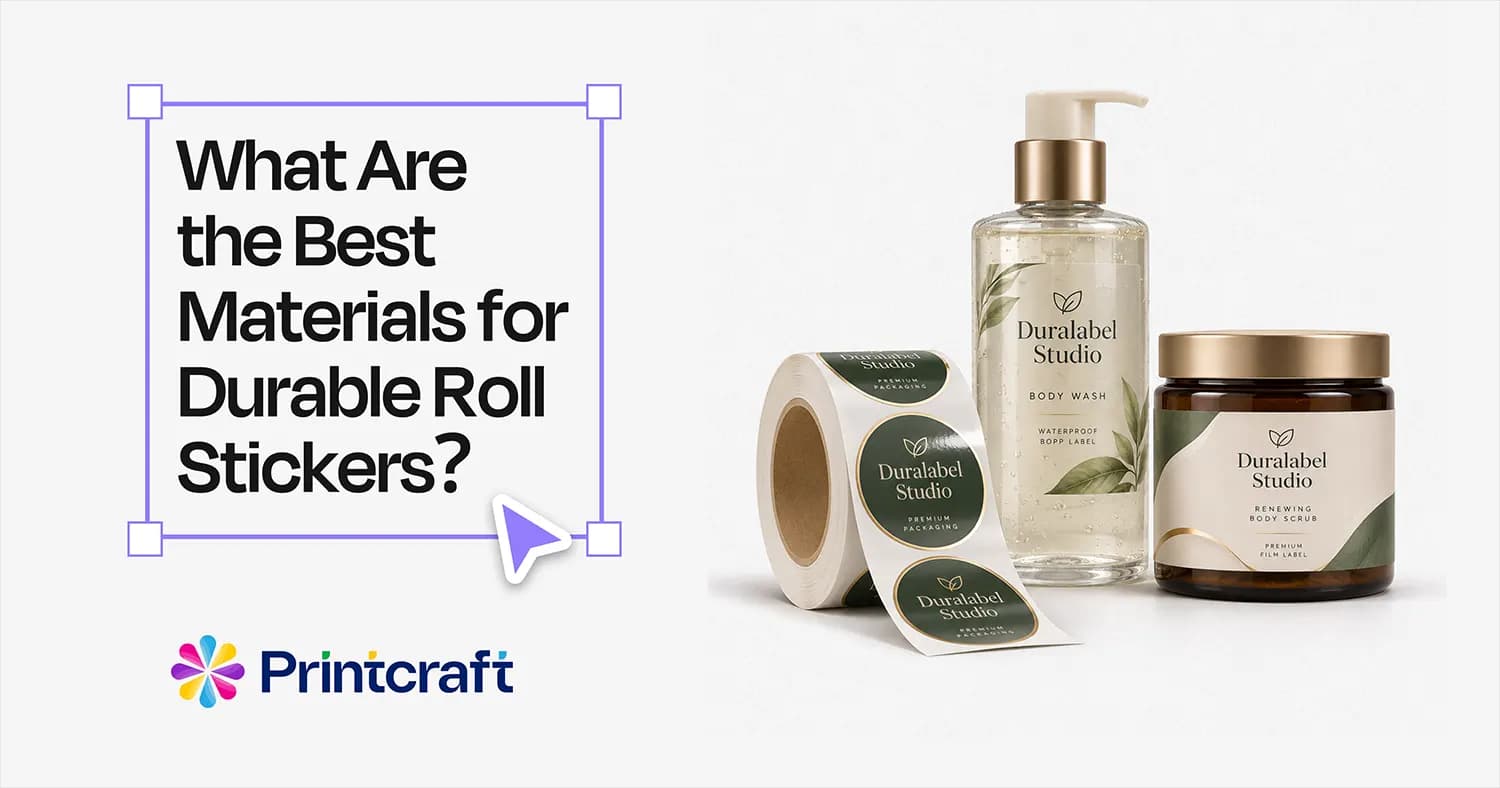
Roll stickers are an essential part of modern product packaging, branding, labelling, and business promotion. From food containers and cosmetic bottles to retail packaging and shipping boxes, businesses use roll stickers to display product information, highlight their brand identity, and create a professional appearance. However, the quality and durability of a sticker depend on more than just its design and printing. The material used to manufacture the sticker plays an equally important role in determining how well it performs in different environments.
Choosing the right material for roll stickers can make a significant difference in their appearance, adhesive strength, resistance to moisture, and overall lifespan. Some materials are ideal for everyday product labeling, while others are better suited for products exposed to water, sunlight, friction, or temperature changes.
For businesses that require attractive and long-lasting labels, understanding the available sticker materials is important. Whether you operate a food business, cosmetics brand, retail store, manufacturing company, or e-commerce business, selecting the right material ensures that your stickers remain visually appealing and functional throughout their intended use.
In this guide, we will explore the best materials for durable roll stickers, their features, benefits, applications, and the factors businesses should consider before choosing a suitable option.
Sticker material directly affects how a label performs after being applied to a product or surface. Even a professionally printed sticker may lose its appearance or functionality if the material is unsuitable for its intended application.
For example, a paper sticker may work perfectly for dry product packaging but may not be the best choice for bottles exposed to moisture. Similarly, a vinyl sticker can offer better flexibility and water resistance, making it suitable for products that require longer-lasting labels.
The right material helps businesses maintain consistent product presentation while reducing the chances of peeling, tearing, fading, or damage.
Here are some important reasons why material selection matters:
Selecting an appropriate material from the beginning helps businesses achieve better results and maintain a professional brand image.
Vinyl is one of the most popular materials for durable stickers because of its flexibility, strength, and resistance to moisture. It is commonly used for product labels, promotional stickers, packaging applications, and branding purposes where durability is an important requirement.
Unlike standard paper stickers, vinyl labels are made from synthetic material that can withstand everyday handling and exposure to moisture more effectively.
One of the biggest advantages of vinyl is its versatility. It can be applied to different surfaces, including glass, plastic, metal, and other smooth materials, depending on the adhesive selected.
Vinyl roll stickers are frequently used for beverage bottles, cosmetic packaging, promotional products, retail labels, and outdoor branding. They are particularly useful for businesses that want labels to maintain their appearance during regular product handling.
However, businesses should remember that durability also depends on the adhesive, printing method, and protective coating used. Not every vinyl label is automatically suitable for prolonged outdoor exposure or extreme environmental conditions.
BOPP, also known as biaxially oriented polypropylene, is another excellent material for durable roll stickers. It is widely used in product packaging because of its moisture resistance, lightweight construction, and attractive appearance.
BOPP labels are especially popular among food, beverage, cosmetics, and personal care brands. Their synthetic construction makes them more suitable than ordinary paper labels for products that may come into contact with water, oils, or humidity.
These labels are available in white, transparent, and metallic finishes, giving businesses several options for creating attractive product packaging.
BOPP roll stickers are commonly used for shampoo bottles, skincare products, food containers, beverage packaging, sauces, oils, and household products.
Transparent BOPP labels are particularly useful for brands that prefer a no-label appearance, allowing the product or container to remain visible while displaying important branding information.
For businesses looking for a combination of durability, moisture resistance, and professional presentation, BOPP is one of the strongest material options to consider.
Paper remains one of the most widely used materials for roll stickers, particularly for businesses that need economical labelling solutions for everyday packaging.
Although paper labels are generally less resistant to water and harsh environmental conditions than synthetic alternatives, they offer excellent print quality and are available in different textures and finishes.
Businesses can choose between coated, uncoated, matte, glossy, and kraft paper depending on their packaging requirements.
Paper roll stickers are commonly used for bakery packaging, retail product labels, takeaway food containers, shipping labels, promotional stickers, and price tags.
Kraft paper stickers are particularly popular among businesses that want a natural or minimalistic packaging appearance. They are frequently used by handmade product brands, bakeries, organic product businesses, and small retailers.
However, paper stickers are not the ideal option for products exposed to frequent water contact, high humidity, or heavy friction unless additional protective treatments are used.
Polyester is a strong synthetic material that is commonly selected for applications requiring excellent dimensional stability, durability, and resistance to challenging conditions.
It is particularly useful for industrial, electronic, and product identification labels where the sticker needs to remain readable and attached over an extended period.
Polyester labels are generally more rigid and dimensionally stable than flexible vinyl materials. They can also offer good resistance to moisture, abrasion, chemicals, and temperature variations, depending on the specific grade and construction.
Polyester roll stickers are commonly used for electronic equipment, machinery, industrial products, electrical appliances, asset identification, and technical labelling.
For businesses that require labels to remain readable and intact during regular equipment use, polyester can be a practical choice.
Although polyester is generally more expensive than standard paper options, its durability can make it a worthwhile investment for specialised applications.
Transparent film stickers are a popular option for businesses that want their product packaging to look modern, clean, and sophisticated.
These stickers are manufactured using clear synthetic films, such as transparent BOPP or other suitable plastic materials. They allow the surface beneath the sticker to remain visible while displaying printed logos, product details, and branding elements.
This creates a seamless appearance that is particularly attractive for glass bottles, cosmetic containers, and premium retail packaging.
Transparent film stickers are frequently used for perfume bottles, skincare products, cosmetic packaging, beverage containers, glass jars, and premium food packaging.
Businesses should pay attention to the printing process when selecting transparent labels. White ink may be required beneath certain printed areas to make colours and text more visible, particularly when labels are applied to transparent containers.
Metallic film stickers are an excellent option for brands that want their product packaging to stand out. These labels feature reflective surfaces that create an attractive and premium appearance.
They are available in different metallic effects, including gold, silver, and other decorative finishes. Businesses can use them to highlight logos, product names, special editions, or important packaging details.
Apart from their appearance, metallic synthetic films can also offer good resistance to moisture and everyday handling, depending on the material and finish selected.
Metallic roll stickers are commonly used for perfume packaging, luxury cosmetics, premium food products, gift packaging, promotional products, and speciality retail items.
They are especially suitable for brands that want to communicate quality, exclusivity, and attention to detail through their packaging.
Selecting the right material requires more than comparing prices or choosing the most durable option available. Businesses should evaluate how and where their stickers will be used.
Here are some important factors to consider before placing a roll sticker printing order.
The product itself should be the starting point when selecting a sticker material. Different packaging surfaces require different material and adhesive combinations.
For example, a label designed for a glass bottle may not perform equally well on flexible plastic packaging. Similarly, curved containers may require a more flexible material and a suitable adhesive to prevent lifting around the edges.
Consider whether your stickers will be applied to glass, cardboard, plastic, metal, or another surface before finalising the material.
If your product is regularly exposed to water, humidity, oils, or condensation, choosing a moisture-resistant material is essential.
BOPP and vinyl are commonly preferred for these applications because they offer better moisture resistance than standard paper labels.
However, the adhesive must also be suitable for the environment. A water-resistant sticker material does not automatically guarantee that the label will remain attached under every condition.
The intended environment also influences material selection.
For indoor product packaging, paper, BOPP, and other suitable materials may provide sufficient performance. Outdoor applications generally require materials and printing systems designed to withstand sunlight, moisture, temperature fluctuations, and regular handling.
Vinyl and certain polyester constructions can be appropriate choices for these demanding applications.
Your sticker material should complement your design requirements. Some materials provide a natural paper texture, while others offer smooth, glossy, matte, transparent, or reflective surfaces.
If your design includes detailed graphics, vibrant colours, or small text, discuss the printing method and material compatibility before production.
The right combination helps ensure that your final stickers look professional and communicate your brand message clearly.
Adhesive selection is just as important as the sticker material itself. Even a high-quality synthetic sticker can peel off if its adhesive is unsuitable for the surface.
Different applications may require permanent, removable, repositionable, or specialised adhesives.
For example, product labels used on refrigerated containers may require adhesives designed to perform under cold or damp conditions. Similarly, curved bottles may need adhesives that provide reliable bonding on rounded surfaces.
Always consider the packaging material, surface texture, application temperature, and storage conditions when choosing an adhesive.
Budget is another important consideration, particularly for businesses ordering stickers in large quantities.
Paper stickers are generally economical and suitable for many standard packaging applications. Synthetic materials such as BOPP, vinyl, and polyester may cost more but can offer additional performance benefits.
Instead of choosing the cheapest option, evaluate the overall value of the material based on its durability, intended use, and branding requirements.
Roll stickers offer several practical advantages for businesses that require consistent and efficient product labelling.
Unlike individually supplied stickers, roll labels are arranged on a continuous backing material, making them easier to handle, store, and apply. They can also be compatible with automatic and semi-automatic labelling machines, depending on the roll specifications.
Some important advantages include:
Efficient Application: Roll stickers make it easier to apply labels quickly, especially when businesses need to package large numbers of products.
Consistent Presentation: Using the same sticker design and specifications helps maintain uniform branding across product batches.
Convenient Storage: Roll formats are generally easier to organise and store compared with individually cut stickers.
Bulk Printing Benefits: Businesses can order larger quantities of identical labels for ongoing production requirements.
Flexible Customisation: Roll stickers can be produced in different shapes, sizes, materials, and finishes according to product requirements.
For growing businesses, roll stickers provide a practical labelling solution that supports packaging consistency and production efficiency.
Choosing a durable material is important, but proper storage and application also contribute to the performance of your stickers.
Poor handling can affect adhesive quality, printing appearance, and the overall condition of the labels before they are even used.
Follow these practices to maintain sticker quality:
These simple practices can help businesses achieve better labelling results and reduce unnecessary material wastage.
Professional printing plays an important role in achieving consistent, attractive, and durable roll stickers. The right printing provider can help businesses select suitable materials, adhesives, finishes, and printing specifications according to their packaging requirements.
From small businesses introducing their first product range to established companies managing large-scale production, customised roll stickers can support effective product presentation and brand recognition.
Before finalising an order, businesses should discuss the following details with their printing provider:
Paying attention to these details helps ensure that the final product meets both functional and visual expectations.
Choosing the right material is the foundation of creating durable and professional roll stickers. Whether you need waterproof BOPP labels for beverage packaging, flexible vinyl stickers for branding, economical paper labels for retail products, or specialised polyester labels for industrial applications, selecting the right material can improve your overall packaging experience.
At Printcraft, we understand the importance of quality printing and professional product presentation. We help businesses create customised printing and packaging solutions that align with their branding and business requirements.
Whether you are looking for product labels, promotional stickers, or customised roll sticker printing, choosing the right design, material, and finish can help your products make a stronger impression.
Contact Printcraft today to discuss your custom printing requirements and give your products a professional finish.
1. What is the most durable material for roll stickers?
Vinyl, BOPP, and polyester are among the most durable materials used for roll stickers. Vinyl offers flexibility and moisture resistance, BOPP is popular for product packaging, and polyester is suitable for demanding industrial and technical applications.
2. Are vinyl roll stickers waterproof?
Vinyl roll stickers generally offer good water resistance, making them suitable for products exposed to moisture and everyday handling. However, their actual waterproof performance depends on the material grade, adhesive, printing method, and protective coating.
3. Is BOPP better than paper for product labels?
BOPP is generally a better choice when moisture resistance and durability are important. Paper labels are more economical and suitable for dry packaging applications, while BOPP performs better for products such as beverages, cosmetics, and food containers.
4. Which material is best for waterproof roll stickers?
BOPP and vinyl are popular choices for waterproof or water-resistant roll stickers. Both are synthetic materials that perform better than standard paper labels in applications involving moisture.
5. Are paper roll stickers durable?
Paper roll stickers can be durable enough for indoor applications and everyday product packaging. However, they are generally less resistant to moisture, tearing, and environmental exposure than synthetic materials.
6. Can roll stickers be used on plastic bottles?
Yes, roll stickers can be applied to plastic bottles using suitable materials and adhesives. BOPP and vinyl are commonly used for this purpose because they offer flexibility and good resistance to moisture.
7. What is the difference between vinyl and BOPP stickers?
Vinyl stickers are known for their flexibility and versatility, making them suitable for various branding and labelling applications. BOPP stickers are lightweight synthetic labels commonly used for food, beverage, and cosmetic packaging due to their moisture resistance and professional appearance.
8. Which roll sticker material is best for cosmetic packaging?
BOPP, transparent film, and vinyl are popular choices for cosmetic packaging. Transparent labels create a clean appearance, while white and metallic BOPP options offer different branding possibilities.