
Loading...
Loading...
Rayyan • 19 Nov 2026
Explore the benefits of eco-friendly packaging for modern businesses. Learn about sustainable materials such as kraft paper, recycled cardboard, and biodegradable packaging, and discover how responsible packaging choices can reduce waste while supporting your brand identity.
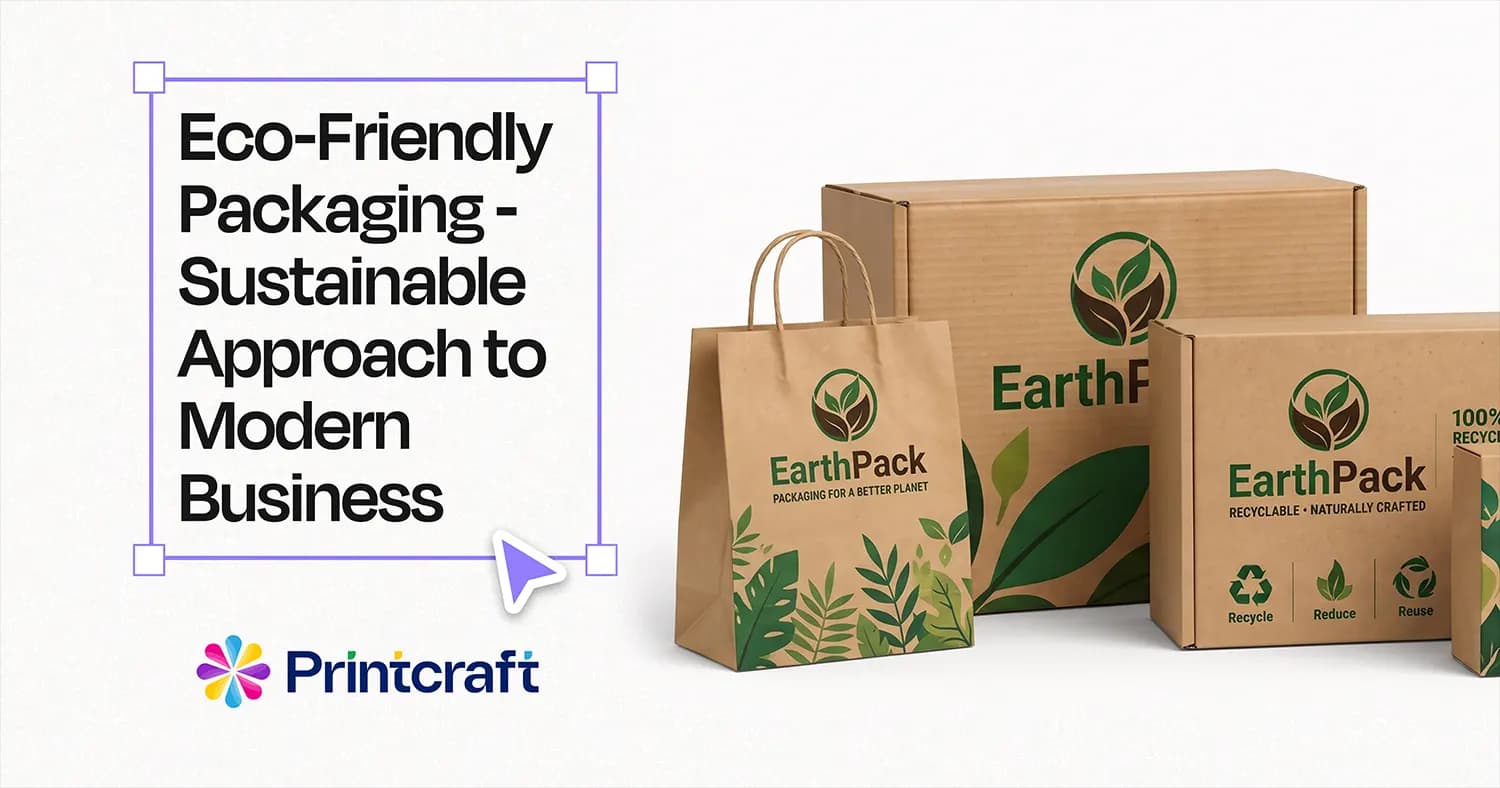
Packaging plays an important role in how businesses protect, store, present, and deliver their products. From retail stores and restaurants to e-commerce companies and manufacturing businesses, almost every industry depends on packaging to keep products safe and create a positive customer experience. However, as environmental concerns continue to grow, businesses are paying more attention to the materials they use and the impact their packaging choices have on the environment.
This growing awareness has increased the demand for eco-friendly packaging. Unlike conventional packaging that may contain materials that are difficult to recycle or dispose of, sustainable packaging focuses on using materials and designs that can help reduce environmental impact. Options such as recycled paper, kraft paper, cardboard, and other responsibly sourced materials allow businesses to explore more environmentally conscious packaging solutions.
Today, customers are also becoming more aware of the products they purchase and the packaging that comes with them. Many prefer businesses that demonstrate responsible practices and make thoughtful packaging decisions. As a result, eco-friendly packaging is no longer limited to environmentally focused brands. It has become an important consideration for restaurants, retail businesses, online stores, corporate organisations, and product manufacturers.
For businesses looking to improve their packaging approach, choosing sustainable materials can be a practical step towards reducing unnecessary waste while maintaining product protection and professional presentation.
Eco-friendly packaging refers to packaging materials and designs developed to reduce environmental impact throughout their lifecycle. This includes considering how packaging is sourced, manufactured, transported, used, and disposed of.
The main objective is to minimise unnecessary material consumption, reduce waste, and encourage responsible resource management without compromising the basic purpose of packaging.
Unlike packaging that relies heavily on difficult-to-recycle materials, eco-friendly alternatives may include recycled paper, cardboard, kraft paper, biodegradable materials, and recyclable packaging solutions.
However, it is important to understand that not every packaging material labelled as environmentally friendly has the same benefits. Some materials are recyclable, while others are biodegradable or compostable under specific conditions. Businesses should understand these differences before selecting packaging for their products.
For example, recycled cardboard can be used to manufacture product boxes, while kraft paper bags provide an alternative to certain plastic shopping bags. Both options can support more responsible packaging decisions when sourced, used, and disposed of appropriately.
Businesses have a responsibility to consider how their operations affect the environment. Packaging is one area where companies can make practical changes without completely redesigning their products or services.
Switching to suitable sustainable packaging materials can offer several environmental and business advantages.
One of the main reasons businesses consider eco-friendly packaging is the opportunity to reduce unnecessary waste. Conventional packaging may contain multiple layers, excessive wrapping, and materials that are difficult to separate for recycling.
Sustainable packaging encourages businesses to evaluate how much material is actually required to protect a product.
For example, a retail business can choose appropriately sized cardboard boxes instead of using oversized packaging with excessive fillers. Similarly, restaurants can explore paper-based takeaway packaging where suitable.
Reducing unnecessary packaging helps limit the amount of material entering the waste stream and encourages more efficient resource use.
Packaging production requires raw materials, energy, and manufacturing processes. Choosing materials made from recycled or responsibly sourced resources can help businesses support more efficient resource management.
Recycled paper and cardboard, for instance, can give previously used materials another purpose instead of relying entirely on newly sourced raw materials.
Businesses can also improve material efficiency by selecting packaging that matches their product dimensions and avoids unnecessary excess.
These decisions may appear small individually, but they can make a meaningful difference when implemented consistently across regular packaging operations.
Customers increasingly notice how businesses package their products. Packaging is often one of the first physical interactions a customer has with a brand, especially when purchasing online or receiving a delivery.
Using environmentally conscious packaging materials can help communicate that a business considers sustainability as part of its operations.
For example, a retail brand using recyclable paper bags or a restaurant offering suitable paper-based takeaway packaging can create a positive impression among customers who value responsible packaging choices.
However, businesses should ensure that their sustainability claims are accurate. Genuine improvements in packaging materials and practices are more valuable than simply adding environmental messages to a product box.
Eco-friendly packaging is not only about changing materials. It also encourages businesses to reconsider their complete packaging process.
Companies can review their packaging sizes, eliminate unnecessary components, improve storage efficiency, and select materials that are easier to recycle.
For example, an e-commerce business may reduce the number of packaging layers used for shipping products. A food business may select packaging that is appropriately designed for its menu items.
These improvements can help businesses develop more efficient packaging systems while supporting their environmental objectives.
Customer expectations are continuously changing, and sustainability has become an important consideration for many purchasing decisions.
People may compare businesses based on product quality, pricing, convenience, and their approach to environmental responsibility.
By exploring suitable eco-friendly packaging options, companies can respond to these expectations and demonstrate that they are paying attention to changing market preferences.
This can be particularly valuable for brands operating in competitive retail, food, hospitality, and e-commerce industries.
Choosing the right sustainable packaging material depends on the product, industry, storage requirements, and intended use. Different materials offer different advantages, so businesses should evaluate their options before making a decision.
Here are some commonly used eco-friendly packaging materials.
Kraft paper is a popular choice for businesses looking for simple and practical packaging with a natural appearance. It is commonly used for shopping bags, food packaging, wrapping paper, product boxes, and takeaway packaging.
Its brown paper finish gives products a minimal and natural look that works well with different branding styles.
Kraft packaging can also be customised with business logos, printed designs, and other branding elements. Depending on its coating and construction, it may be recyclable through suitable paper recycling systems.
Recycled cardboard is manufactured using recovered paper fibres and is widely used across retail, shipping, and product packaging industries.
It is suitable for packaging electronics, clothing, cosmetics, accessories, subscription products, and various retail items.
Businesses can choose customised cardboard boxes according to their product dimensions and branding requirements. Recycled cardboard can also help reduce the demand for virgin paper materials when incorporated into suitable packaging systems.
Corrugated cardboard consists of multiple paper layers, including a fluted middle layer that provides strength and cushioning.
It is commonly used for shipping cartons, e-commerce packaging, storage boxes, and transportation of fragile products.
Its structure makes it suitable for protecting products during handling and delivery. Corrugated cardboard is also widely recyclable where appropriate collection and recycling facilities are available.
Paper bags are commonly used by retail stores, bakeries, restaurants, supermarkets, and fashion brands.
They can serve as an alternative to certain plastic shopping bags and are available in different sizes, styles, and paper qualities.
Businesses can customise paper bags with their logos, brand colours, and promotional messages. This allows them to combine practical packaging with brand visibility.
Their environmental benefits depend on factors such as paper sourcing, production, reuse, and local recycling facilities.
Biodegradable packaging is designed to break down through natural biological processes under suitable environmental conditions.
Depending on the material, it may be used for food containers, protective packaging, disposable products, and other applications.
However, biodegradable does not automatically mean that packaging will decompose quickly in every environment. Temperature, moisture, microorganisms, and disposal conditions can influence the process.
Businesses should check the material specifications and disposal instructions before selecting biodegradable packaging.
Compostable packaging is designed to break down into compost under specified composting conditions.
It may be manufactured using plant-based materials, paper fibres, or other compostable substances.
These packaging options can be useful for food businesses and organisations looking to explore alternatives to certain conventional disposable products.
However, some compostable materials require industrial composting facilities rather than ordinary home composting. Businesses should clearly communicate disposal requirements to customers.
Different industries have different packaging requirements. A food business may prioritise food safety and moisture resistance, while an e-commerce company may focus on product protection during transportation.
Understanding these requirements helps businesses choose sustainable packaging that is both practical and suitable for their operations.
Restaurants, cafés, bakeries, and takeaway outlets use packaging every day to serve and deliver food.
Paper bags, suitable kraft boxes, cardboard food containers, and other food-grade packaging options can help these businesses explore more environmentally conscious alternatives.
For example, a restaurant may use paper-based takeaway bags, while a bakery can select cardboard boxes for cakes, pastries, and other baked products.
Food packaging must always meet relevant food-contact safety requirements. Businesses should also consider grease resistance, moisture protection, ventilation, and temperature requirements when selecting materials.
Online shopping has increased the demand for shipping boxes, protective packaging, and delivery materials.
E-commerce companies can explore recycled cardboard boxes, corrugated cartons, paper-based fillers, and appropriately sized shipping packaging.
Using packaging that closely matches product dimensions can help reduce unnecessary material consumption and improve storage and transportation efficiency.
For fragile products, businesses should ensure that sustainable protective materials provide sufficient cushioning to prevent damage during delivery.
Retail businesses often use packaging to improve product presentation and provide customers with convenient shopping experiences.
Custom paper bags, kraft packaging, recycled cardboard boxes, and paper wrapping can be suitable options for different retail products.
Clothing brands, gift shops, cosmetics stores, and accessory retailers can customise their packaging with branded printing to maintain a consistent identity.
Corporate gifts are commonly used for employee appreciation, business events, promotional campaigns, and client relationships.
Businesses can explore recycled cardboard gift boxes, kraft packaging, paper bags, and other suitable materials to create attractive gift presentations.
Custom printed packaging can include company logos, event details, and brand colours while maintaining a more environmentally conscious approach.
Cosmetic brands require packaging that protects their products while creating an attractive presentation.
Recycled paperboard boxes, cardboard sleeves, and responsibly sourced paper packaging can be used for selected cosmetic and skincare products.
Businesses can also consider reducing unnecessary outer packaging while ensuring that the primary product container remains protected.
Selecting sustainable packaging requires more than choosing a material based on its appearance. Businesses need to consider product requirements, durability, environmental impact, storage, and customer convenience.
Here are some important factors to evaluate before making a decision.
Start by identifying what you are packaging and what level of protection it needs.
Food products may require moisture-resistant and food-safe materials, while electronics and fragile items need stronger packaging and suitable cushioning.
Selecting materials according to the product helps ensure that sustainability does not compromise packaging performance.
Not every material marketed as eco-friendly has the same environmental characteristics.
Businesses should review material specifications, recycled content, sourcing information, and relevant certifications before selecting a packaging supplier.
For example, recycled paper, recyclable cardboard, biodegradable packaging, and certified compostable materials are different categories and should not be treated as interchangeable.
A packaging material may be technically recyclable, but its actual recycling depends on local collection systems and material conditions.
Businesses should consider whether customers can easily dispose of the packaging through available recycling or composting facilities.
Clear disposal instructions can also help customers understand how to handle packaging after use.
Sustainable packaging should still perform its primary function of protecting products.
Weak packaging can result in damaged products, customer complaints, and additional replacement shipments. These issues may create more waste than using an appropriately designed package in the first place.
The selected material should provide the strength and protection required for storage, handling, and transportation.
Packaging should be easy to assemble, store, handle, and transport.
Businesses can explore designs that use fewer materials without compromising structural strength. Customised packaging dimensions can also help reduce empty space and unnecessary fillers.
Sustainable packaging does not have to look plain or unattractive.
Businesses can use custom printing, simple graphics, brand colours, and carefully selected typography to create professional packaging.
A well-designed package helps maintain brand identity while supporting more responsible material choices.
Packaging is not only responsible for protecting products; it also provides an opportunity to communicate a brand's identity.
Custom printing allows businesses to incorporate their logos, brand colours, product information, and other visual elements into packaging designs.
For eco-friendly packaging, printing should also be considered carefully. Businesses can explore suitable inks, coatings, and printing processes that are compatible with the selected packaging material and its intended disposal method.
For example, a retail brand can use a customised kraft paper bag featuring its logo and website. Similarly, a restaurant can use branded cardboard packaging to maintain a consistent appearance across takeaway orders.
Some important customisation options include:
Businesses should ensure that their printing choices do not interfere with recyclability or compostability claims. The complete packaging construction, including inks, adhesives, and coatings, should be considered.
Although sustainable packaging is becoming more popular, businesses sometimes misunderstand what makes a packaging material environmentally responsible.
Let's look at some common misconceptions.
Paper packaging is often considered a more sustainable option, but its environmental impact depends on how the paper is sourced, manufactured, used, and disposed of.
Recycled content and responsible sourcing can make a difference. Similarly, certain coatings or mixed materials may affect recyclability.
These terms are related but have different meanings.
Biodegradable materials can break down through biological processes under suitable conditions, while compostable materials are designed to break down under specified composting conditions and meet additional requirements.
Businesses should understand the difference before making environmental claims.
The cost of eco-friendly packaging depends on the material, design, production quantity, printing requirements, and supplier.
Some alternatives may have higher initial costs, while others can be cost-effective depending on order volume and packaging design.
Reducing unnecessary materials and selecting appropriately sized packaging may also help businesses manage their overall packaging expenses.
Sustainable packaging can be professionally designed and customised.
Kraft bags, recycled cardboard boxes, and other paper-based packaging can feature attractive printing, clean layouts, and distinctive branding.
Businesses do not need to compromise product presentation when exploring more environmentally conscious packaging solutions.
Choosing the right printing and packaging partner is important when businesses want packaging that combines product protection, professional presentation, and suitable material choices.
At Printcraft, we understand that packaging is an important part of business operations and brand identity. Whether you run a restaurant, retail store, e-commerce business, or corporate organisation, selecting the right packaging can help improve how your products are presented and delivered.
We provide customised printing and packaging solutions designed around different business requirements.
Here is what businesses can expect from Printcraft:
Whether you need customised paper bags, cardboard boxes, food packaging, or other printed packaging materials, Printcraft can help you explore solutions that align with your brand and packaging needs.
When selecting eco-friendly materials, businesses should confirm the recycled content, material specifications, and relevant recyclability or compostability details for their chosen packaging.
Eco-friendly packaging is becoming an important consideration for businesses looking to reduce unnecessary waste and adopt more responsible packaging practices. From kraft paper bags and recycled cardboard boxes to biodegradable and compostable alternatives, different materials offer opportunities to improve packaging choices across various industries.
However, selecting sustainable packaging requires careful consideration of product protection, material quality, disposal options, and printing requirements. Businesses should focus on solutions that meet their operational needs while supporting their environmental objectives.
Custom printing can further improve packaging presentation by incorporating brand logos, colours, and business information without losing the professional appearance customers expect.
Whether you operate a restaurant, retail store, e-commerce company, or corporate organisation, choosing suitable eco-friendly packaging can be a valuable step towards more responsible business practices.
Looking for customised and eco-friendly packaging solutions in Dubai? Contact Printcraft today to discuss your packaging requirements and explore professional printing solutions for your business.
1. What is the difference between eco-friendly and sustainable packaging?
Eco-friendly packaging generally refers to packaging designed to reduce environmental impact. Sustainable packaging takes a broader approach by considering material sourcing, manufacturing, transportation, usage, and disposal throughout the packaging lifecycle.
2. Is kraft paper considered eco-friendly packaging?
Kraft paper can be an environmentally conscious packaging option, particularly when it is responsibly sourced and recyclable. Its actual environmental impact depends on its production process, coatings, printing, and disposal.
3. What industries can benefit from eco-friendly packaging?
Restaurants, cafés, retail stores, e-commerce companies, cosmetic brands, bakeries, and corporate organisations can all explore eco-friendly packaging options. The suitable material depends on the products being packaged and their protection requirements.
4. Is recycled cardboard suitable for product packaging?
Yes, recycled cardboard is widely used for product boxes, shipping cartons, retail packaging, and storage solutions. It can provide suitable protection while incorporating recovered paper fibres into packaging production.
5. Can eco-friendly packaging be customised with company branding?
Yes, many sustainable packaging materials can be customised with business logos, brand colours, product information, and promotional messages. Printing options should be selected according to the material and its recycling or composting requirements.
6. What is the difference between recyclable and biodegradable packaging?
Recyclable packaging can be collected and processed into materials for new products through suitable recycling systems. Biodegradable packaging is designed to break down through biological processes under suitable conditions. These terms describe different material properties.
7. Is compostable packaging suitable for food businesses?
Compostable packaging can be suitable for certain food applications, including takeaway containers and disposable food packaging. Businesses should check food-contact safety, temperature requirements, and whether suitable composting facilities are available.
8. How can businesses reduce unnecessary packaging waste?
Businesses can reduce packaging waste by selecting appropriately sized boxes, avoiding excessive wrapping, using fewer packaging components, exploring recycled materials, and choosing designs that support reuse or recycling where practical.
Looking for Custom Eco-Friendly Packaging in Dubai?
Make a responsible packaging choice without compromising your brand presentation. Printcraft offers customised packaging solutions, including paper bags, cardboard boxes, and food packaging tailored to your business needs.
Contact Printcraft today to discuss your requirements and get a quote for your custom packaging.