
Loading...
Tooba Asad • 21 Nov 2026
In countries like the UAE, outdoor advertising materials are regularly exposed to intense sunlight, high temperatures, dust, humidity, and occasional strong winds. These environmental conditions can affect banner quality, causing colours to fade, materials to weaken, and printed surfaces to deteriorate over time.
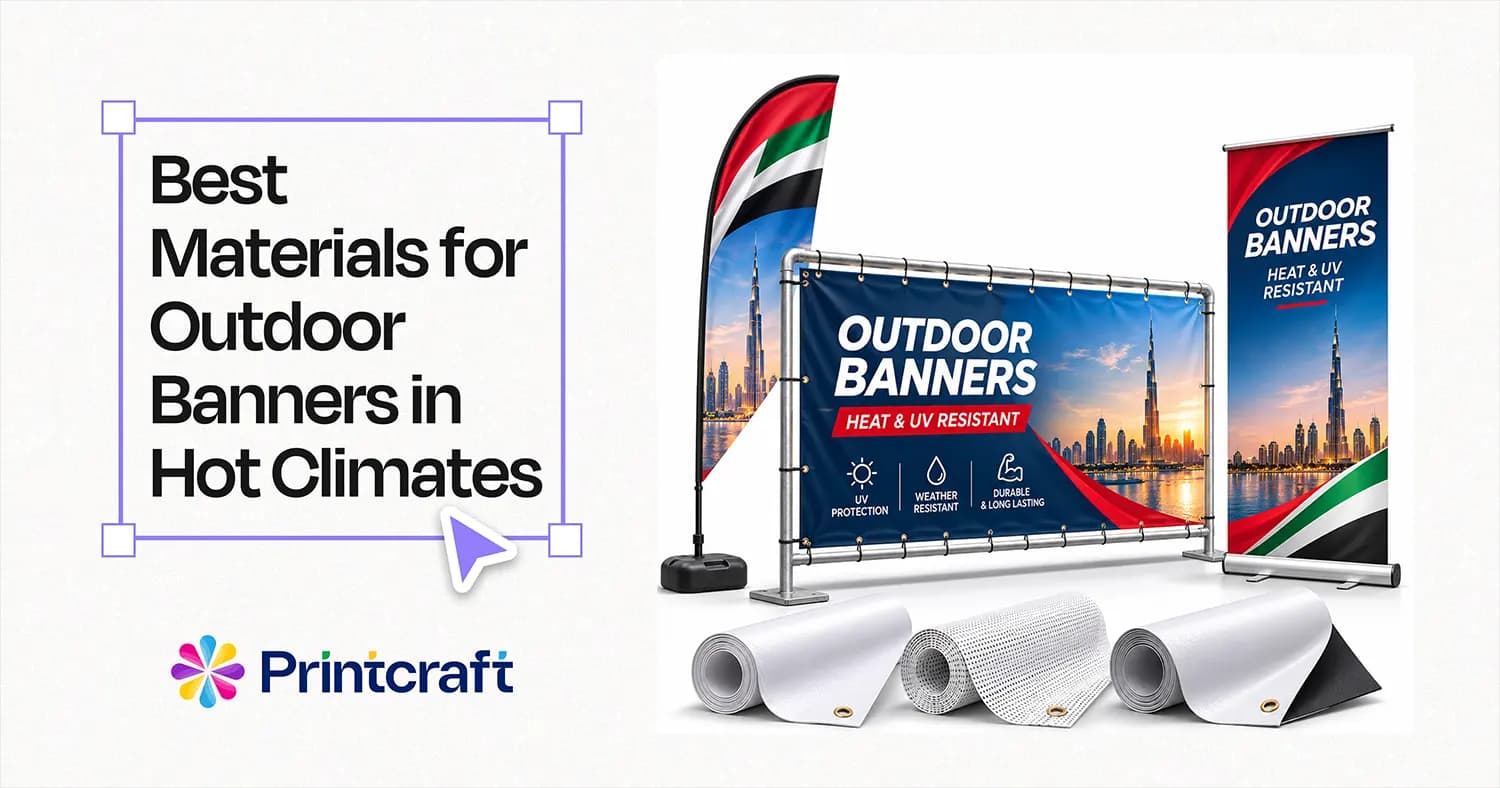
Outdoor banners are an effective way for businesses to promote their products, services, events, and special offers. From retail promotions and construction sites to exhibitions and corporate advertising, banners help brands communicate their messages to a large audience. However, when banners are displayed outdoors in hot climates, selecting the right material becomes extremely important.
In countries like the UAE, outdoor advertising materials are regularly exposed to intense sunlight, high temperatures, dust, humidity, and occasional strong winds. These environmental conditions can affect banner quality, causing colours to fade, materials to weaken, and printed surfaces to deteriorate over time.
Choosing the right banner material can help businesses maintain attractive advertising displays while improving durability and reducing the need for frequent replacements.
Different materials offer different advantages depending on their intended application. PVC flex banners, mesh banners, vinyl materials, and fabric banners are among the commonly used options for outdoor advertising. Understanding their features and limitations can help businesses make better printing decisions.
In this guide, we will explore the best materials for outdoor banners in hot climates, their benefits, common applications, and the factors to consider when selecting banners for outdoor advertising in the UAE.
Outdoor banners are designed to remain visible and functional in environments where weather conditions can change throughout the day. In hot regions, continuous exposure to sunlight and high temperatures can gradually affect the material and printed graphics.
For example, low-quality banner materials may become brittle, lose colour intensity, or develop surface damage after prolonged exposure to harsh weather conditions.
Similarly, banners installed in open areas may experience additional pressure from wind, dust, and moisture.
Selecting suitable materials helps businesses achieve better performance and maintain a professional advertising appearance.
Here are some important reasons why material selection matters:
The right material depends on where the banner will be installed, how long it needs to remain outdoors, and the environmental conditions it will face.
PVC flex is one of the most widely used materials for outdoor banners. It is made from polyvinyl chloride and is commonly selected for advertising displays because of its flexibility, strength, and suitability for large-format printing.
PVC flex banners are available in different thicknesses and qualities, allowing businesses to choose suitable options for various advertising requirements.
They are particularly useful for outdoor promotions where businesses need large, colourful, and highly visible displays.
PVC flex banners are commonly used for shop advertisements, outdoor promotional campaigns, construction site branding, event backdrops, roadside displays, and retail advertising.
For hot climates, businesses should select suitable outdoor-grade PVC flex material with compatible UV-resistant inks and protective treatments where required.
Although PVC flex is a popular option, its performance depends on material quality, printing technology, installation, and actual weather exposure.
Mesh banners are designed with small perforations that allow air to pass through the material. This construction makes them particularly useful for outdoor locations where wind pressure can affect traditional solid banners.
In open areas, large solid banners can experience significant wind resistance, potentially placing additional stress on their mounting points.
Mesh banners help reduce this pressure by allowing airflow through their surface.
Mesh banners are frequently used on construction site fencing, building scaffolding, outdoor event barriers, stadium fencing, and large advertising structures.
For businesses operating in the UAE, mesh banners can be a practical option for exposed locations where wind conditions need to be considered alongside high temperatures.
However, the perforated surface may reduce image sharpness and colour density compared with solid banner materials. Businesses should consider viewing distance and design requirements before selecting this option.
Vinyl banners are another popular choice for outdoor advertising. They are made from flexible synthetic materials and can be produced in different thicknesses and finishes.
Vinyl offers good resistance to moisture and can provide reliable performance for many outdoor promotional applications when the appropriate grade is selected.
Its flexibility also makes it suitable for different display formats and installation requirements.
Vinyl banners are commonly used for retail advertising, promotional events, business openings, outdoor exhibitions, trade shows, and temporary marketing campaigns.
For hot climates, businesses should consider outdoor-grade vinyl with appropriate UV-resistant printing and finishing.
It is also important to distinguish between different vinyl specifications because not every vinyl product is designed for prolonged outdoor exposure.
Fabric banners offer a different appearance compared with traditional PVC and vinyl options. They are commonly manufactured using polyester or other suitable textile materials.
Their smooth surface can produce attractive graphics and a professional visual finish, making them popular for exhibitions, promotional events, and branded displays.
Some fabric banners are designed for outdoor use, while others are intended primarily for indoor environments. Therefore, businesses should always check the material specifications before selecting fabric for outdoor installations.
Fabric banners are commonly used for corporate events, exhibitions, promotional displays, branded backdrops, and outdoor festivals.
For UAE outdoor applications, businesses should select fabric specifically designed for exterior use and consider its resistance to UV exposure, moisture, and environmental conditions.
Standard indoor display fabrics may not be suitable for continuous exposure to intense sunlight.
Blockout banners are manufactured using materials designed to prevent light from passing through the printed surface. Many blockout banners include an internal layer that helps prevent graphics from showing through from the opposite side.
This makes them particularly suitable for double-sided advertising and locations where lighting conditions may affect the visibility of printed content.
Blockout banners are used for hanging promotional displays, retail advertising, event signage, exhibition branding, and double-sided outdoor advertisements.
When selecting blockout banners for hot climates, businesses should check their outdoor suitability, temperature tolerance, UV resistance, and printing specifications.
Selecting the right material involves more than comparing durability or printing prices. Businesses should evaluate the intended advertising location and the conditions the banner will experience.
Here are some important factors to consider before placing an outdoor banner printing order.
Direct sunlight is one of the biggest challenges for outdoor banners in hot climates.
Continuous UV exposure can gradually affect printed colours and weaken certain materials.
Choose materials and printing inks specifically designed for outdoor applications. UV-resistant inks and suitable protective coatings can help maintain colour quality for longer periods.
If the banner will be installed in an area receiving direct sunlight throughout the day, discuss the expected exposure with your printing provider.
High temperatures can affect the flexibility and performance of certain banner materials.
Some lower-quality materials may become brittle, deform, or experience changes in their physical properties when exposed to temperatures outside their recommended operating range.
Before choosing a material, review its technical specifications and confirm that it is suitable for the expected environmental conditions.
Wind is another important consideration, particularly for large banners installed in open spaces.
Solid banners can experience significant wind pressure, placing stress on their edges, eyelets, frames, and mounting structures.
Mesh banners may be more suitable for exposed locations because their perforated construction allows airflow.
Regardless of material, proper installation and secure mounting are essential for outdoor banner safety.
Although hot climates are often associated with dry weather, outdoor banners may still experience humidity, rain, cleaning water, and condensation.
Selecting a moisture-resistant material can help prevent unnecessary damage.
PVC and suitable vinyl materials are commonly used for these applications because of their resistance to water exposure.
A banner is only effective when its message remains clear and visually attractive.
High-quality printing ensures that text, images, logos, and promotional graphics remain sharp and readable.
Businesses should consider the printing technology, ink compatibility, resolution, and protective finishing when selecting outdoor banners.
The location where a banner will be installed can determine which material is most suitable.
For example:
Understanding the installation environment helps prevent material selection mistakes.
Budget is another important consideration when ordering outdoor banners.
Temporary promotional campaigns may not require the same material specifications as long-term outdoor advertising.
Businesses should consider how frequently the banner will be used, the expected display period, and the cost of potential replacements.
Choosing a suitable material based on actual requirements can provide better long-term value than simply selecting the cheapest available option.
Even high-quality outdoor banners require proper handling, installation, and maintenance to maintain their appearance.
Here are some practical tips to improve their lifespan.
Choose Outdoor-Grade Materials: Always select materials specifically designed for exterior applications rather than using standard indoor display materials.
Use UV-Resistant Printing: Suitable UV-resistant inks and protective treatments can help reduce colour fading caused by sunlight.
Install Banners Securely: Use appropriate frames, mounting systems, eyelets, and tensioning methods to prevent excessive movement and stress.
Avoid Unnecessary Folding: Repeated folding can create creases and damage certain printed surfaces. Roll banners carefully when storing them.
Clean Regularly: Remove accumulated dust and dirt using cleaning methods recommended by the material manufacturer.
Store Properly: Keep unused banners in a clean, dry environment away from direct sunlight and extreme temperatures.
Inspect Mounting Points: Check eyelets, edges, and fixing points regularly to identify potential damage before it becomes worse.
Following these practices can help businesses maintain their outdoor advertising materials in better condition.
Businesses sometimes focus entirely on design and price while overlooking important technical details.
Avoid these common mistakes when selecting outdoor banner printing services.
Working with an experienced printing company can help businesses avoid these issues and select suitable materials for their advertising needs.
Professional printing is essential for producing banners that look attractive and perform reliably in outdoor environments.
The right printing provider can help businesses choose appropriate materials, printing methods, finishes, and installation specifications according to their requirements.
From promotional banners and retail advertisements to construction site displays and corporate event branding, professional printing ensures better control over design quality and production consistency.
Businesses should also discuss the intended display location, exposure to sunlight, expected usage period, and mounting requirements before finalising their order.
These details help determine the most suitable printing solution for the project.
Choosing the right material is essential for creating outdoor banners that maintain their appearance in hot climates. Whether you need PVC flex banners for promotional campaigns, mesh banners for construction sites, or customised vinyl displays for retail advertising, selecting suitable materials can improve the performance of your printed advertisements.
At Printcraft, we understand the importance of high-quality printing for business promotion and brand visibility. We provide customised printing solutions to help businesses create professional marketing and advertising materials.
Whether you are planning an outdoor promotional campaign, organising a corporate event, or improving your storefront branding, our printing solutions can help bring your advertising ideas to life.
Contact Printcraft today to discuss your outdoor banner printing requirements in Dubai.
1. What is the best material for outdoor banners in hot climates?
PVC flex, outdoor-grade vinyl, and suitable mesh materials are popular choices for outdoor banners in hot climates. The best option depends on sunlight exposure, wind conditions, installation location, and expected usage period.
2. Are PVC flex banners suitable for the UAE weather?
Yes. Outdoor-grade PVC flex banners are commonly used for advertising in the UAE. Choosing suitable material specifications, UV-resistant inks, and proper installation can help improve their performance in hot weather.
3. Which outdoor banner material is best for direct sunlight?
Outdoor-grade PVC and vinyl materials with suitable UV-resistant printing are commonly used in locations exposed to direct sunlight. Protective coatings can also help reduce fading, depending on the application.
4. Are mesh banners better than PVC banners for windy areas?
Mesh banners can be a better option for windy locations because their perforated construction allows air to pass through, reducing wind pressure compared with solid banners. However, installation quality remains essential.
5. How long do outdoor banners last in hot weather?
The lifespan of outdoor banners varies depending on material quality, UV exposure, printing technology, installation, and maintenance. There is no fixed lifespan that applies to every banner.
6. Can outdoor banners fade in the sun?
Yes. Continuous exposure to UV radiation can gradually cause printed colours to fade. Using outdoor-grade inks, UV-resistant printing, and suitable protective treatments can help maintain colour quality.
7. What is the difference between PVC and vinyl banners?
PVC is a type of plastic material, and many vinyl banners are manufactured using PVC-based materials. The terms are sometimes used interchangeably in the printing industry, although product specifications and constructions can differ.
8. Are fabric banners suitable for outdoor advertising?
Some fabric banners, particularly suitable outdoor-grade polyester options, can be used for exterior advertising. However, standard indoor fabric displays may not withstand prolonged sunlight and weather exposure.