
Loading...
Loading...
Tooba Asad • 25 Oct 2026
In today's competitive business world, the way a company presents its products and communicates with customers can make a significant difference. From attractive packaging to professional marketing materials, printing and packaging play an important role in building a strong brand identity. Businesses need more than just printed materials or boxes; they need solutions that reflect their brand values, meet their practical requirements, and create a consistent customer experience.
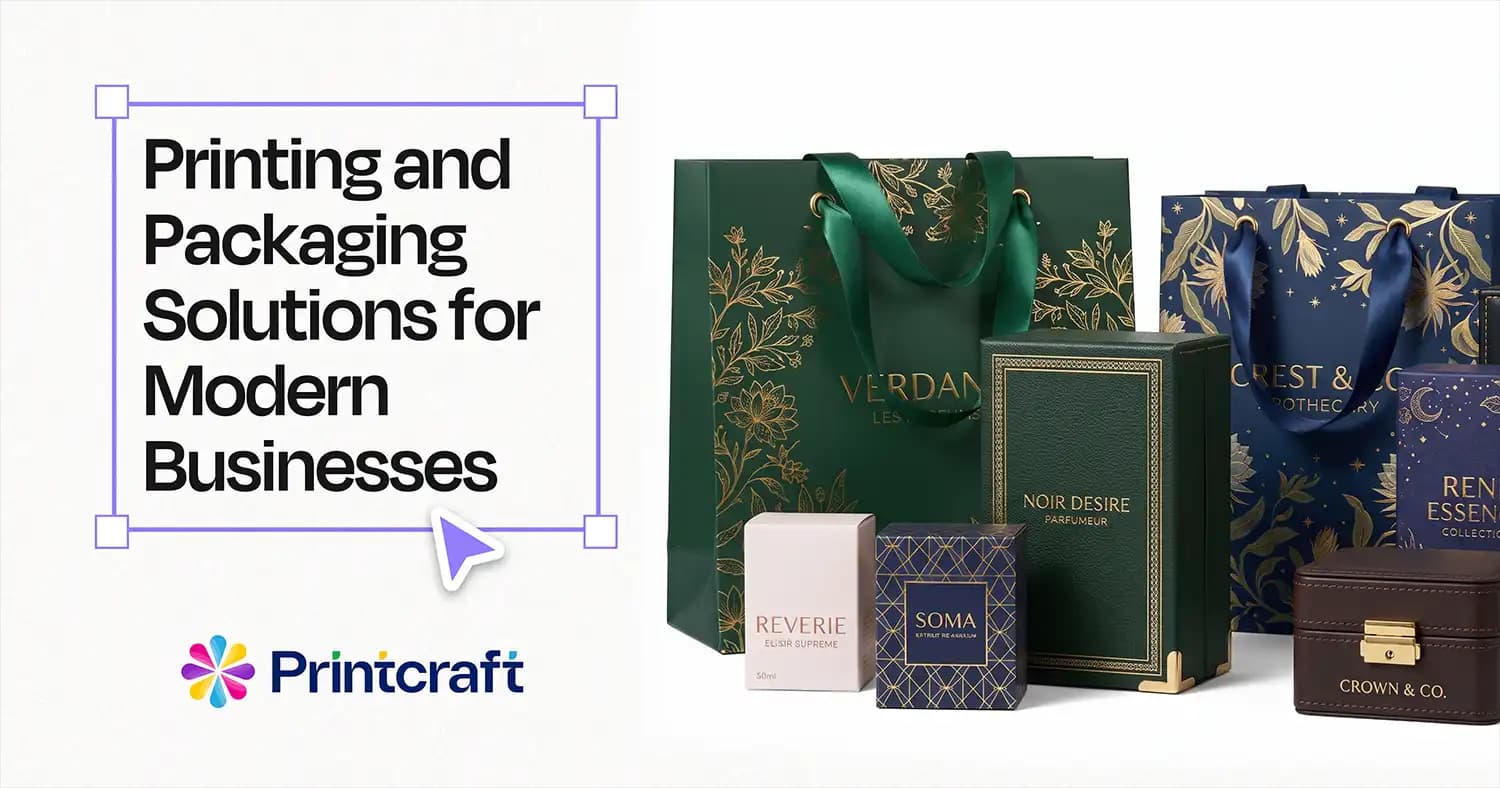
A reliable printing and packing solution provider helps businesses manage these needs through a wide range of printing services, packaging options, and customised solutions. Whether a business requires product packaging, corporate stationery, promotional materials, paper bags, or branded merchandise, working with an experienced provider can make the process easier and more organised.
For businesses in Dubai, where competition exists across retail, hospitality, e-commerce, corporate services, and many other industries, choosing the right printing and packaging partner can support better presentation, stronger brand recognition, and smoother day-to-day operations.
A printing and packing solution provider offers services that help businesses create printed materials and packaging according to their branding, marketing, and operational requirements. Instead of coordinating with multiple suppliers for different printing and packaging needs, businesses can explore several solutions through one provider.
Printing services may include business cards, brochures, flyers, catalogues, posters, labels, stickers, corporate stationery, and promotional materials. Packaging solutions can include custom boxes, paper bags, product packaging, food packaging, and other packaging formats designed around specific products and business needs.
The exact services available depend on the provider, materials, and project requirements. A suitable partner should help businesses understand their options, select appropriate materials, choose finishing techniques, and prepare artwork for the required application.
The goal is to create printed and packaged products that look professional, serve their intended purpose, and maintain consistency with the company's brand identity.
Printing and packaging are often among the first physical ways customers interact with a brand. A well-designed brochure can communicate professionalism, while carefully planned packaging can improve how a product is presented and received.
A consistent brand identity helps customers recognise a business across different platforms and touchpoints. Using the same logo, colours, typography, and visual style across packaging, business cards, brochures, labels, and promotional materials creates a more unified appearance.
For example, a retail business can use branded shopping bags, product boxes, and labels to maintain a consistent look throughout the customer journey. Similarly, a corporate company can use coordinated stationery, presentation folders, and marketing materials to create a professional impression during meetings and events.
Packaging does more than hold a product. It influences how the product is displayed, handled, stored, and presented to customers. Suitable packaging can help products look organised, attractive, and appropriate for their intended market.
Custom packaging also allows businesses to consider the product's dimensions, weight, fragility, and presentation requirements. Choosing the right size and material can help reduce unnecessary packaging and improve the overall appearance of the finished product.
Printed materials continue to serve an important role in business marketing. Flyers, brochures, catalogues, posters, banners, and promotional products can help companies communicate offers, introduce services, and reach customers at events, exhibitions, retail locations, and business meetings.
When these materials use consistent branding and clear messaging, they can support recognition and make important information easier to understand.
Professional presentation can influence how customers perceive a business. Clear printing, appropriate materials, readable information, and well-finished packaging show that attention has been given to the details.
Although attractive packaging alone cannot guarantee customer loyalty, it can contribute to a positive experience when combined with product quality, reliable service, and effective communication.
Every business has different communication and marketing requirements. A printing and packing solution provider should help customers identify suitable products according to their intended use, design, quantity, and budget.
Business cards, letterheads, envelopes, folders, and other stationery items help businesses maintain a professional image. These materials are useful for meetings, networking events, client communication, presentations, and everyday office activities.
Consistent colours, typography, and logo placement can make corporate stationery look more organised and recognisable. Businesses can also consider different paper stocks and finishes depending on the desired appearance and practical requirements.
Brochures and flyers allow businesses to present products, services, offers, and company information in a convenient printed format. Catalogues can provide more detailed product information, while brochures can introduce a company or explain its services.
The design should focus on readability, logical information flow, and clear calls to action. Choosing suitable paper, print quality, and finishing options can help the material match the intended audience and distribution method.
Posters and banners are commonly used for advertising, exhibitions, retail displays, corporate events, and promotional campaigns. Their purpose is to communicate information quickly while attracting attention in a particular environment.
The right material and printing specifications depend on where the display will be used. Indoor displays may have different requirements from outdoor applications, where exposure to weather and handling must be considered.
Labels and stickers can provide product information, display branding, identify packaging, or support promotional activities. They are used across retail products, food packaging, bottles, jars, boxes, and many other applications.
When selecting labels, businesses should consider the surface they will be applied to, the required size, the amount of information, and whether the product may be exposed to moisture, heat, or frequent handling.
Branded promotional materials can help businesses create a consistent identity across events, campaigns, employee appreciation activities, and client gifting. Depending on the available options, these may include printed products, branded stationery, customised packaging, and other promotional items.
The most suitable choice depends on the audience, occasion, intended use, and budget. Clear branding and practical usefulness can make promotional products more relevant to recipients.
Packaging requirements vary according to the product, industry, customer expectations, and delivery method. A reliable provider should help businesses explore suitable packaging formats rather than treating every product in the same way.
Custom product boxes are used by retail brands, gift businesses, cosmetics companies, electronics sellers, and many other industries. They can be designed around product dimensions and brand requirements, helping businesses present products in a consistent and organised manner.
Businesses can explore different box structures, materials, printing options, and finishing techniques depending on the product and the required level of presentation.
Restaurants, cafés, bakeries, takeaway businesses, and food brands need packaging that suits the type of food being served or delivered. Food boxes, paper bags, and other suitable packaging formats can support convenient handling and a consistent brand presentation.
Material selection is particularly important for food applications. Businesses should confirm that the chosen packaging is appropriate for its intended food contact, temperature, moisture exposure, and handling requirements.
Branded paper bags can help retailers present purchases neatly while keeping their visual identity consistent. They may be used by clothing stores, gift shops, boutiques, cosmetics brands, and other retail businesses.
The appropriate bag size, paper quality, handle style, and finishing depend on the weight and type of products being carried. Well-planned bag design can also make logos and other brand elements easier to recognise.
Luxury packaging is often used for perfumes, watches, jewellery, corporate gifts, premium products, and special occasions. Its appearance may include rigid structures, customised inserts, distinctive colours, textured materials, or refined finishing details.
The objective is to create packaging that complements the product without compromising its protection or practicality. Businesses should consider both the external presentation and the way the product fits inside the box.
Online businesses need packaging that supports product protection, handling, storage, and delivery. The right packaging depends on the product's size, fragility, weight, shipping conditions, and unboxing requirements.
Packaging that is too large can use unnecessary material, while packaging that does not provide enough protection can increase the risk of damage. Businesses should choose dimensions and materials carefully and test packaging for products that are particularly fragile or valuable.
Customisation gives businesses more control over how their products and communications appear. Instead of relying entirely on generic materials, companies can choose specifications that better reflect their identity and requirements.
Using brand colours and logo placement consistently across printed materials and packaging creates a recognisable visual identity. Customers may encounter a business through a brochure, shopping bag, product box, or event display. A coordinated appearance helps connect these different experiences.
Materials and finishing techniques influence both appearance and usability. Depending on the product, businesses may consider matte or gloss finishes, lamination, foil details, embossing, or other available options.
Not every finish suits every application. The best choice depends on the design, material, expected handling, intended audience, and budget. Discussing these factors before production helps avoid selecting an option that looks attractive but does not meet the project's practical needs.
Custom dimensions and internal arrangements can help packaging fit a product more appropriately. For delicate items, suitable inserts may help limit movement. For retail products, the packaging may need enough space for labels, product information, and other required details.
Businesses should confirm measurements and artwork before production to help minimise errors and ensure that the finished packaging meets expectations.
Customers interact with printed materials and packaging at different stages, from discovering a brand to receiving a purchase or attending an event. Clear information, attractive presentation, and convenient packaging can contribute to a smoother experience.
For corporate gifts and premium products, the packaging can also support the purpose of the occasion by presenting the item in a thoughtful and professional way.
Choosing a provider involves more than comparing prices. Businesses should consider whether the provider understands the project, communicates clearly, and can offer appropriate options for the required application.
A provider offering multiple printing and packaging solutions may make it easier to coordinate related projects. This can be particularly useful when a business needs packaging, labels, brochures, and promotional materials for the same campaign.
Before proceeding, confirm which services and product types are available and whether any specialist requirements need separate arrangements.
Ask about available materials, print specifications, finishing options, and suitable production methods. The correct choice depends on the project's purpose, quantity, design complexity, and expected use.
Where possible, reviewing a sample or proof can help businesses assess colours, readability, material quality, and finishing before approving a larger order.
A dependable provider should explain the available options, request the necessary artwork and specifications, and clarify important details before production begins.
Good communication is especially important for customised projects, where small differences in dimensions, colours, finishing, or product quantities can affect the final result.
Printing and packaging costs depend on factors such as material, dimensions, printing coverage, finishing, order quantity, and production requirements. Businesses should compare quotations based on equivalent specifications rather than looking at the total price alone.
It is also helpful to confirm minimum order quantities, setup costs where applicable, production timelines, delivery arrangements, and any additional charges before confirming an order.
Correct artwork preparation helps reduce production problems. Businesses should check logo quality, text readability, colour specifications, dimensions, bleed requirements, and final file formats.
Reviewing a proof before production can help identify errors early. Any changes to artwork or specifications should be confirmed clearly to ensure that the final product matches the approved design.
Dubai is home to businesses across retail, hospitality, food services, real estate, e-commerce, corporate services, events, and many other industries. Each sector has different requirements for communicating with customers and presenting products.
A restaurant may need branded takeaway packaging and menus. A retail store may require shopping bags, labels, and product boxes. A corporate company may need brochures, stationery, exhibition materials, and customised gift packaging.
Working with a suitable printing and packing solution provider allows businesses to explore these needs in a more organised way. It can also help maintain consistency when different printed products are required for a launch, seasonal campaign, exhibition, or company event.
The key is to choose solutions based on actual business requirements instead of selecting materials or finishes solely because they are popular. A practical, well-planned approach can support professional presentation while keeping costs and production requirements under control.
Even a well-designed project can face problems if the specifications are not checked carefully. Avoiding a few common mistakes can make the process more efficient.
Choosing materials without considering their use: A material suitable for a brochure may not work for a heavy product or food packaging. Consider the environment, weight, moisture exposure, and handling requirements before making a decision.
Ignoring product dimensions: Incorrect measurements can result in packaging that is too tight, too loose, or unsuitable for the product. Confirm dimensions and internal space before approving the final design.
Using low-quality artwork: Blurry logos, incorrect colours, small text, and poorly prepared files can affect the final appearance. Always provide suitable artwork and review the proof carefully.
Focusing only on the lowest price: A low quotation may not include the same materials, finish, quantity, or specifications as another offer. Compare the details to understand the actual value.
Ordering without checking the final proof: Spelling mistakes, incorrect contact information, and layout issues can be costly once production is complete. Review all content and design details before giving approval.
Leaving production planning until the last minute: Custom printing and packaging may require artwork preparation, proof approval, material selection, and production time. Share deadlines early and confirm the expected timeline with the provider.
Printing and packaging continue to evolve as businesses respond to changing customer expectations, new technologies, and environmental concerns. Customisation, improved design flexibility, and more efficient production processes are important considerations for many companies.
Businesses are also paying greater attention to packaging materials and waste reduction. Depending on the product and its requirements, options may include recyclable materials, appropriately sized packaging, and designs that avoid unnecessary components. Environmental claims should always be verified against the actual material and its local recycling conditions.
Digital tools and improved artwork workflows can also help businesses manage design revisions and maintain consistency across different products. However, technology alone does not guarantee a good result. The final quality still depends on suitable specifications, careful design, material selection, and production checks.
Businesses that regularly review their printing and packaging requirements can identify opportunities to improve presentation, reduce avoidable waste, and make their materials more practical for customers and employees.
At Printcraft.ae, businesses can explore printing and packaging solutions designed around their branding, product presentation, marketing, and operational needs. From printed marketing materials to customised packaging, the right specifications can help create a consistent appearance across different business touchpoints.
Every project has its own requirements. A business preparing product boxes may need a different material and finishing approach from a company ordering brochures, event banners, or branded shopping bags. Considering the purpose, quantity, design, and intended use helps identify the most suitable options.
Businesses should discuss their project requirements, preferred dimensions, artwork, material preferences, and expected quantities before confirming an order. This makes it easier to understand the available choices and plan a solution that fits the project.
Whether you are preparing packaging for retail products, printing materials for a marketing campaign, or branded items for a corporate event, a well-planned approach can help your business present its brand more professionally.
A reliable printing and packing solution provider can support businesses with the materials they need to communicate clearly, present products professionally, and maintain a consistent brand identity. From business stationery and promotional printing to custom boxes, shopping bags, food packaging, and luxury gift packaging, each solution should be selected according to its intended purpose.
The best results come from combining thoughtful design with appropriate materials, accurate specifications, clear communication, and careful proofing. Businesses should evaluate quality, service options, pricing, and production requirements before selecting a provider.
For companies operating in Dubai, investing time in the right printing and packaging decisions can support stronger presentation across customer interactions, product deliveries, corporate events, and marketing campaigns.
1. What does a printing and packing solution provider do?
A printing and packing solution provider helps businesses source or create printed materials and packaging according to their requirements. Depending on the services offered, this may include business cards, brochures, banners, labels, stickers, product boxes, shopping bags, and promotional materials.
2. Why should a business use professional printing and packaging services?
Professional services can help businesses choose suitable materials, prepare artwork, maintain consistent branding, and produce materials that meet their intended purpose. They can also help clarify specifications before an order moves into production.
3. What printing services do businesses commonly need?
Common requirements include business cards, corporate stationery, flyers, brochures, catalogues, posters, banners, labels, stickers, and promotional printing. The right combination depends on the business's industry, marketing activities, and communication needs.
4. What types of packaging can businesses customise?
Depending on the provider's capabilities, businesses may be able to customise product boxes, retail bags, food packaging, gift boxes, luxury packaging, and e-commerce packaging. Material, dimensions, printing, and finishing should be selected according to the product and intended use.
5. How do I choose the right packaging for my product?
Consider the product's size, weight, fragility, storage conditions, delivery method, and presentation requirements. You should also review material suitability, internal protection, branding needs, and budget before approving the final packaging.
6. Can printing and packaging be customised with a company logo?
Yes, many printing and packaging products can be customised with company logos, brand colours, text, and other design elements. The available options depend on the product, material, printing method, and provider's capabilities.
7. What factors affect printing and packaging costs?
Costs can depend on material type, product dimensions, order quantity, design complexity, printing coverage, finishing techniques, and production requirements. Comparing quotations with matching specifications gives a clearer picture of the overall cost.
8. How can businesses ensure good printing quality?
Provide high-resolution artwork, confirm dimensions and colour requirements, check text carefully, and review a proof before production. It is also useful to discuss materials and finishing options with the provider before approving the order.
9. Is custom packaging useful for small businesses?
Custom packaging can help small businesses create a more consistent and professional brand presentation. The best option depends on the product, customer expectations, order quantity, and available budget. Businesses can start with practical packaging choices and expand customisation as their needs grow.
10. How can I order printing and packaging solutions in Dubai?
Start by identifying the products you need, their dimensions, quantity, intended use, artwork requirements, and preferred delivery timeline. Contact a provider such as Printcraft.ae to discuss the project, explore suitable options, and request a quotation based on your specifications.
At Printcraft.ae, we provide customized printing solutions in Dubai for businesses looking to improve their corporate presentation, product packaging, and brand visibility. From exploring suitable materials and colours to selecting finishes, printing specifications, and branding details, we help businesses plan packaging around their requirements.
Whether you need printed marketing materials, customised product packaging, branded bags, or materials for a corporate event, discuss your requirements with our team to explore suitable options.
Get a Quote Today and give your business a more professional presentation with printing and packaging solutions tailored to your needs.