
Loading...
Loading...
Tooba Asad • 27 Oct 2026
Packaging plays an important role in how products are protected, presented, transported, and experienced by customers. For businesses, choosing the right packaging material can affect product safety, branding, cost, convenience, and customer perception.
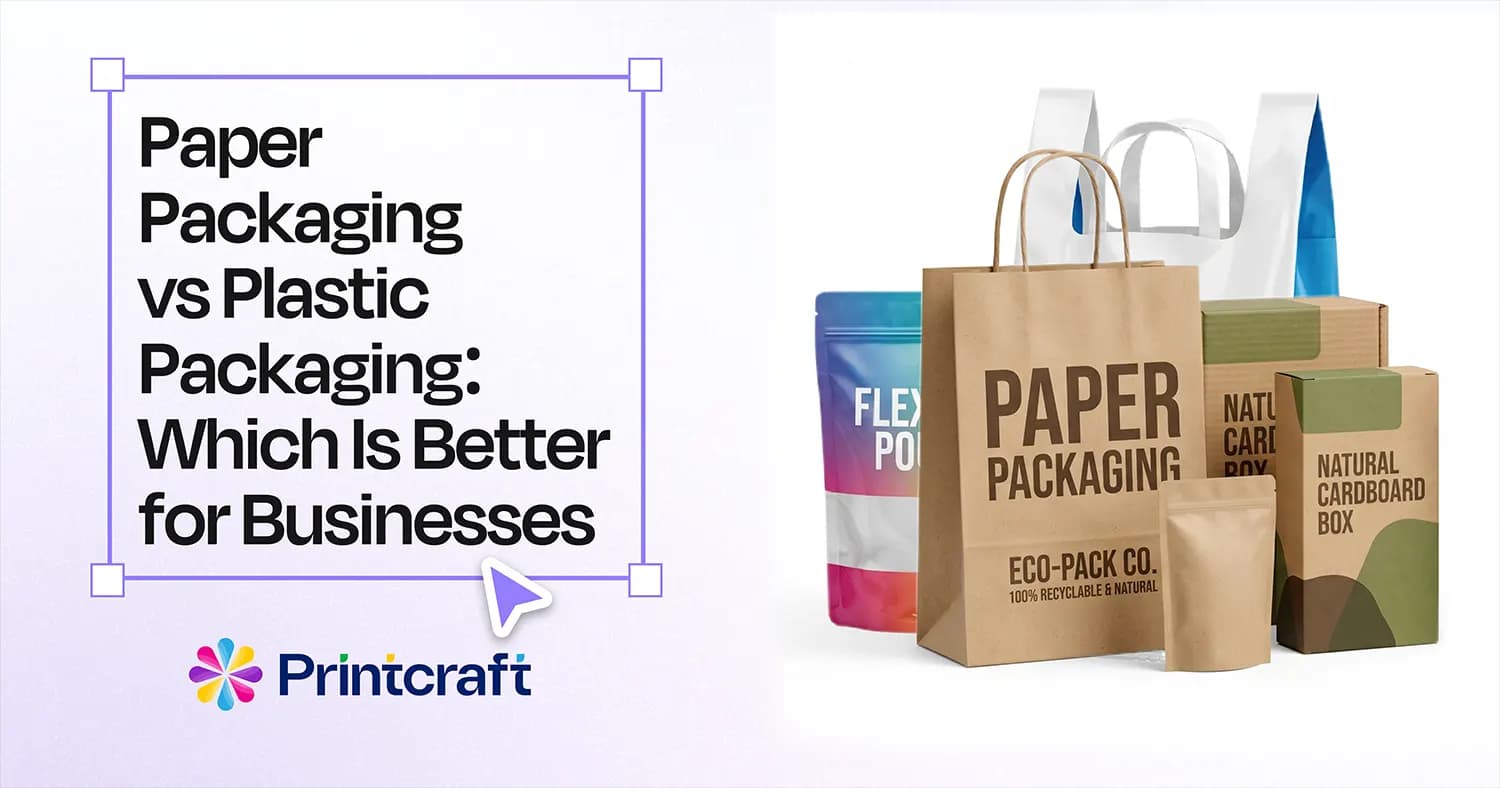
Two of the most commonly used options are paper packaging and plastic packaging. While plastic has traditionally been popular because of its durability and versatility, paper packaging has become an increasingly attractive option for businesses looking for practical and more environmentally conscious packaging solutions.
But which one is better for your business?
The answer depends on your products, budget, branding goals, storage requirements, and packaging needs. This guide compares paper and plastic packaging to help you make the right choice.
Paper packaging is made from materials such as kraft paper, cardboard, paperboard, and corrugated paper. It is widely used for shopping bags, product boxes, food packaging, paper bags, cartons, sleeves, and other packaging applications.
Businesses can customize paper packaging with logos, colors, graphics, finishes, and different sizes to create packaging that matches their brand identity.
Paper packaging is especially popular among retail stores, restaurants, food businesses, e-commerce brands, and companies that want their packaging to have a natural and professional appearance.
Plastic packaging is made from different types of plastic materials and is commonly used for bags, bottles, containers, wraps, pouches, and protective packaging.
Plastic is known for being lightweight, flexible, moisture-resistant, and durable. These properties make it suitable for products that require strong protection against water, air, or physical damage.
However, businesses also need to consider disposal, recycling requirements, and customer preferences when selecting plastic packaging.
The best way to compare both materials is to look at the factors that matter most to businesses.
Paper packaging is often preferred by businesses that want to reduce their dependence on plastic-based packaging. Paper can be recyclable when it is made and processed appropriately, and many paper packaging products can be produced using recycled materials.
Plastic can also be recyclable, but recycling depends on the type of plastic, local recycling infrastructure, and how the packaging is collected and processed.
For businesses focused on improving their packaging approach, paper can be an attractive option, particularly for shopping bags, boxes, cartons, and other applications where plastic is not necessary.
Plastic generally offers excellent resistance to moisture, tearing, and certain types of physical damage. This makes it useful for products that need additional protection during transportation or storage.
Paper packaging can also be strong and durable when the appropriate material and thickness are selected. Corrugated boxes, kraft bags, and heavy-duty paper packaging can provide reliable protection for many products.
The right choice depends on the type of product and the conditions the packaging will experience.
One of the biggest advantages of plastic packaging is its resistance to moisture. Plastic can help protect products from water and humidity, making it useful for certain food, cosmetic, and industrial applications.
Traditional paper packaging is more vulnerable to moisture. However, specialized coatings and treatments can improve its resistance depending on the packaging application.
If your product is frequently exposed to moisture, plastic may have an advantage. For dry products, paper packaging can often provide sufficient protection.
Packaging is also a marketing tool. The material you choose can influence how customers perceive your brand.
Paper packaging offers a natural, premium, and professional appearance. It can be printed with logos, product information, illustrations, and brand colors. Finishing options such as lamination, foiling, and special coatings can also create a more distinctive look.
Plastic packaging can also be customized, but paper is often preferred when a business wants a more sophisticated or natural visual identity.
Both paper and plastic packaging can be customized, but paper provides particularly versatile options for printed packaging.
Businesses can customize:
Custom printing allows businesses to turn packaging into an extension of their brand.
Cost varies depending on the material, size, quantity, printing method, thickness, finishing, and design.
Plastic packaging can be economical for certain high-volume applications, while paper packaging may offer better value for businesses that prioritize branding and presentation.
Rather than comparing material prices alone, businesses should consider the total packaging cost, including printing, customization, transportation, storage, and customer experience.
Customer expectations have become an important consideration when selecting packaging.
Many customers appreciate packaging that looks well-designed and reflects responsible business practices. Paper packaging can support this type of brand image, especially when it is designed professionally and used appropriately.
Plastic is still practical for many products, but businesses may need to consider how their target customers perceive plastic packaging.
The packaging material can also affect storage and transportation requirements.
Paper packaging can be lightweight and easy to stack, especially when designed efficiently. However, it needs to be protected from moisture during storage.
Plastic packaging can offer greater resistance to humidity and water, which can be beneficial in certain environments.
Businesses should evaluate their warehouse conditions, transportation routes, product weight, and storage requirements before making a decision.
Paper packaging can provide several benefits for businesses.
Printed paper bags and boxes provide valuable space for logos, slogans, product information, and other brand elements.
High-quality printing and finishing can give paper packaging a premium appearance that improves product presentation.
Paper can be used for retail bags, food packaging, product boxes, shipping cartons, gift packaging, and many other applications.
Businesses can choose different paper types, sizes, shapes, printing styles, and finishing options according to their requirements.
Retail stores, restaurants, bakeries, e-commerce businesses, corporate brands, and manufacturers can all use paper packaging for different purposes.
Plastic packaging also offers important advantages.
Plastic can protect many products from water and humidity.
Plastic packaging is often lightweight, which can help reduce packaging weight during transportation.
Plastic can be manufactured in different shapes, sizes, and formats to suit specific products.
Certain plastic packaging options provide excellent resistance to impact, tearing, and external conditions.
Plastic can be particularly useful for products that require airtight, waterproof, or flexible packaging.
There is no universal answer. The better option depends on what your business sells and what your packaging needs to achieve.
Paper packaging may be better if you:
Plastic packaging may be better if you:
In some cases, businesses can also use a combination of both materials depending on the product range.
Before selecting paper or plastic packaging, consider the following questions:
Think about moisture, weight, fragility, temperature, shelf life, and transportation requirements.
Determine how much you can spend per unit while maintaining the quality and appearance you want.
Your packaging should support your overall brand identity. A premium retail brand may benefit from customized paper bags or boxes, while a product requiring waterproof protection may need another material.
Consider whether customers will carry, store, reuse, or dispose of the packaging after purchasing the product.
If packaging is an important part of your marketing strategy, choose a material that provides enough space and flexibility for high-quality branding.
Packaging does more than protect products. It can create a memorable customer experience and help businesses stand out from competitors.
A well-designed paper bag, printed box, or customized package can display your brand every time a customer carries or uses it. For retail and e-commerce businesses, this additional visibility can make packaging an important part of brand recognition.
At the same time, businesses should not select packaging based on appearance alone. Product protection, cost, storage, transportation, and practical requirements should all be considered.
Both paper and plastic packaging have their own advantages. Paper packaging can be an excellent choice for businesses that prioritize branding, presentation, customization, and a more environmentally conscious packaging approach. Plastic packaging can be more suitable when moisture resistance, flexibility, durability, or specialized protection is essential.
The right choice ultimately depends on your product and business requirements.
If you are looking for custom paper bags, boxes, printed packaging, or other packaging solutions in Dubai, choosing the right material and design can help protect your products while strengthening your brand presence.
1. Is paper packaging better than plastic packaging?
Paper packaging can be better for businesses that prioritize branding, presentation, customization, and reduced reliance on plastic. However, plastic may be more suitable for products requiring moisture resistance or flexible protection.
2. Is paper packaging more expensive than plastic packaging?
The cost depends on the material, size, quantity, printing, thickness, and customization. Paper packaging can be cost-effective for many retail and branding applications, while plastic may be economical for certain high-volume or specialized uses.
3. Can paper packaging be customized?
Yes. Paper packaging can be customized in different sizes, shapes, colors, designs, and finishes. Businesses can add logos, product information, graphics, and other branding elements.
4. Which packaging is more durable, paper or plastic?
Plastic generally provides strong resistance to moisture and tearing, while heavy-duty paper and corrugated packaging can provide excellent strength for many products. The durability depends on the specific packaging material and design.
5. Is paper packaging suitable for food businesses?
Yes. Paper packaging is widely used for many food-related applications, including bags, boxes, cartons, and takeaway packaging. The appropriate food-safe material should be selected according to the product and intended use.
6. Can paper packaging replace plastic completely?
Not always. Some products require moisture resistance, airtight protection, flexibility, or other properties that plastic can provide. Businesses should select packaging based on product requirements rather than using one material for every application.
7. Why do businesses use custom paper packaging?
Custom paper packaging helps businesses combine product protection with branding. Printed bags and boxes can display logos, colors, messaging, and designs that improve brand visibility and customer experience.
8. How can businesses choose between paper and plastic packaging?
Businesses should consider product requirements, durability, moisture exposure, budget, branding goals, storage, transportation, and customer expectations before choosing a packaging material.
At printcraft.ae, we provide custom packaging printing in Dubai for small and large businesses, restaurants, cafés, retail brands, food businesses, and promotional campaigns. Choose the right material, size, style, finish, and print specifications to create custom packaging designed around your product and brand requirements.