
Loading...
Loading...
Tooba Asad • 16 Sep 2026
Understand the difference between matte and glossy printing, including their appearance, readability, durability, and best uses for business cards, brochures, flyers, packaging, and promotional materials.
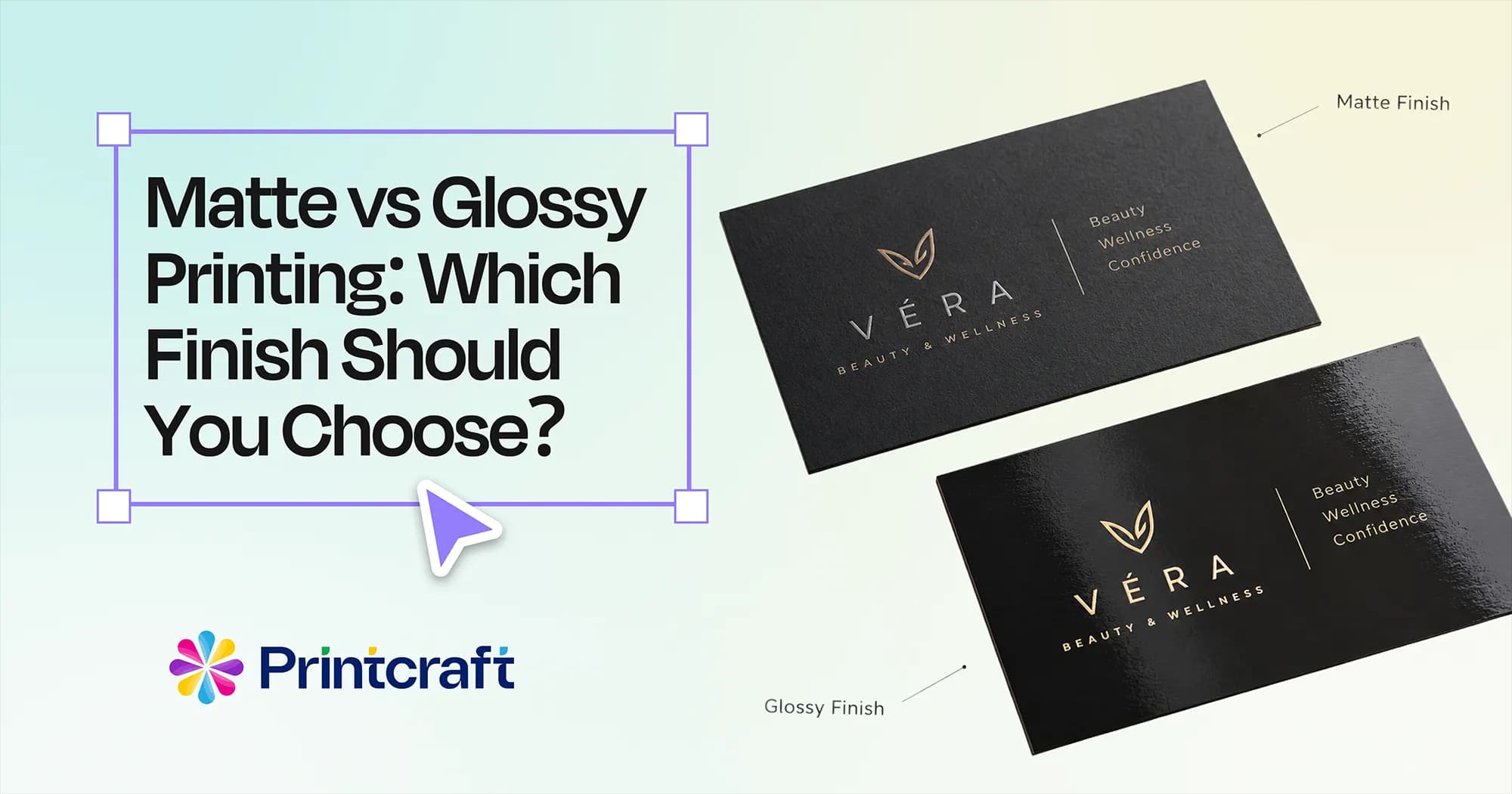
When it comes to professional printing, the finish you choose can significantly change how your printed materials look and feel. Two of the most popular options are matte and glossy printing. Both offer a polished appearance, but they create very different visual effects and work better for different types of printed products.
Whether you're printing business cards, brochures, flyers, packaging, menus, or promotional materials, understanding the difference between matte and glossy finishes can help you make the right choice for your brand.
Matte printing uses a smooth, non-shiny finish that reduces reflections on the printed surface. Instead of producing a bright and reflective appearance, matte paper gives printed materials a soft, sophisticated, and professional look.
The surface is also comfortable to handle and generally makes text easy to read because there is less glare under bright lighting.
Matte finishes are particularly suitable for materials where a clean and elegant appearance is important. They can work well for business cards, corporate brochures, presentation folders, stationery, menus, and premium packaging.
Glossy printing has a smooth, shiny surface that reflects light and gives printed materials a vibrant appearance. The finish can make colors appear more vivid and images look sharper and more eye-catching.
Because of its reflective surface, glossy printing is often used for marketing materials where strong visual impact matters. It can be a suitable choice for flyers, photographs, product brochures, promotional cards, catalogs, and colorful packaging.
Glossy finishes can also make printed materials feel more polished and visually striking.
The main difference between matte and glossy printing is the appearance of the finished surface.
The right choice ultimately depends on your design, purpose, audience, and the type of printed material you're producing.
Matte is a good option when you want your printed materials to communicate professionalism and sophistication.
For example, businesses may choose matte finishes for corporate business cards because the subtle surface creates a refined appearance. Matte can also be useful for brochures and documents containing significant amounts of text because reduced glare can make them more comfortable to read.
Consider matte printing if you want:
For brands with a minimalist or corporate visual identity, matte can complement the overall design particularly well.
Glossy printing is ideal when your design relies heavily on strong colors, photographs, or visual details.
For example, a restaurant promoting new dishes might use glossy flyers with high-quality food photography. Similarly, retailers may use glossy brochures or promotional cards when they want product images and colors to attract attention.
Consider glossy printing if you want:
Glossy finishes can be particularly effective for marketing materials where visual presentation is a major part of the message.
Business cards are one of the most common applications where people compare matte and glossy finishes.
A matte business card can create a professional and sophisticated impression, making it a popular choice for consultants, corporate professionals, agencies, and service businesses.
A glossy business card can provide a brighter and more eye-catching appearance, especially when the design includes colorful graphics, photographs, or strong branding elements.
Think about your brand identity when choosing between the two. A subtle corporate design may work well with matte, while a bold and colorful design may benefit from a glossy finish.
For brochures and flyers, the best finish depends heavily on the content.
If your brochure contains a combination of text, charts, and professional information, matte may provide a clean reading experience.
If your flyer depends on photography, bold colors, or promotional graphics, glossy can help the visual elements stand out.
For marketing campaigns, you should also consider where the printed material will be displayed. Materials exposed to strong lighting may produce more noticeable reflections with a glossy finish.
The finish can also influence how product packaging looks on a shelf or display.
Matte packaging can create a premium, understated appearance that works well for brands aiming for a sophisticated identity. Glossy packaging can produce brighter colors and stronger visual contrast, helping designs attract attention.
The choice should complement the product, brand identity, packaging design, and intended customer experience.
Both finishes can provide a professional result, but durability depends on the paper or material, coating, printing process, and intended use.
Glossy surfaces can be easier to wipe clean, while matte surfaces can offer a softer tactile experience. If your printed material will be frequently handled, discuss the available finishing and coating options with your printing provider before placing an order.
Yes. You don't always have to choose one finish for an entire project.
Some printing projects can combine different finishes to create contrast. For example, a design could use a matte surface with selected glossy elements to make a logo, photograph, or particular design feature stand out.
This type of finishing can create a distinctive look when used thoughtfully and can be especially effective for premium marketing materials and packaging.
Before selecting matte or glossy, consider these factors:
Think about whether you're printing business cards, brochures, flyers, packaging, menus, or another product.
Minimal and professional designs may suit matte, while colorful and image-heavy designs can benefit from glossy.
If your design contains a lot of text, consider how lighting and reflections could affect readability.
Your finish should support the overall image you want your brand to communicate.
Consider whether the material will be displayed indoors, handled frequently, or exposed to bright lighting.
Choosing between matte and glossy is more than simply selecting a surface. The right finish should work with your design, printed material, brand identity, and intended use.
At Printcraft, professional printing solutions can help businesses create high-quality marketing materials and branded products with finishes that complement their designs. Whether you're preparing business cards, brochures, flyers, packaging, or promotional materials, choosing the right printing specifications can make a noticeable difference in the final result.
Ready to give your printed materials a professional finish? Contact Printcraft to discuss your printing requirements and find the right option for your project.
1. What is the difference between matte and glossy printing?
Matte printing has a smooth, non-reflective surface, while glossy printing has a shiny surface that reflects light and can make colors and images appear more vibrant.
2. Is matte or glossy better for business cards?
Both can work well. Matte is often chosen for a professional and sophisticated appearance, while glossy can create a brighter and more eye-catching look.
3. Is glossy printing better for photographs?
Glossy finishes can be a good choice for photographs because their reflective surface can enhance color and visual impact.
4. Is matte printing easier to read?
Matte surfaces generally produce less glare than glossy surfaces, which can make text more comfortable to read in bright lighting.
5. Can Printcraft provide both matte and glossy finishes?
Printing and finishing options can vary depending on the product and material. Printcraft can help you select a suitable finish based on your specific printing requirements.
6. Which finish is better for brochures?
It depends on the brochure's design and purpose. Matte can suit text-focused corporate brochures, while glossy can work well for brochures that rely heavily on photographs and vibrant graphics.
7. Can matte and glossy finishes be combined?
Yes, certain printing projects can use different finishes or selective glossy effects to create contrast and highlight specific design elements.
At printcraft.ae online printing service, we offer a range of professional printing finishes to help your printed materials look and feel the way your brand intends. Choose from matte, glossy, lamination, foil, and other finishing options across business cards, flyers, brochures, packaging, and more.
Get a Quote / Browse Printing Products / hello@printcraft.ae / +971556265479