
Loading...
Loading...
Rayyan • 28 Oct 2026
Paper bags are an important part of product packaging for retail stores, restaurants, bakeries, boutiques, and many other businesses. The right bag protects products, makes carrying easier, and creates a professional presentation that reflects your brand. However, choosing the correct paper bag size can be challenging when your products vary in shape, weight, and dimensions.
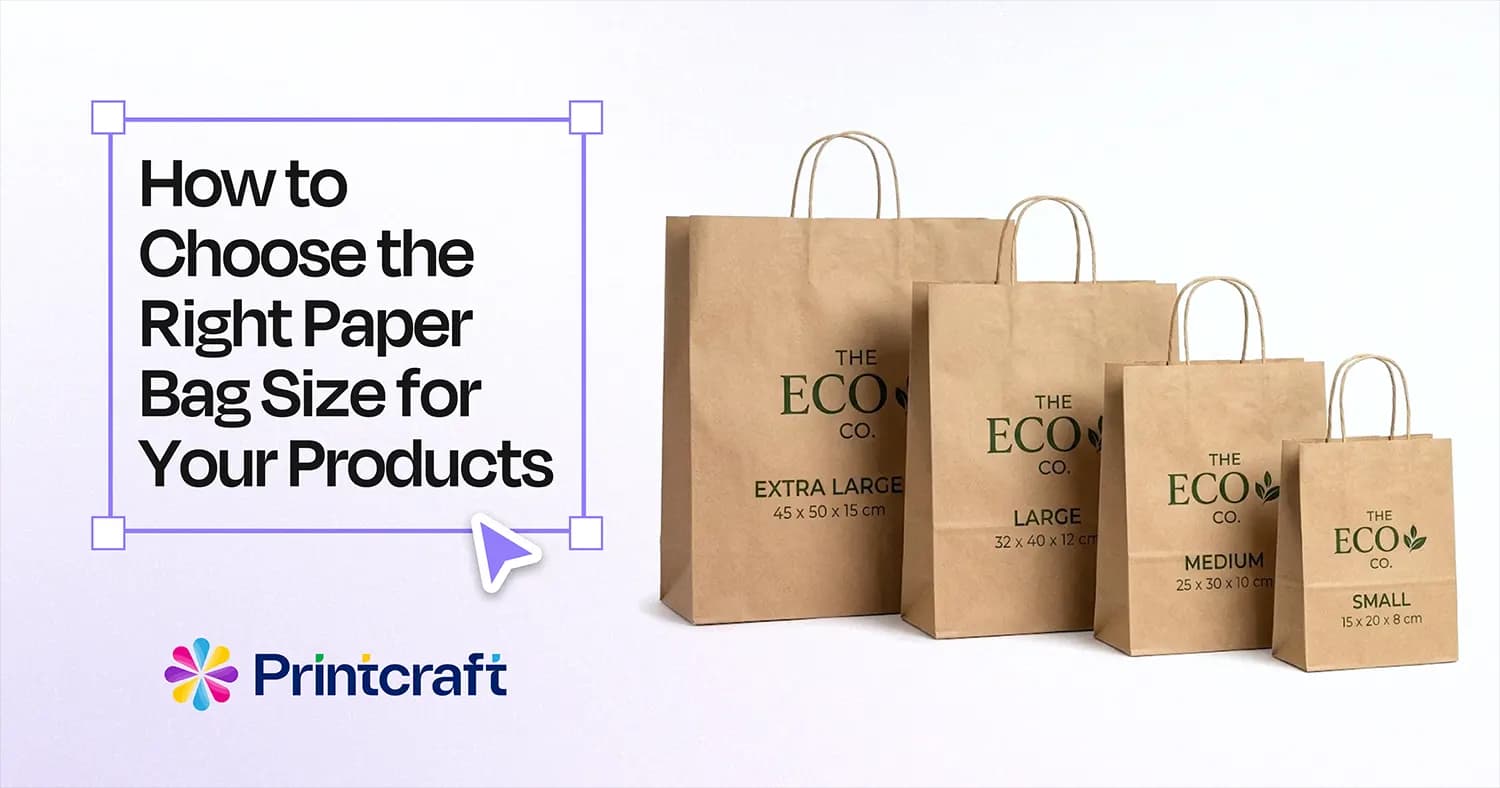
A bag that is too small may damage products or make packing difficult, while an oversized bag can waste materials and increase packaging costs. The ideal size provides enough room for the product without compromising stability, appearance, or convenience.
Understanding how to choose the right paper bag size for your products helps businesses improve packaging efficiency, manage costs, and deliver a better customer experience.
Paper bag size affects more than the appearance of your packaging. It influences product protection, carrying comfort, storage, and the overall customer experience.
A properly sized paper bag helps keep products in position during transportation. Excess space can allow items to shift, while a bag that is too tight may put pressure on delicate packaging.
Choosing suitable dimensions helps reduce the risk of crushed boxes, damaged products, and spills.
Customers expect packaging that is easy to carry and suitable for the items they purchase. A bag with appropriate width, height, and gusset depth makes it easier to place products inside and remove them when needed.
The right handle style and bag construction also contribute to carrying comfort.
Using oversized bags for small products can increase material consumption and storage requirements. Choosing the correct dimensions helps businesses avoid unnecessary packaging expenses.
However, the smallest bag is not always the most economical choice. It must still accommodate the product safely and provide sufficient strength for its intended load.
Packaging is often one of the first physical interactions customers have with a brand. A well-fitted paper bag creates a neat presentation and can make products appear more carefully packaged.
Businesses can combine suitable bag dimensions with custom printing, brand colors, and quality handles to create consistent packaging.
Before ordering paper bags, it is important to understand how their dimensions are measured. Most paper bags are described using three main measurements: width, height, and gusset depth.
Width is the measurement across the front of the bag. It determines how much horizontal space is available for the product.
For example, a wide product box may require a bag with sufficient front width to fit comfortably without bending or forcing the sides apart.
Height measures the distance from the bottom of the bag to its opening. It determines whether the product can fit vertically and how much of the item will remain inside the bag.
Tall products, clothing boxes, and bottles may require greater height, depending on how they will be positioned.
The gusset is the expandable side or bottom section that provides additional internal space. It allows the bag to accommodate products with depth rather than just flat items.
A bag with adequate gusset depth is particularly useful for takeaway containers, shoe boxes, food packaging, and other bulky products.
When comparing paper bag sizes, always check all three measurements rather than relying on width alone.
Measuring products before selecting a bag helps prevent sizing mistakes and unnecessary packaging waste.
Measure the widest part of the product or its retail box. If the product has irregular dimensions, use the widest point as your starting measurement.
Consider any protective wrapping or secondary packaging that will be added before the item is placed in the bag.
Measure the product from its base to its highest point in the position in which it will be carried.
For products that must remain upright, such as bottles or certain food containers, make sure the bag provides adequate height and stability.
Measure the product from front to back. This measurement is particularly important for boxed items, food containers, footwear, and gift products.
If the bag has insufficient depth, the product may not fit comfortably even when its width and height appear suitable.
A paper bag should accommodate the product without excessive pressure on its sides or bottom. Allow suitable clearance for easy insertion and removal.
The additional space required depends on the product's shape, packaging, and how closely the bag needs to fit. Fragile items may also require protective wrapping or internal support.
Before ordering in bulk, test a sample bag using the actual product. Check whether the item fits easily, sits securely, and can be carried without stretching the bag or putting excessive strain on its handles.
This simple step can help businesses avoid costly packaging mistakes.
Different products have different packaging requirements. Selecting a bag based on the intended product category can help narrow down the available options.
Small accessories, jewelry boxes, cosmetics, and compact gifts generally require smaller paper bags.
A bag that closely fits these products can create a neat appearance while reducing unnecessary material use. However, there should still be enough room to insert the item without damaging its packaging.
Businesses selling small products can also consider branded paper bags to create a more memorable shopping experience.
Clothing stores often need paper bags that accommodate folded garments, accessories, and apparel boxes.
The appropriate size depends on the number of items purchased and whether the products are folded or boxed. A wider bag may be suitable for multiple garments, while taller bags can work well for certain clothing packages.
Sturdy paper and reinforced handles are important when customers may carry several items together.
Shoe boxes usually require bags with sufficient width, height, and gusset depth. Measuring the actual box is more reliable than choosing a bag based on the shoe size alone.
If customers commonly purchase multiple boxes, consider whether a larger bag or separate bags would provide better support and easier handling.
The bag's bottom construction and paper strength should also be suitable for the combined weight.
Restaurants, cafes, bakeries, and takeaway businesses need bags that accommodate food containers, cups, bakery boxes, and meal orders.
Gusset depth is particularly important because takeaway containers often have more depth than standard retail products.
Consider the following when choosing bags for food orders:
For hot or heavy takeaway orders, choose paper bags designed for the intended conditions. A paper bag should not be assumed to be greaseproof or moisture-resistant unless its material and construction provide those properties.
Bakeries often package cakes, pastries, cookies, and bread in different types of boxes or food-safe wrapping.
A suitable paper bag should accommodate the product's packaging while minimizing unnecessary movement. Cake boxes may require a wide base and adequate height, while bread bags may benefit from a taller, narrower design.
For delicate baked goods, prioritize a stable base and enough clearance to avoid crushing decorations or packaging.
Gift shops need paper bags that can accommodate products of different shapes and sizes. A well-fitted bag improves presentation and provides enough room for tissue paper or other decorative materials.
For small gifts, compact bags can look elegant. Larger or unusually shaped gifts may require custom dimensions.
Businesses can also use premium finishes, rope handles, or custom printing to complement the gift's presentation.
Electronic accessories, small appliances, and other boxed products need bags that accommodate the full package without placing pressure on corners or edges.
Measure the retail box, including any protective outer packaging. For heavier items, choose an appropriate paper weight, reinforced base, and handles designed to support the load.
A bag that fits the box correctly can make transportation easier while helping protect the product packaging from unnecessary damage.
Choosing the correct dimensions is only one part of selecting suitable paper bags. The bag must also support the product's weight safely.
A large bag made from lightweight paper may not be suitable for heavy items. Similarly, a small bag with weak handles may tear even if the product fits inside it.
Paper weight, material quality, construction, and handle attachment all influence a bag's performance. Heavier products generally require stronger paper and a well-constructed base.
Twisted paper handles, flat paper handles, and rope handles offer different combinations of appearance and carrying comfort. The right choice depends on the bag size, expected load, and intended use.
Products with considerable weight or an uneven shape may require reinforced bottoms. This helps distribute the load and supports more stable carrying.
Test the complete packaged product rather than relying only on the bag's appearance. Check handle attachment, bottom strength, and comfort during carrying.
For businesses ordering in bulk, testing samples before approving a large production run is a practical way to assess suitability.
Businesses can choose between standard paper bag dimensions and custom-sized bags based on their product range and packaging requirements.
Standard-sized bags are often convenient for businesses that sell common product types or need packaging quickly.
Their advantages include:
However, standard sizes may not fit unusually shaped products or specialized packaging perfectly.
Custom paper bags are designed around a business's specific product dimensions and requirements.
They can be useful for businesses that sell distinctive products, have unusual packaging dimensions, or want a consistent fit across their product range.
Benefits may include better space utilization, a more tailored presentation, and greater flexibility in material and handle selection.
Custom bags can involve higher setup or production costs, depending on the specifications and order quantity. Businesses should compare quotes before deciding which option offers the best value.
Even a well-designed paper bag may not perform as expected if its dimensions or construction are unsuitable.
Choosing a bag based on appearance alone: An attractive bag may still be too narrow, too short, or too weak for the product.
Ignoring gusset depth: A product may fit the width and height measurements but still be too deep for the bag.
Forgetting protective packaging: Tissue paper, wrapping, inserts, and retail boxes can change the space required.
Overlooking weight capacity: The bag must support the product and any additional items safely.
Ordering in bulk without testing: A sample test can reveal fitting problems before they affect a large order.
Using the same bag for every product: Businesses with different product categories may benefit from a small range of carefully selected sizes instead of one oversized bag.
Avoiding these mistakes can improve packaging consistency and reduce unnecessary expenses.
Choosing the right paper bag size involves more than selecting a small, medium, or large option. Businesses need to consider product width, height, gusset depth, weight, packaging materials, and customer convenience.
A properly sized bag protects products, makes carrying easier, and supports a professional brand image. Standard sizes can work well for common products, while custom paper bags provide flexibility for specialized packaging requirements.
If your business needs paper bags for retail products, food packaging, clothing, gifts, or promotional purposes, Printcraft can help you explore suitable paper bag printing options. By measuring your products carefully and selecting appropriate materials and handles, you can create packaging that meets both practical and branding needs.
1. How do I choose the right paper bag size for my products?
Measure the product's width, height, and depth, including any retail box or protective packaging. Select a bag that provides enough clearance for easy insertion and removal, then test a sample with the actual product.
2. What are the standard dimensions of a paper bag?
Paper bags are available in a variety of widths, heights, and gusset depths. There is no single universal standard size because dimensions vary by supplier, product category, and intended use.
3. What is the gusset of a paper bag?
The gusset is the expandable side or bottom section that provides additional internal space. It allows a paper bag to accommodate products with depth, such as food containers, shoe boxes, and gift items.
4. How much extra space should I leave in a paper bag?
Leave enough clearance for the product to fit easily without putting pressure on the bag's sides or bottom. The exact allowance depends on the product's shape, protective packaging, and how closely the bag needs to fit.
5. Which paper bag size is best for clothing stores?
Clothing stores generally need bags wide and tall enough for folded garments, accessories, or apparel boxes. The ideal dimensions depend on the number and type of items customers typically purchase.
6. How do I choose paper bags for takeaway food?
Measure your largest food container and consider the combined weight of a typical order. Select a bag with adequate gusset depth, a stable base, and suitable paper strength to keep containers secure during transportation.
7. Are custom-sized paper bags better than standard-sized bags?
Custom-sized bags can provide a better fit for specialized products, while standard-sized bags may be more economical and convenient for common packaging needs. The best choice depends on product dimensions, order quantity, and budget.
8. Does paper bag size affect its weight capacity?
Yes, but size alone does not determine capacity. Paper strength, bag construction, handle attachment, and bottom reinforcement also affect how much weight a bag can safely carry.
9. How can I reduce paper bag packaging costs?
Choose dimensions that fit your products without excessive empty space, use suitable paper strength, and compare standard and custom options. Ordering appropriate quantities and testing samples can also help avoid waste.
10. Where can I order custom paper bags in Dubai?
Businesses can contact Printcraft to discuss paper bag printing for retail packaging, food businesses, clothing stores, gifts, and promotional campaigns. Provide your product dimensions, expected quantity, preferred material, and branding requirements to explore suitable options.
At printcraft.ae, we provide professional paper bag printing in Dubai for restaurants, cafés, burger brands, cloud kitchens, boutiques, small and large businesses. Create luxury paper bags with custom sizes, printed designs, and practical specifications suited to your products and operations.
Get a Quote / Browse Paper Bags / hello@printcraft.ae / +971556265479