
Loading...
Loading...
Rayyan • 27 Oct 2026
Packaging is more than just a way to wrap or protect a product. It plays an important role in product safety, brand presentation, customer experience, storage, and transportation. The right packaging can help your products arrive safely while making your brand more recognizable and professional.
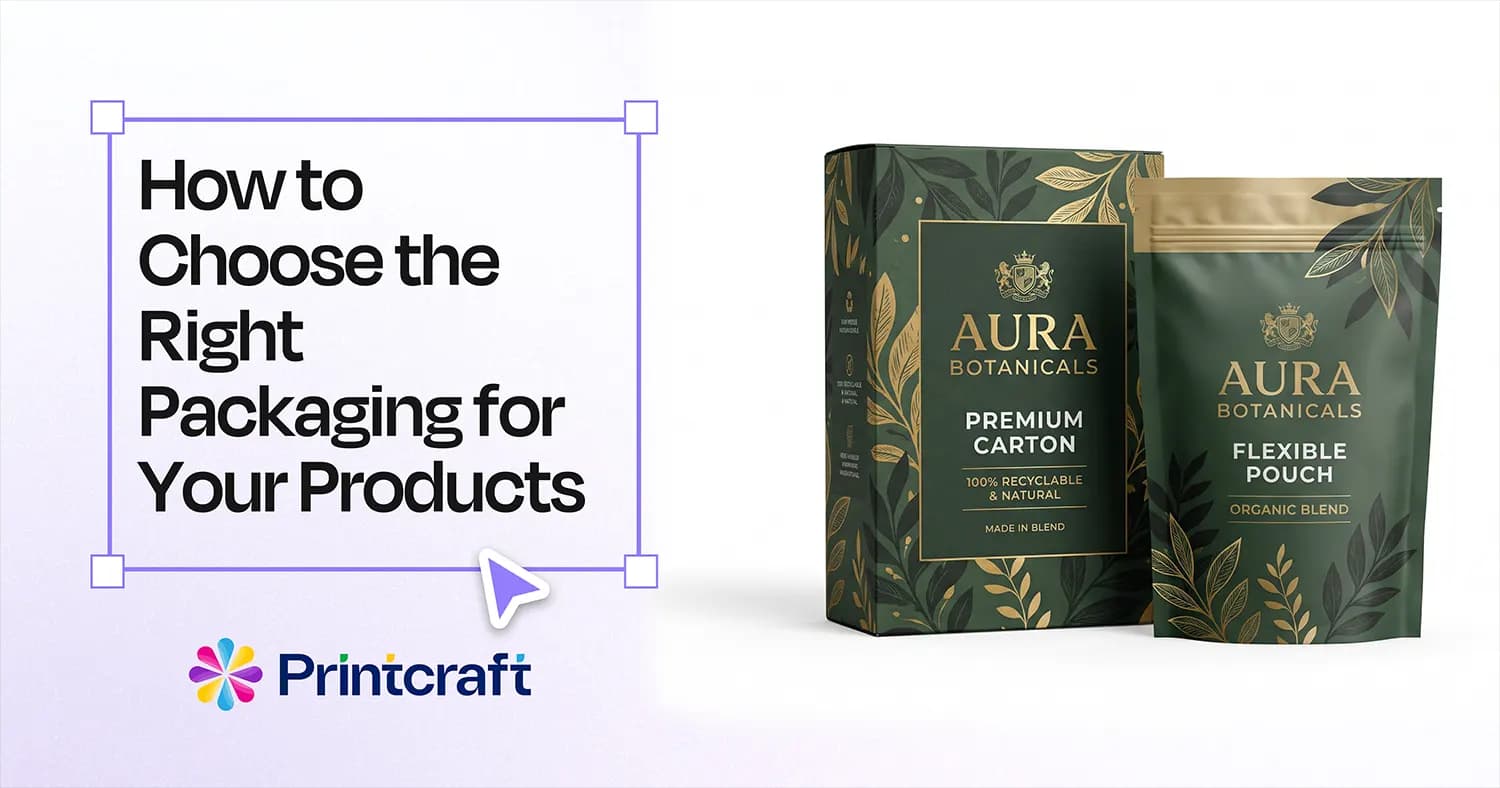
With so many packaging materials, sizes, shapes, printing options, and finishes available, choosing the right solution can sometimes be challenging. Businesses need to consider both practical and branding requirements before making a decision.
Whether you run a retail store, restaurant, e-commerce business, or product-based company, this guide explains the key factors to consider when choosing packaging for your products.
The packaging you select should protect your product while supporting your business goals.
Good packaging can help:
Poorly selected packaging, on the other hand, can lead to damaged products, unnecessary costs, difficult storage, and a disappointing customer experience.
The first step is to understand exactly what you are packaging.
Consider the product's:
For example, fragile products may require rigid boxes or additional protective materials, while lightweight retail products may only need customized paper bags.
Your packaging should provide enough protection without being unnecessarily large or complicated.
Different products require different packaging materials.
Paper packaging is popular for retail, food, gift, and product packaging. Kraft paper bags, paper boxes, cartons, and sleeves can provide an attractive and customizable solution.
Paper is particularly useful for businesses that want packaging with a natural, professional, or premium appearance.
Cardboard and corrugated materials are commonly used for product boxes and shipping packaging. They can provide additional protection during transportation while offering plenty of space for branding and printing.
Plastic can be useful when products require moisture resistance, flexibility, or additional protection. It is commonly used for containers, pouches, wraps, and specialized packaging.
The right material depends on your product's specific requirements rather than simply choosing the most popular option.
One of the most important functions of packaging is protecting the product.
Think about what could happen to your product during:
If your products are fragile, the packaging should be strong enough to minimize the risk of damage. Products that are sensitive to moisture may require packaging with additional protection against humidity.
For e-commerce businesses, this is especially important because packages may pass through several stages of handling before reaching the customer.
Packaging should fit the product properly.
Packaging that is too large can increase material usage, storage requirements, and transportation costs. Packaging that is too small may damage the product or create an unattractive presentation.
Measure your product carefully and consider whether you need additional space for protective materials.
For custom packaging, accurate dimensions can help create a better fit and a more professional final appearance.
Packaging is one of the most visible ways to communicate your brand.
Your packaging can include:
A consistent packaging design can help customers recognize your business and create a stronger connection with your brand.
For example, a retail business may use custom printed paper bags, while an e-commerce brand may use branded product boxes or packaging sleeves.
Think about what your customers expect when they receive your product.
A premium product may benefit from high-quality boxes, attractive printing, and specialized finishing. A casual retail product may need simple but effective packaging.
Understanding your target audience can help you decide whether your packaging should be:
The packaging should match both the product and the expectations of your customers.
Packaging costs can vary considerably depending on material, size, quantity, printing, and finishing.
Before selecting a packaging solution, determine your target cost per unit.
You should also consider additional costs such as:
The cheapest packaging option is not always the most cost-effective. Packaging that reduces product damage or improves customer perception may provide greater value in the long run.
Custom packaging allows businesses to create packaging specifically around their products and branding.
It can be useful when you want to:
Custom paper bags, boxes, stickers, labels, and printed packaging can all be used to create a more recognizable brand experience.
The printing method and finishing can significantly affect the appearance of packaging.
Depending on your packaging type, you may consider options such as:
You do not necessarily need multiple finishing techniques. Sometimes a clean design with high-quality printing can create a more professional result.
Packaging should be practical not only for customers but also for your business.
Consider how much space your packaging will require in your warehouse or store. If you order packaging in large quantities, make sure you have enough storage space.
You should also consider how the packaging will be transported. Lightweight and appropriately sized packaging can make handling and shipping more convenient.
Packaging can influence how customers feel about a product before they even use it.
A well-designed package can create a positive first impression and make the product feel more valuable.
For e-commerce businesses, branded packaging can also make the unboxing experience more memorable. Even simple elements such as a printed box, branded sticker, or customized paper bag can make the experience feel more professional.
Many businesses are now paying greater attention to the environmental impact of their packaging.
Depending on your product and packaging requirements, you may consider materials that can be recycled or are designed to reduce unnecessary material use.
However, environmental considerations should be balanced with product protection, durability, functionality, and business requirements.
The goal should be to choose packaging that performs effectively without using unnecessary materials.
Before placing a large packaging order, it is a good idea to test your chosen design and material.
Check whether:
Testing can help identify problems before you commit to a large production quantity.
Businesses can make several mistakes when selecting packaging.
Low-cost packaging may not provide sufficient protection or presentation. Consider overall value instead of focusing only on the initial price.
Oversized packaging can waste materials and storage space while making transportation less efficient.
Plain packaging may protect your product, but customized packaging can also help promote your brand.
Packaging that looks good in a store may not be suitable for shipping. Always consider how your products will be handled during delivery.
Too many colors, graphics, or finishing techniques can make packaging look cluttered. A clear and well-balanced design is often more effective.
Before finalizing your packaging, ask yourself:
Answering these questions can make it easier to narrow down the right packaging solution.
Choosing the right packaging requires a balance between protection, functionality, cost, appearance, and branding. The best packaging is not necessarily the most expensive or elaborate option. It is the one that meets your product's needs while supporting your business goals.
Whether you need custom paper bags, product boxes, printed packaging, stickers, labels, or other packaging solutions, selecting the right material and design can help your products stand out while creating a better customer experience.
For businesses looking for custom packaging in Dubai, working with an experienced printing and packaging company can help you select suitable materials, designs, sizes, and finishing options for your products.
1. How do I choose the right packaging for my product?
Start by considering your product's size, weight, fragility, moisture sensitivity, transportation requirements, and budget. Then select a suitable material, size, design, and printing option.
2. What is the most common packaging material?
Paper, cardboard, corrugated materials, and plastic are commonly used for different packaging applications. The best material depends on the product and the level of protection required.
3. Is custom packaging worth it for small businesses?
Yes. Custom packaging can help small businesses create a stronger brand identity, improve product presentation, and provide a more memorable customer experience.
4. How important is packaging size?
Packaging size is very important. Packaging should be large enough to protect the product but not unnecessarily oversized, as excess space can increase material, storage, and transportation costs.
5. Should packaging match my brand?
Yes. Consistent colors, logos, typography, and design elements can help customers recognize your brand and create a more professional appearance.
6. What type of packaging is best for fragile products?
Fragile products generally require packaging that provides adequate structural protection and may need additional protective materials. The appropriate solution depends on the product's size, weight, and fragility.
7. Can packaging improve the customer experience?
Yes. Attractive, functional, and easy-to-open packaging can create a positive first impression and make the overall purchasing experience more memorable.
8. Should I test packaging before placing a large order?
Yes. Testing allows you to check the fit, appearance, durability, printing quality, and practicality of the packaging before committing to a larger production quantity.
9. What should I consider when designing custom packaging?
Consider your product dimensions, material, branding, printing requirements, customer expectations, budget, transportation, storage, and the overall appearance of the finished packaging.
10. Can packaging be used as a marketing tool?
Yes. Branded bags, boxes, stickers, labels, and other customized packaging can display your logo and brand message, helping increase brand visibility beyond the point of purchase.
At printcraft.ae, we create custom luxury packaging for retail brands, from premium paper bags and rigid boxes to elegant foiling, embossing, and Spot UV finishes. Bring your brand to life with packaging designed to make a lasting impression.