
Loading...
Loading...
Tooba Asad • 12 Sep 2026
Learn how to choose the right business card for printing, from card size and paper thickness to finishes, colors, and design. This guide helps you select business cards that look professional and suit your brand and budget.
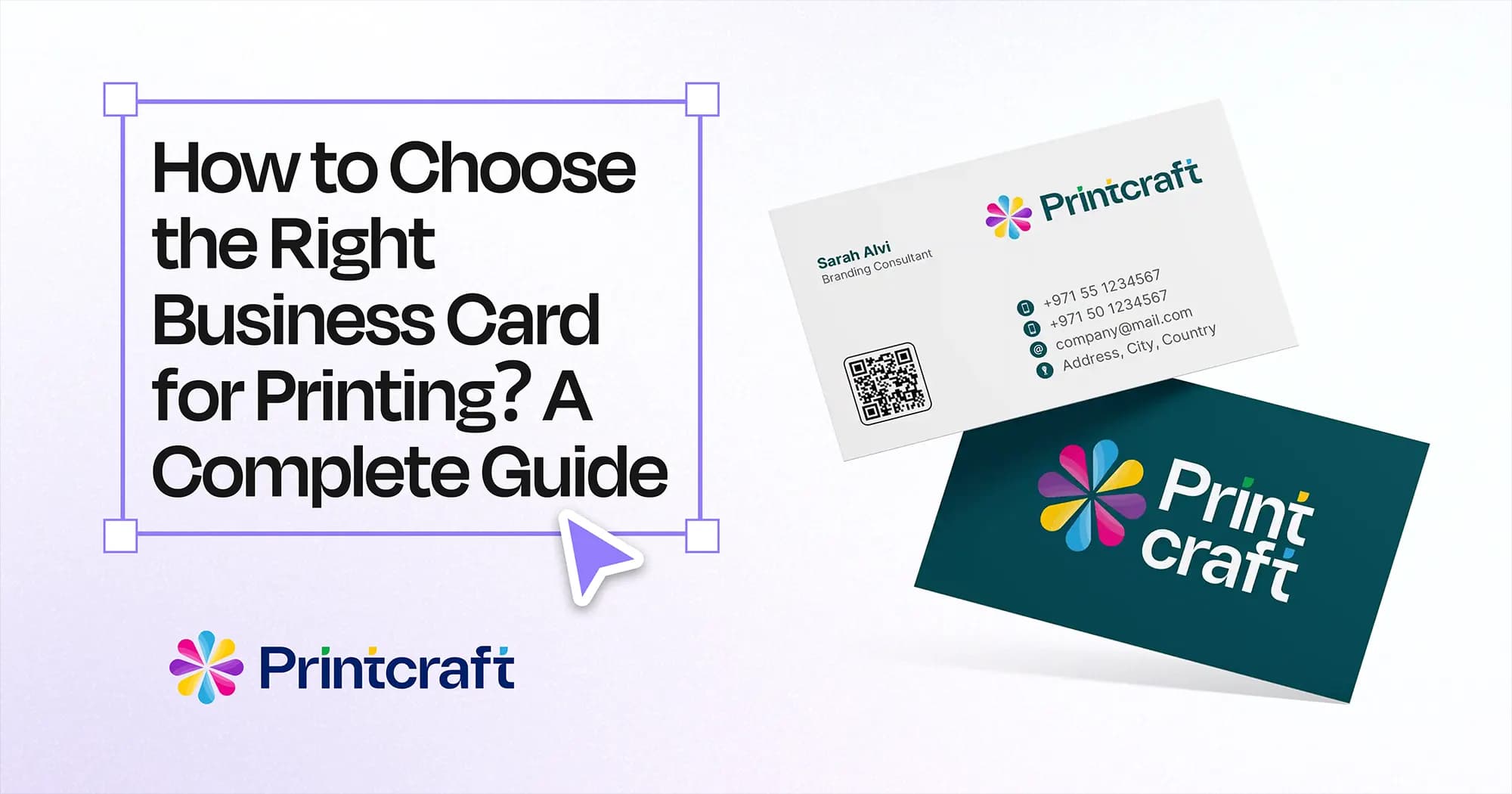
A business card may be small, but it can have a big impact on how people remember your brand. Whether you are meeting a potential client, attending a networking event, or introducing your business to a new customer, a well-designed business card gives people something physical to remember you by.
But choosing a business card is not simply about putting your logo and contact details on paper. You need to consider the card size, paper weight, material, finish, printing quality, design, quantity, and how you plan to use it.
With so many options available, choosing the right business card for printing can feel confusing.
This guide explains the most important factors to consider so you can choose a business card that matches your brand, budget, and professional needs.
Your business card represents your brand when you are not there to explain it yourself.
A poorly designed card with difficult-to-read text, weak printing, or low-quality paper can make your business appear less professional. On the other hand, a carefully designed card with the right stock and finish can create a stronger first impression.
A good business card should be:
The goal is not necessarily to create the most expensive card. The goal is to choose one that communicates your brand effectively.
Before choosing paper or finishing, think about who will receive your cards.
Different industries can benefit from different business card styles.
For example:
Corporate businesses:
A clean, professional card with a simple layout and matte finish can work well.
Real estate professionals:
Premium cardstock, Spot UV, foil, or other distinctive finishes can help create a more memorable impression.
Creative professionals:
Unique shapes, colours, typography, and creative finishes can reflect your personality and work.
Luxury businesses:
Heavyweight cardstock with premium finishing can support a sophisticated brand image.
Restaurants and hospitality businesses:
Bold branding, clear contact details, and attractive finishes can help the card stand out.
Your business card should look like it belongs to your brand rather than looking like a generic template.
Size is one of the first decisions you need to make.
The standard business card format is popular because it is easy to store in wallets, card holders, and business card organisers.
A common UAE business card size is around 90 × 55 mm, which is also available from Printcraft.
However, you do not necessarily have to use a traditional rectangular format.
Depending on your brand, you can consider:
A standard size is usually the safest option for professional businesses because it is practical and familiar.
A custom shape can be useful if standing out is more important than maintaining a traditional format.
One of the most important factors when printing business cards is GSM.
GSM means grams per square metre and is commonly used to describe paper weight.
Generally, a higher GSM indicates a thicker and more substantial card.
This range can be suitable for businesses that need professional cards for everyday networking, team members, events, or larger quantities.
A 400gsm card provides a thicker and more premium feel. It can be a good choice for client-facing professionals who want their cards to feel more substantial.
Heavier cards can create a more premium and distinctive experience. They may be suitable for luxury brands, executives, real estate professionals, consultants, and businesses where presentation is particularly important.
However, heavier does not automatically mean better.
The right GSM depends on your brand, budget, usage, and preferred finish.
The material of your business card affects both appearance and feel.
Some commonly used options include:
Coated paper has a smooth surface that works well with vibrant colours and detailed designs.
It is a practical choice for businesses that want sharp graphics and a clean professional appearance.
Uncoated paper has a more natural texture and is often easier to write on.
It can work particularly well for creative businesses, consultants, artists, and brands that prefer a simple and understated look.
For luxury or high-end branding, specialty stocks can provide a distinctive texture and appearance.
The material should always complement your brand rather than being selected simply because it is more expensive.
The finish changes how your business card looks and feels.
Matte cards have a smooth, non-shiny surface.
They are a popular choice for professional and minimalist designs because they provide a clean and sophisticated appearance.
Matte works particularly well with:
Gloss creates a shiny surface that can make colours appear brighter and more vibrant.
It can work well for:
If you want a sophisticated and understated card, matte may be the better choice. If you want strong colour and visual impact, gloss can be worth considering.
Soft-touch lamination adds a smooth, velvety feel to the surface of the card.
It is often chosen by businesses that want their cards to feel premium without relying on excessive visual effects.
Soft-touch can work particularly well with minimalist designs, dark colours, luxury branding, and premium business cards.
The tactile experience can make the card feel different from ordinary printed materials.
Spot UV is a finishing technique that adds a glossy effect to selected parts of the card rather than covering the entire surface.
For example, you could apply Spot UV to:
A popular combination is a matte background with Spot UV on the logo. The contrast between the two finishes creates a noticeable effect without making the entire card look overly busy.
Spot UV is especially useful when you want a premium appearance while keeping the overall design clean.
Foil printing can add a metallic or specialty finish to specific parts of a business card.
Gold and silver are common choices, but other foil colours can also be used depending on the design.
Foil can work particularly well for:
The key is to use foil strategically. Applying too many decorative elements can make a card look crowded rather than premium.
Rounded corners offer a subtle alternative to the traditional square business card.
They can make a card look more modern and can give it a slightly different feel when compared with standard rectangular cards.
Rounded corners can work particularly well for:
For traditional corporate brands, square corners may still be the more suitable option.
Your business card can be printed on one or both sides.
Single-sided cards are suitable when you want a simple design with limited information.
They can also provide space on the back for handwritten notes.
Double-sided printing gives you more space for branding and information.
For example, the front could contain:
The back could include:
Double-sided printing is often a good option when you want to include more information without making the front of the card crowded.
One of the most common business card mistakes is trying to fit too much information into a small space.
Your card does not need to contain everything about your business.
Focus on the information that someone actually needs to contact or identify you.
A typical business card may include:
Use clear typography and enough spacing between different elements.
A simple design often looks more professional than a card filled with text and graphics.
Your business card should match your overall brand identity.
If your website, packaging, stationery, and social media use specific colours, fonts, and visual elements, your business card should follow the same style.
Consistent branding helps customers recognise your business across different touchpoints.
Avoid choosing colours simply because they look attractive in isolation. Think about how they fit into your existing brand.
A QR code can connect your physical business card to your digital presence.
Depending on your business, you can use it to direct people to:
However, the QR code should not dominate the design.
Make sure it is large enough to scan easily and has sufficient contrast against the background.
The quantity you order should depend on how frequently you network and how quickly your contact information may change.
If you attend events regularly or have a large sales team, ordering in larger quantities can be practical.
For a smaller business or individual professional, a smaller quantity may be better if your details are likely to change.
Before ordering a large batch, double-check:
A simple mistake can make an entire batch unusable.
Good printing starts with good artwork.
Before sending your design to print, make sure your file follows the printer's requirements.
Common artwork considerations include:
Printcraft accepts print-ready PDF artwork for its business card products and provides file review/proofing options, making it important to prepare the artwork correctly before production.
Printing method can depend on quantity, design, turnaround time, and the type of business card you choose.
Digital printing can be useful for fast production and smaller or urgent orders.
Offset printing can be suitable for larger quantities and consistent professional results.
If you need business cards urgently, same-day printing may also be an option depending on the selected product, artwork, order time, and production requirements.
Always confirm the expected turnaround before placing your order, especially if the cards are needed for an event or meeting.
Price is naturally important when ordering business cards, but the cheapest option is not always the best choice.
Consider what you are getting for the price:
A business card is a relatively small marketing investment, but it represents your brand directly in front of potential customers and business partners.
Choosing a suitable quality level can help your card create the right impression without unnecessarily increasing your budget.
Your business card should communicate the same level of quality that customers can expect from your business.
For example:
Budget-focused business:
Choose a clean, professional card without unnecessary premium finishing.
Corporate business:
Consider a professional layout with quality cardstock and a refined matte finish.
Premium business:
Consider thicker cardstock, soft-touch lamination, Spot UV, or foil.
Luxury brand:
Premium paper, heavyweight stock, foil, embossing, or other specialty finishing may be appropriate.
The best business card is not necessarily the most expensive one. It is the one that feels right for your brand.
Before placing your order, ask yourself:
Answering these questions will make it much easier to choose the right business card.
A business card is not a brochure. Keep only the most useful information.
Low-resolution logos and images can appear blurry after printing.
Designs that extend to the edge need the correct bleed to avoid unwanted white borders after trimming.
Information that looks readable on a computer screen may be difficult to read once printed.
Using several different fonts can make a small design look confusing and unprofessional.
Always check names, numbers, email addresses, URLs, and other information before approving the final print.
Premium finishes work best when they complement the design rather than compete with it.
If you are looking for business card printing in Dubai, choose a printing provider that offers different paper weights, finishes, sizes, quantities, and turnaround options.
Printcraft offers standard and premium business card options, including 350gsm and 400gsm cards, matte and glossy finishes, rounded corners, Spot UV, foil, and premium 3D finishing options.
The company also provides same-day business card printing for urgent requirements, subject to the selected product and production conditions.
Choosing the right business card is about more than selecting a design template.
The right combination of size, GSM, paper, finish, printing method, design, and quantity can make your card look professional while supporting your overall brand identity.
For everyday networking, a quality 350gsm or 400gsm card with a clean design may be all you need. If your brand depends heavily on premium presentation, you can explore options such as soft-touch, Spot UV, foil, rounded corners, or heavier cardstock.
Before ordering, think about how your cards will be used, who will receive them, and what you want them to say about your business.
A well-chosen business card can turn a simple exchange of contact details into a memorable brand experience.
What GSM is best for business cards?
There is no single best GSM for every business. Around 350gsm can be suitable for everyday professional cards, while 400gsm and heavier stocks can provide a more premium feel.
What is the standard business card size in Dubai?
A commonly used business card size in Dubai is approximately 90 × 55 mm. However, businesses can also choose rounded corners, square formats, or custom shapes depending on their branding.
Is matte or glossy better for business cards?
Matte is generally suited to clean, professional, and sophisticated designs, while gloss can make colours appear brighter and more vibrant. The better option depends on your brand and design.
Should business cards be printed on both sides?
Double-sided printing is useful when you need additional space for contact information, a QR code, social media details, or other branding elements. Single-sided cards can work well for simpler designs.
What is Spot UV on a business card?
Spot UV is a glossy finish applied to selected areas of a business card, such as a logo, text, or pattern. It creates contrast when used with a matte background.
Are foil business cards suitable for every business?
Foil can work for many brands, but it is particularly effective for businesses that want a premium or luxurious appearance. The finish should complement the overall design.
Can I add a QR code to my business card?
Yes. A QR code can link your card to a website, portfolio, LinkedIn profile, booking page, or other digital destination. It should be large enough and have sufficient contrast to scan properly.
What file format should I use for business card printing?
Print-ready PDF is commonly used for professional printing. Always follow your printer's specific artwork requirements for dimensions, bleed, colour mode, and resolution.
How many business cards should I order?
The right quantity depends on how frequently you network, the size of your team, and whether your contact information is likely to change. Ordering larger quantities can make sense for regular networking and events.
How long does business card printing take?
Turnaround depends on the product, quantity, finishing, artwork, and whether you choose standard or urgent production. Same-day options may be available for selected business card products.
What information should I put on a business card?
Most business cards include a logo, name, job title, company name, phone number, email address, and website. You can also add social media details, a QR code, or an address when relevant.
Where can I get custom business cards printed in Dubai?
Businesses can order custom business cards from professional printing companies in Dubai that offer different cardstock weights, sizes, finishes, and printing options. Printcraft provides both standard and premium business card printing options.
At printcraft.ae, we provide professional business card printing in Dubai, Sharjah, Abu Dhabi and across the UAE. Choose from a wide range of premium card stocks, full-colour printing options, and luxury finishes to create business cards that make a lasting impression.
Have your own artwork ready? Send it to us for printing. Need help bringing your idea to life? Our design service can help you create a professional business card that reflects your brand