
Loading...
Loading...
Rayyan • 19 Nov 2026
Discover why professional letterhead printing matters for businesses. Learn about custom letterhead designs, paper options, printing methods, and how branded stationery strengthens your business identity.
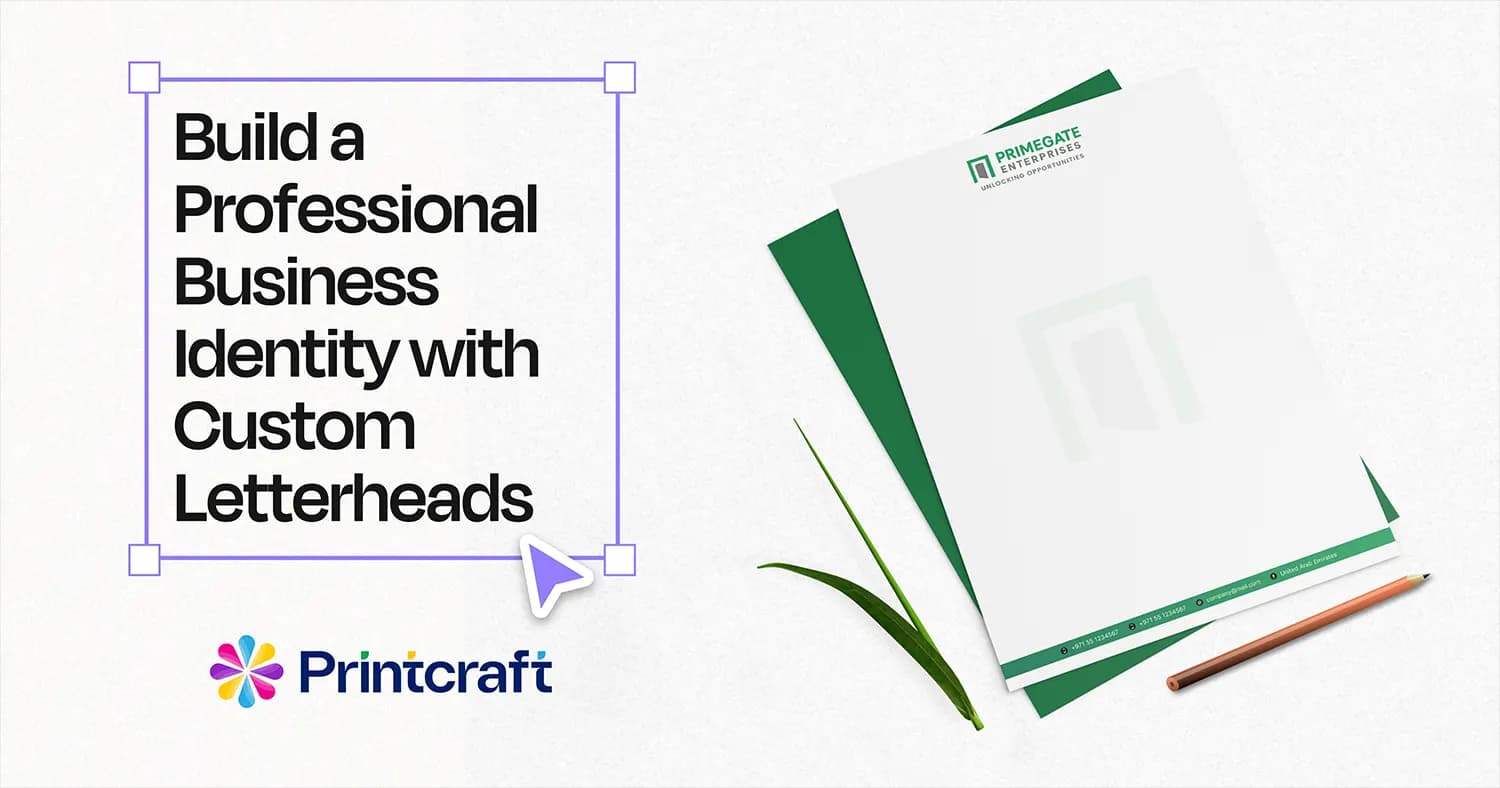
Professional business communication is an important part of building trust and maintaining a strong brand identity. Whether a company is sending official letters, preparing quotations, sharing business proposals, or communicating with clients, the way documents are presented can influence how people perceive the business. This is where professional letterhead printing becomes valuable.
A letterhead is more than just a piece of printed paper featuring a company logo. It represents the business's identity and creates consistency across official documents. A well-designed letterhead usually includes essential company information, such as the business name, logo, contact details, website, and address. These elements make business correspondence look organised, professional, and easy to recognise.
For startups, small businesses, established companies, and corporate organisations, printed letterheads remain a useful part of everyday business operations. Even with the growing use of digital communication, many businesses still rely on printed documents for contracts, agreements, quotations, invoices, official announcements, and other important correspondence.
Investing in quality letterhead printing helps businesses maintain a professional appearance while ensuring that every document reflects their brand consistently.
Letterhead printing is the process of producing customised business stationery featuring a company's branding and contact information. It is commonly used for official correspondence and documents that require a professional business presentation.
A standard business letterhead generally contains the company logo, business name, address, telephone number, email address, and website. Some businesses also include their social media details, registration information, or a short tagline.
The design can be simple and minimal or more detailed, depending on the company's branding requirements. For example, a corporate organisation may prefer a clean layout with subtle colours and a prominent logo, while a creative agency may choose a more distinctive design that reflects its visual identity.
Printed letterheads are generally produced on quality paper to ensure that documents look professional and are suitable for writing, printing, signing, and sharing.
Business stationery contributes to how a company presents itself to clients, suppliers, employees, and business partners. Although letterheads may seem like a small branding element, they can make a noticeable difference in official communication.
Here are some important reasons why businesses should consider professionally printed letterheads.
First impressions matter in business communication. When a company sends a proposal, quotation, official letter, or business agreement on branded stationery, it creates a more organised and professional appearance.
A professionally printed letterhead shows that a business pays attention to its presentation and communication standards. It also helps make official documents look more credible compared to ordinary, unbranded paper.
For businesses that regularly communicate with corporate clients, suppliers, and other organisations, maintaining this professional image is particularly important.
Brand identity is built through consistent use of visual elements across different communication channels. Logos, brand colours, typography, and design styles all contribute to making a business recognisable.
Custom letterhead printing allows companies to incorporate these elements into their everyday business documents. Whenever a customer or business partner receives an official letter, the branded stationery reinforces the company's identity.
Using the same branding across letterheads, envelopes, business cards, and other printed materials also creates a consistent appearance that customers can easily associate with the business.
Professional presentation can help businesses establish confidence in their communication. A properly designed letterhead makes official correspondence look more structured and authentic.
For example, when a company sends a signed agreement or an official business proposal on branded stationery, it gives the document a more formal appearance. Including accurate business information also makes it easier for recipients to identify and contact the organisation.
Although a letterhead alone cannot establish business credibility, it supports a professional communication approach and contributes to a positive business impression.
Businesses handle different types of documents every day. These may include client correspondence, employment letters, purchase orders, quotations, business proposals, and internal announcements.
Using a standard letterhead helps maintain consistency across these documents. Instead of creating a new design for every communication, businesses can use a common stationery format that follows their brand guidelines.
This makes document preparation easier and helps ensure that official correspondence maintains a uniform appearance.
Every branded document provides another opportunity for customers and business partners to become familiar with a company's identity.
When a business consistently uses its logo, colours, and contact details on printed stationery, recipients become more familiar with its visual branding. Over time, this repeated exposure can support brand recognition.
For companies that regularly send printed documents, letterheads offer a practical way to maintain brand visibility without requiring additional promotional materials.
Every business has different stationery requirements. Some organisations prefer simple and minimal designs, while others need customised layouts that reflect their corporate identity.
Choosing the right type of letterhead depends on the company's branding, document usage, and printing preferences.
Standard business letterheads are commonly used by offices, professional service providers, and small businesses. They generally feature the company logo, business name, and essential contact information.
These letterheads are suitable for everyday official correspondence, including business letters, quotations, and general client communication.
Their simple design makes them practical for companies that prefer a clean and professional presentation.
Corporate letterheads are designed for organisations that require consistent and formal business stationery. They often feature structured layouts, carefully selected typography, and subtle brand colours.
These letterheads are suitable for corporate offices, financial institutions, consulting firms, legal companies, and large organisations.
A professional corporate letterhead helps maintain consistency across departments and official communications.
Custom printed letterheads allow businesses to personalise their stationery according to their branding requirements. Companies can select their preferred colours, logo placement, typography, and overall design.
They can also include additional details such as website addresses, social media handles, company registration information, and taglines.
Customisation gives businesses more control over their stationery and helps create a distinctive appearance.
Minimalist letterheads focus on simplicity and clarity. Instead of including too many design elements, they use a clean layout with carefully positioned branding and contact information.
This style is suitable for businesses that prefer a modern and elegant appearance. It also ensures that the main content of the document remains easy to read.
Premium letterheads are designed for businesses that want to create a more refined stationery experience. These may feature high-quality paper stocks, specialised printing techniques, and carefully selected finishes.
They are often used by executive offices, luxury brands, professional consultants, and organisations that regularly communicate with high-value clients.
The choice of paper and finishing can make these letterheads feel more distinctive and professional.
A letterhead should provide essential business information without making the design look overcrowded. Including the right details helps recipients identify the organisation and contact it when necessary.
Some commonly included elements are:
Company Logo: The logo is one of the most important elements because it represents the business visually. It should be placed clearly and remain recognisable when printed.
Business Name: The official company name should be displayed prominently so recipients can immediately identify the sender.
Contact Information: Telephone numbers and email addresses make it easier for clients and business partners to communicate with the company.
Business Address: Including the office address provides useful information, particularly for businesses that receive official correspondence.
Website URL: A website address allows recipients to learn more about the company's services, products, and business activities.
Brand Colours and Typography: Consistent use of brand colours and fonts helps maintain a uniform appearance across all business stationery.
Additional Business Details: Depending on the company's requirements, registration numbers, social media handles, and taglines may also be included.
It is important to keep the layout balanced. Too much information can make a letterhead look crowded and distract readers from the actual document content.
Paper selection is an important consideration when planning professional letterhead printing. The quality and texture of the paper can influence the final appearance of the stationery and the overall document experience.
Businesses should consider how their letterheads will be used before selecting a suitable paper type.
Letterhead paper should be suitable for regular business use. It should feel professional, remain easy to handle, and support clear printing.
The paper should also be compatible with the office printers commonly used by the business, especially when employees need to print letters or other information on pre-printed stationery.
The finish of the paper can influence how the design appears. Different finishes create different visual effects and may suit different business identities.
A smooth finish is generally suitable for clean and professional business documents, while textured paper can create a more distinctive stationery appearance.
White paper is a common choice because it provides a clean background and makes printed text easy to read. However, businesses may select other suitable shades depending on their brand identity and design preferences.
The most important consideration is maintaining sufficient contrast between the printed elements and the paper background.
Before selecting paper, businesses should consider whether the stationery will be used in laser printers, inkjet printers, or professional printing environments.
The selected paper should support the intended printing method and allow additional text to be printed clearly without smudging or affecting document quality.
Selecting the right printing method can influence the quality, production process, and overall cost of business stationery. Digital and offset printing are two commonly used options, and each offers different advantages depending on the project requirements.
Digital printing is suitable for businesses that need smaller quantities of letterheads or require printing within a shorter timeframe.
It allows designs to be transferred directly from digital files onto paper without requiring traditional printing plates. This makes it a practical option for short production runs and customised printing requirements.
Digital printing is particularly useful for startups, small offices, and businesses that want to order stationery without maintaining large quantities in storage.
Offset printing is commonly used for larger printing requirements. It uses printing plates to transfer ink onto paper and is suitable for producing consistent results across high-volume orders.
Businesses that regularly use letterheads may find offset printing useful when ordering larger quantities. It can also provide consistent colour reproduction and professional print quality.
The right option depends on your order quantity, budget, turnaround requirements, and design specifications.
Digital printing may be more suitable for smaller orders, while offset printing can be a practical choice for larger quantities. Discussing your requirements with a professional printing company can help you select the most appropriate method.
A letterhead represents a company's identity, so its design should be carefully planned. Even a good logo and colour combination may not produce the desired results if the overall layout is poorly organised.
Here are some common mistakes businesses should avoid.
Including too many colours, fonts, icons, and decorative elements can make a letterhead look cluttered. A clean and balanced design is generally more effective because it keeps the focus on the company's identity and document content.
Decorative typography may look attractive on a screen but can become difficult to read when printed in smaller sizes. Businesses should choose clear and professional fonts that work well with their branding.
A letterhead should make it easy for recipients to identify and contact the company. Missing or outdated phone numbers, email addresses, or website details can reduce its usefulness.
A low-quality logo can appear blurry or pixelated in printed materials. Businesses should provide high-resolution artwork or suitable vector files to ensure that the logo prints clearly.
Some businesses print additional information on pre-printed letterheads using office printers. Selecting unsuitable paper or placing design elements in the wrong positions can create printing difficulties.
It is important to consider the intended use of the stationery before finalising the design.
Custom letterhead printing offers more than an attractive stationery design. It gives businesses a practical way to maintain their identity throughout everyday communication.
For startups, customised stationery helps establish a professional image from the beginning. It allows new businesses to present themselves consistently when communicating with potential customers, suppliers, and business partners.
For established organisations, custom letterheads help maintain brand consistency across different departments and locations. They can also be designed to match other corporate stationery, including business cards, envelopes, folders, and presentation materials.
Another advantage is flexibility. Businesses can update their letterhead designs when their branding, contact information, or business details change. They can also select different paper qualities and printing methods according to their requirements.
Whether you are running a small business or managing a large organisation, professional letterhead printing can become a valuable part of your overall branding strategy.
Choosing the right printing company is important when you want business stationery that represents your brand professionally. From paper selection to final printing, every detail contributes to the appearance and usability of your letterheads.
At Printcraft, we understand the importance of quality printing and professional business presentation. We provide printing solutions designed to support businesses with their everyday stationery and branding requirements.
Whether you need letterheads for a startup, corporate office, professional service company, or established organisation, we can help you explore suitable printing and customisation options.
Here is what makes Printcraft a suitable choice for your printing requirements:
Our goal is to provide printing solutions that help businesses maintain a consistent and professional appearance across their printed materials.
Letterhead printing remains an important part of professional business communication, even as more organisations move towards digital documentation. A well-designed letterhead helps businesses present official documents professionally, maintain consistent branding, and make their correspondence more recognisable.
From standard business stationery to premium custom letterheads, companies can choose different designs, paper qualities, and printing methods according to their requirements.
Whether you are establishing a new business identity or updating your existing corporate stationery, investing in quality letterhead printing can help strengthen your overall brand presentation.
Looking for professional letterhead printing in Dubai? Contact Printcraft today to discuss your requirements and get customised business stationery that represents your brand with quality and consistency.
1. What is the purpose of a business letterhead?
A business letterhead is used to present official company information and branding on business documents. It helps identify the organisation and creates a professional appearance for letters, proposals, agreements, and other official correspondence.
2. What should be included in a professional letterhead?
A professional letterhead generally includes the company logo, business name, address, phone number, email address, and website. Businesses can also include registration details, social media information, or a tagline depending on their requirements.
3. What is the standard size for letterhead printing?
A4 is one of the most commonly used sizes for business letterheads. It is suitable for everyday office correspondence, official letters, quotations, and business documents.
4. Which paper is best for printing business letterheads?
The best paper depends on the intended use and desired presentation. Quality uncoated paper is a popular option because it provides a professional appearance and allows additional text to be printed easily using office printers.
5. Can I customise my company letterhead design?
Yes, business letterheads can be customised with company logos, brand colours, typography, contact information, and other design elements. Customisation helps businesses maintain consistency across their printed stationery.
6. Is digital printing suitable for letterheads?
Yes, digital printing is suitable for businesses that need smaller quantities or shorter production times. It offers flexibility and is a practical option for startups and offices with limited stationery requirements.
7. What is the difference between digital and offset letterhead printing?
Digital printing transfers designs directly from digital files onto paper and is generally suitable for smaller quantities. Offset printing uses printing plates and is commonly preferred for larger production runs where consistent results are important.
8. Can letterheads be printed with my company logo and brand colours?
Yes, custom letterhead printing allows businesses to incorporate their logos, brand colours, and other visual elements. Providing high-resolution artwork helps ensure that the final printed design looks clear and professional.
Looking for Professional Letterhead Printing in Dubai?
Give your business documents a professional touch with custom printed letterheads from Printcraft. Share your company logo, preferred design, and required quantity with us. Contact Printcraft today to get a quote and find the right stationery solution for your business.