
Loading...
Tooba Asad • 24 Nov 2026
From educational institutions and corporate organisations to training centres and event management companies, certificates are used across different industries. A well-designed certificate reflects the value of the achievement and the organisation presenting it.
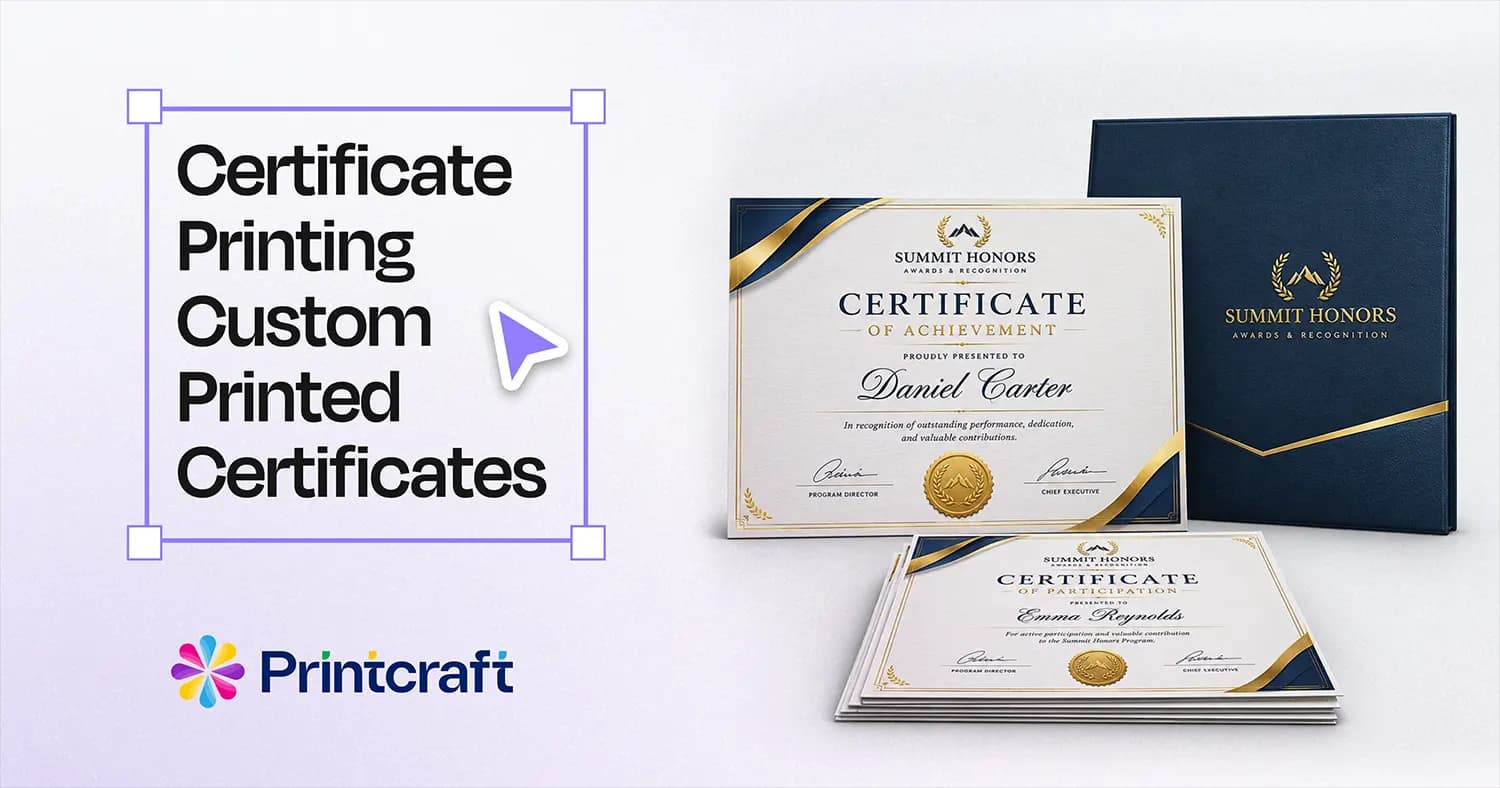
Certificates are more than printed pieces of paper. They represent achievements, recognise hard work, and provide a lasting reminder of important milestones. Whether awarded to students, employees, trainees, or event participants, a professionally printed certificate gives recognition a more meaningful and memorable touch.
From educational institutions and corporate organisations to training centres and event management companies, certificates are used across different industries. A well-designed certificate reflects the value of the achievement and the organisation presenting it.
With professional certificate printing, businesses and institutions can create customised certificates that match their branding, purpose, and presentation requirements. The right paper, layout, typography, and finishing options can make even a simple certificate look elegant and professional.
Certificate printing is the process of producing printed documents that formally recognise an individual's achievement, participation, qualification, or contribution. These documents may be awarded after completing a course, attending a workshop, achieving academic success, receiving an employee award, or participating in an event.
Unlike ordinary documents, certificates are usually designed with a more formal appearance. They may include an organisation's logo, recipient's name, certificate title, date, authorised signatures, and other relevant details.
Professional printing helps ensure that the final certificate is clear, presentable, and suitable for its intended purpose. Organisations can choose different layouts, paper types, sizes, and finishes depending on whether the certificate is for everyday distribution or a special recognition ceremony.
The quality of a certificate can influence how recipients perceive the recognition they receive. A poorly printed or badly designed certificate may not reflect the importance of the achievement. On the other hand, a carefully produced certificate creates a positive impression and gives recipients something they can proudly display.
Here are some reasons why professional certificate printing matters.
A certificate represents the organisation issuing it. Clean printing, balanced layouts, readable text, and suitable paper quality help create a professional appearance. This is particularly important for educational institutions, corporate offices, and professional training organisations.
Receiving a certificate is often an important moment for students, employees, and participants. A professionally printed certificate makes the recognition feel more special and gives recipients a physical reminder of their efforts.
Certificates can also support an organisation's branding. Including the official logo, brand colours, and consistent design elements helps maintain a recognisable identity across all issued documents.
Digital certificates are convenient, but printed certificates offer something tangible. Recipients can keep them in folders, display them in frames, or include them in professional portfolios.
Many organisations use certificates as part of their formal recognition process. A printed certificate can acknowledge course completion, professional development, employee performance, competition participation, and other achievements.
Certificate printing is not limited to academic awards. Different organisations require different certificate formats depending on the purpose and audience.
Here are some commonly printed certificate types.
Schools, colleges, universities, and educational institutions use academic certificates to recognise students' achievements. These may include certificates for academic excellence, subject performance, competition participation, and extracurricular activities.
The design is generally formal and may include the institution's name, logo, student details, and authorised signatures.
Training centres, online learning providers, and educational organisations issue course completion certificates to individuals who successfully finish a programme.
These certificates usually include the course name, participant's name, completion date, and issuing organisation. A clean and organised layout makes the information easy to read.
Businesses use employee recognition certificates to appreciate staff contributions and professional achievements. Common examples include Employee of the Month, Best Performance, Outstanding Contribution, and Long Service awards.
A professional design helps organisations recognise employees in a meaningful way and encourages a positive workplace culture.
Participation certificates are commonly awarded at seminars, workshops, exhibitions, sports competitions, conferences, and community events.
They acknowledge an individual's involvement in an activity, even when the event does not involve a competitive achievement.
Appreciation certificates are used to recognise someone's support, dedication, service, or contribution. Businesses, schools, charities, and event organisers may issue them to employees, volunteers, speakers, partners, and other contributors.
Training providers and corporate organisations often issue certificates after workshops, seminars, and professional development sessions. These certificates confirm attendance or completion and may be useful for personal records and professional portfolios.
A certificate should communicate its purpose clearly. While the exact information depends on the type of certificate, certain details are commonly included.
Certificate title: Clearly state the purpose, such as Certificate of Achievement, Certificate of Completion, or Certificate of Appreciation.
Recipient's name: Include the full name of the individual receiving the certificate. It should be prominent and easy to read.
Issuing organisation: Add the official name and logo of the school, company, institution, or training centre.
Achievement or recognition details: Briefly explain why the certificate is being awarded. This could be course completion, outstanding performance, participation, or another accomplishment.
Date of issue: Include the date when the certificate is awarded or issued.
Authorised signatures: Add the names, designations, and signatures of relevant authorities where required.
Certificate number: For organisations that maintain formal records, a unique reference number can help with identification and verification.
Additional details: Depending on the purpose, certificates may also include the course duration, event name, department, or other relevant information.
Before sending a design for printing, carefully check all names, dates, spellings, and other details. Correct information is essential because certificates are often retained for years.
Paper selection plays an important role in the final appearance of a certificate. The right paper can make a certificate feel more formal, durable, and suitable for presentation.
Here are some factors to consider when selecting certificate paper.
Certificates are often printed on thicker paper than standard office documents. A heavier paper can provide a more substantial feel and help the certificate maintain its shape during handling and storage.
The ideal thickness depends on the design, printing method, and intended use.
Paper texture can influence the overall appearance of a certificate. Smooth paper offers a clean and modern finish, while textured paper can create a more traditional or premium look.
The choice should complement the certificate design rather than distract from its content.
White and off-white are common choices for certificates because they provide a clean background and make text easy to read. Some organisations may prefer cream or other subtle shades to match their branding or preferred design style.
If certificates are intended to be displayed or stored for a long time, paper quality should be considered carefully. The right paper helps maintain the certificate's appearance and reduces the risk of damage during normal handling.
Finishing options can add a distinctive appearance to printed certificates. The right finish depends on the organisation's identity, certificate design, and presentation requirements.
A matte finish creates a smooth, non-glossy appearance. It is a suitable option for formal certificates because it provides a clean look and helps reduce reflections.
Gloss finishing creates a shiny surface that can make colours and design elements appear more vibrant. It may work well for certificates with colourful graphics or contemporary designs.
Foil stamping adds metallic details, often in gold or silver, to selected parts of a certificate. It can be used for borders, logos, headings, or decorative elements to create a premium appearance.
Embossing creates raised details on the paper surface. It can highlight a logo, seal, or selected design elements and give the certificate a more distinctive finish.
Decorative borders can make certificates look more formal and visually organised. They may include simple lines, traditional patterns, or customised designs that match the organisation's identity.
Not every certificate needs an elaborate finish. Sometimes a simple layout with quality paper and clean printing creates the most professional result.
A certificate should look attractive without making its information difficult to read. Good design balances visual elements with clarity.
Consider the following points when preparing a certificate design.
Organise the information in a logical order. The certificate title, recipient's name, achievement details, and issuing organisation should be easy to identify.
Avoid placing too many elements close together, as this can make the design look crowded.
Decorative fonts can work well for certificate headings or recipient names, but important information should use clear and readable typography.
Using too many different fonts can affect the overall appearance. A combination of two or three complementary fonts is generally sufficient.
Use the organisation's logo, colours, and other visual elements consistently. This helps ensure that certificates look connected to the organisation's overall identity.
White space gives the design room to breathe. It helps separate different sections and makes the certificate easier to read.
Before printing, review the complete design carefully. Check the recipient's name, certificate title, dates, spelling, alignment, and logo quality. Also ensure that the artwork is prepared in the correct size and print-ready format.
Certificate printing is useful for organisations across different industries. It supports formal recognition, encourages participation, and helps maintain professional documentation.
Schools and educational institutions: Schools, colleges, and universities print certificates for academic achievements, competitions, extracurricular activities, and graduation events.
Corporate organisations: Companies use certificates to recognise employee performance, training completion, professional development, and workplace contributions.
Training centres: Educational and training providers issue certificates to participants who complete courses, workshops, and skill development programmes.
Event management companies: Event organisers use participation, appreciation, and achievement certificates for conferences, exhibitions, seminars, and competitions.
Sports academies: Sports clubs and academies award certificates for participation, performance, competition results, and training milestones.
Non-profit organisations: Charities and community organisations use appreciation certificates to recognise volunteers, supporters, and contributors.
Even a well-designed certificate can lose its professional appearance if important printing details are overlooked.
Here are some common mistakes organisations should avoid.
Using low-quality images or logos: Blurry logos and pixelated graphics can affect the final print quality. Always use high-resolution artwork.
Choosing unsuitable paper: Thin or inappropriate paper may not provide the desired presentation. Select paper according to the certificate's purpose.
Overcrowding the design: Too much text, excessive decorative elements, and unnecessary graphics can make the certificate difficult to read.
Using too many fonts: Different font styles can make the design look inconsistent. Keep typography simple and organised.
Ignoring spelling and personal details: Incorrect names, dates, or course titles can make a certificate unusable. Proofread all information before approving the artwork.
Not checking the print size: The design should match the selected paper size. Incorrect dimensions may cause unwanted cropping or spacing issues.
Skipping a sample review: For large orders, reviewing a sample or print proof can help identify design and colour issues before the full quantity is produced.
A professionally printed certificate reflects the effort behind an achievement and the organisation presenting it. Whether you need certificates for a school, training centre, corporate office, or special event, selecting the right printing partner can help you achieve the desired result.
At Printcraft, we provide printing solutions in Dubai with a focus on quality, affordability, and customer satisfaction. We understand that every certificate serves a purpose, which is why the design, paper selection, and final presentation all deserve attention.
Whether you require a small batch for an internal event or certificates for a larger programme, you can discuss your requirements and select suitable printing options.
Our key service benefits include:
If you are looking for certificate printing in Dubai, visit Printcraft.ae to discuss your requirements and get a quote for your next printing project.
1. What is certificate printing?
Certificate printing is the process of producing printed documents that recognise achievements, course completion, participation, appreciation, or professional contributions. These certificates are commonly used by schools, businesses, training centres, and event organisers.
2. What types of certificates can be printed?
Common types include academic certificates, course completion certificates, employee recognition certificates, participation certificates, appreciation certificates, training certificates, and achievement awards.
3. What is the best paper for certificate printing?
The best paper depends on the purpose and design of the certificate. Thicker paper is often preferred for formal certificates because it provides a more substantial feel. Smooth and textured paper options can also be considered depending on the desired appearance.
4. Which size is commonly used for printed certificates?
A4 is a commonly used certificate size because it provides enough space for the recipient's name, certificate title, details, signatures, and branding. Other sizes can be selected depending on the design and requirements.
5. Can I customise certificates with my company logo?
Yes. Certificates can include your company or institution's logo, brand colours, text, signatures, and other design elements. Customisation helps maintain consistent branding across all certificates.
6. Can certificates be printed with gold or silver foil?
Foil stamping may be used to add metallic details to certificate designs. Gold and silver are popular choices for highlighting headings, logos, borders, and decorative elements, subject to the selected printing specifications.
7. What is the difference between a certificate of achievement and a certificate of participation?
A certificate of achievement recognises a specific accomplishment or successful performance. A certificate of participation confirms that an individual attended or took part in an event, activity, or programme.
8. Can certificates be printed in bulk?
Yes. Organisations can request certificate printing in larger quantities for schools, corporate training programmes, workshops, competitions, and events. The quantity and printing requirements can be discussed before placing an order.