
Loading...
Loading...
Rayyan • 03 Jul 2025
Brochures are powerful marketing tools that help businesses inform, engage, and persuade customers. This guide explains what brochures are, their key benefits, and how to create one that stands out for maximum impact.
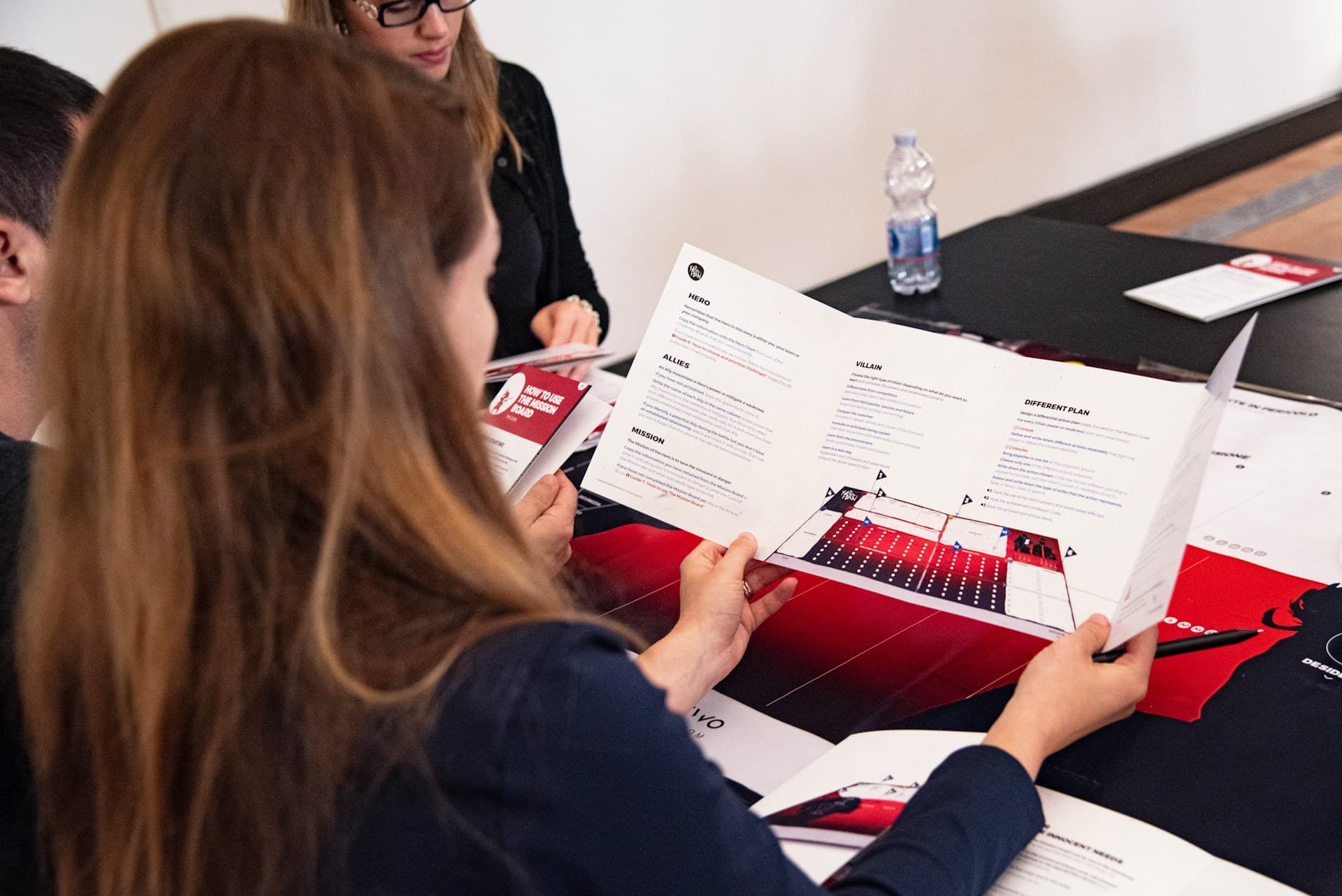
Brochures remain one of the most effective ways to share important information in marketing and business promotion. But what exactly is a brochure, and why do so many businesses rely on them?
A brochure is a printed promotional piece used to market to, educate, and persuade customers. It is designed to capture attention, deliver clear information, and encourage action in a simple, readable format. Organisations across healthcare, education, real estate, hospitality, and many other sectors use brochures every day.
This guide explains what brochures are, why they work, the main types you can choose from, and how to create one that stands out. Whether you are a marketer or a business owner, you will find practical steps you can apply right away.
A brochure is a short booklet or pamphlet created for promotional and educational purposes. It may be a simple leaflet or a more detailed fold-out piece, and it usually includes text, images, and a call to action with key business details.
Important traits of a well-made brochure:
The main purpose of a brochure is to give prospective customers the information they need about your business or offer. It builds awareness, educates the reader, and encourages a next step, whether that means visiting a website, making a purchase, or contacting your team for more details.
A strong brochure sparks interest, explains benefits clearly, and leads the reader toward action. These elements matter most:
Keep the copy focused. Avoid overcrowding the layout with too much text. Emphasise benefits over features, and write in a tone that speaks directly to your target audience. Every word on the page should earn its place.
Use quality graphics and a layout that guides the eye naturally from one section to the next. White space is not wasted space. It gives the reader room to absorb the information without feeling overwhelmed. A clean, well-structured layout always performs better than a cluttered one.
Every brochure needs a clear next step. Examples include "Call now for a free consultation" or "Visit our website for exclusive offers." A good call to action tells readers exactly what to do and makes it easy for them to do it.
Paper type and finish affect how professional the final piece feels in someone's hand. A premium matte or gloss laminate gives your brochure a polished look that reflects well on your brand. In markets like Dubai where presentation standards are high, the physical quality of your print materials matters as much as the design itself.
Fonts, colours, and design elements should match your broader brand identity so the brochure feels familiar and trustworthy. A brochure that looks disconnected from your website, business cards, or other materials undermines the confidence you are trying to build.
Not every brochure works the same way. The fold and format you choose should match your content, your audience, and your goals. These are the most common types used by businesses in Dubai and across the UAE.
A single fold that creates four panels. This is the simplest and most widely used brochure format. It works well for short, direct messages where you want to lead with a strong visual on the cover and follow with key information inside. Ideal for service summaries, event programmes, and product introductions.
Folds into three equal sections, creating six panels of content. The tri-fold is the most popular brochure format across retail, hospitality, and professional services. It gives you enough space to cover your key offerings, add visuals, and include a call to action without the piece feeling too large to carry or display.
Folds in a zigzag pattern, similar to a tri-fold but with a different panel sequence. The Z-fold works particularly well for step-by-step content, timelines, or creative layouts where you want each panel to feel like a natural reveal. It is a strong choice for campaigns that tell a story from start to finish.
Two side panels open outward to reveal a larger interior spread, like a gate opening. This format creates a high-impact reveal moment and is often used for premium product launches, luxury brand campaigns, or corporate presentations where making a strong impression is the priority.
A multi-page format for businesses that need to share deeper, more detailed information. Product catalogues, company profiles, training materials, and annual reports all work well as booklet brochures. This format carries significant weight as a leave-behind piece at meetings and trade shows.
Bi-Fold Brochures | A4 Tri-Fold Brochures | A3 Tri-Fold Brochures
Creating an effective brochure is easier than many people think. Follow these steps to produce one that gets noticed and gets results.
Once your design is ready, print quality determines how the brochure is perceived. Even the best design can be undermined by poor print quality, the wrong paper choice, or misaligned folds. Use these tips to get the best possible result from your print run.
Glossy paper produces vivid colours and a professional shine, making it a strong choice for image-heavy brochures in retail, food, and hospitality. Matte paper gives a flat, sophisticated finish that works particularly well for text-heavy content and corporate materials. Textured stock adds a tactile premium feel suited to luxury brands and high-end services.
A reliable printing service ensures sharp colour reproduction, clean folds, and consistent output across the entire run. Look for a printer that offers digital proofing so you can review and approve the final file before production begins. This single step prevents the majority of costly reprints.
Larger print runs significantly reduce the cost per unit. If you know a brochure will be used across multiple events, campaigns, or locations over a period of time, it almost always makes financial sense to order the full quantity in one run rather than placing multiple smaller orders.
Before approving a large print run, always review a physical proof or sample print. Colours can appear differently on paper than on screen, and reviewing a sample lets you catch any issues with finish, fold alignment, or colour accuracy before the full quantity is produced.
Browse Brochure Printing Options | Get an Instant Quote
A brochure does not work in isolation. The most effective campaigns use brochures as part of a broader marketing mix that includes digital channels, in-person touchpoints, and follow-up communications.
At trade shows and exhibitions, a brochure gives visitors something to take away after your conversation ends. In a retail environment, a well-placed brochure stand converts passive browsers into engaged prospects. Sent as part of a direct mail campaign, a brochure reaches audiences that digital advertising often misses entirely.
Adding a QR code to your brochure bridges print and digital seamlessly. A QR code can link directly to a product page, a booking form, a video, or a special offer landing page, allowing you to track engagement and measure the return on your print investment.
A brochure is more than a piece of paper. It is a tool for connecting with your audience at the right moment with the right message. Before you finalise yours, confirm that it addresses the specific needs of your target audience, reflects your company's values honestly, and provides a clear and easy path for further engagement.
The businesses that get the most value from their brochures are the ones that treat them as a genuine communication tool rather than a box to tick. A well-designed, professionally printed brochure tells your audience that you take your brand seriously, and that attention to detail carries over into everything else you do.
A brochure is often the first tangible interaction a prospect has with your brand. Investing in strong design and professional printing ensures that interaction makes the right impression and delivers real value from every copy you distribute.
Printcraft offers bi-fold, tri-fold, Z-fold, and booklet brochure printing across a full range of paper stocks and finishes, with turnaround from 2 to 3 business days and delivery across Dubai and the UAE.
Browse our brochure printing options or get an instant quote today.