
Loading...
Loading...
Rayyan • 28 Oct 2026
Packaging is often the first physical interaction customers have with a brand. Before they use a product, they notice its packaging, examine its quality, and form an impression of the business behind it. Well-designed packaging can communicate professionalism, build trust, and make a product more memorable. Poor packaging, on the other hand, can create doubts about product quality and affect how customers perceive a brand.
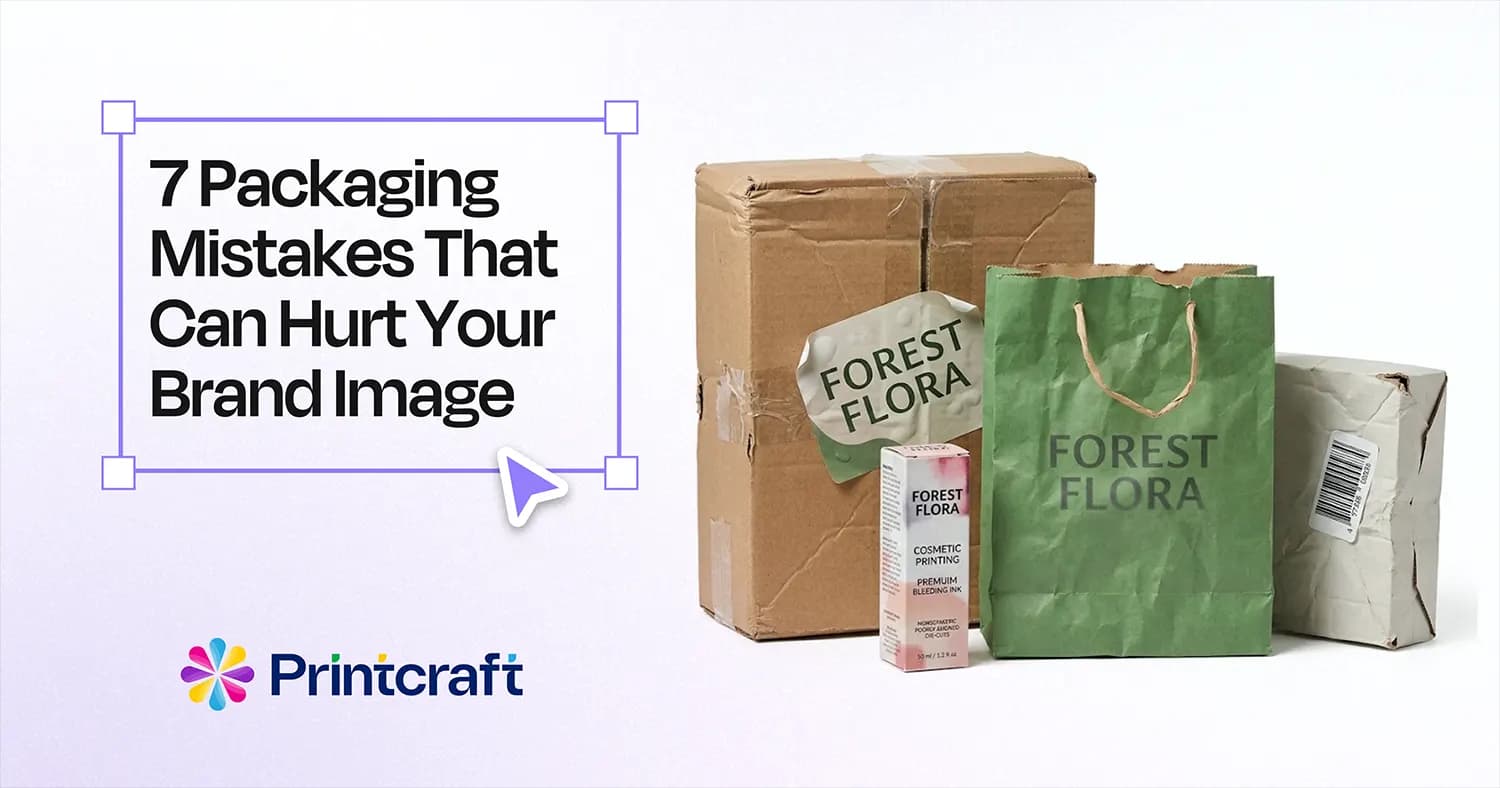
For businesses operating in competitive markets such as Dubai, packaging is more than a way to protect products during storage and delivery. It is an important part of the customer experience and brand identity. From choosing the right materials to ensuring consistent printing, every detail matters.
Understanding common packaging mistakes can help businesses avoid unnecessary costs, improve customer satisfaction, and present their products more professionally. Here are seven packaging mistakes that can hurt your brand image and practical ways to avoid them.
One of the most common packaging mistakes is choosing materials based solely on their price. While affordable packaging can help control costs, low-quality materials may not provide adequate protection or create the right impression.
Thin paper bags, weak cardboard boxes, and poorly constructed packaging can tear, bend, or lose their shape during handling. When customers receive damaged packaging, they may question the quality of the product inside, even if the product itself is perfectly fine.
Choose packaging materials according to your product's weight, size, fragility, and storage requirements. Retail products may need sturdy paper bags, while delicate items may require protective inserts or durable boxes. Businesses should balance cost, durability, and appearance rather than selecting materials based on price alone.
Investing in quality packaging helps reduce product damage and creates a more reliable customer experience.
Your packaging should be instantly recognizable as part of your brand. Inconsistent colours, logos, fonts, and design elements can make a business appear unprofessional and weaken brand recognition.
For example, if your website uses specific brand colours but your packaging features unrelated shades and different typography, customers may struggle to connect the packaging with your business. Inconsistency across shopping bags, product boxes, labels, and promotional materials can further dilute your brand identity.
Create clear packaging guidelines that define your brand colours, logo placement, typography, and visual style. Apply these guidelines consistently across all packaging formats.
Custom packaging can help businesses maintain a unified appearance while making products easier to recognize. Before approving a design, review it across different materials and sizes to ensure your branding remains clear and consistent.
Packaging design should do more than look attractive. It should communicate essential information, reflect the product's purpose, and appeal to the intended audience.
Overcrowded designs, difficult-to-read text, excessive decorative elements, and poorly arranged graphics can make packaging confusing. On the other hand, a design that lacks personality may fail to capture attention in a competitive retail environment.
Both extremes can reduce the impact of your packaging and make your brand less memorable.
Focus on clarity, readability, and visual balance. Make sure the logo, product name, and other important information are easy to identify. Use colours and imagery that reflect your brand personality without overwhelming the overall design.
Before printing a large quantity, review a physical sample. A design that looks excellent on a computer screen may appear different when printed on paper, cardboard, or another packaging material.
Packaging that is too large or too small can negatively affect both product protection and customer perception.
Oversized boxes may allow products to move around during transportation, increasing the risk of damage. They can also require unnecessary filling materials and occupy more storage and shipping space. Packaging that is too small may squeeze the product, damage its appearance, or make it difficult for customers to remove the item.
The wrong size can also make packaging look poorly planned, which may affect the perceived professionalism of your business.
Measure your products carefully before choosing packaging dimensions. Account for protective inserts, wrapping materials, and any additional space needed for safe transportation.
For products available in multiple sizes, consider developing a small range of packaging options instead of using one box for everything. Proper sizing can improve protection, reduce material waste, and create a better unboxing experience.
Even an excellent packaging design can lose its impact when the printing quality is poor. Blurry logos, incorrect colours, uneven alignment, smudged text, and inconsistent finishes can make packaging look cheap or unfinished.
These problems are particularly noticeable when packaging features a company's logo, product details, or promotional messages. Customers may associate poor presentation with a lack of attention to detail in other areas of the business.
Finishing also plays an important role. Depending on the product and brand positioning, techniques such as lamination, foil stamping, and spot UV can enhance the appearance of packaging.
Work with a professional printing provider that understands your design requirements and material specifications. Request a sample or proof before approving a bulk order, and check colour accuracy, text readability, alignment, and finishing.
Businesses should choose finishing techniques that support their brand identity rather than adding decorative effects without a clear purpose. Consistent print quality helps packaging look professional and reinforces customer confidence.
Packaging must be attractive, but its primary practical purpose is to protect the product. Businesses that focus only on appearance may overlook the strength, cushioning, and structural support required during handling and transportation.
This can lead to crushed boxes, broken items, damaged labels, or products arriving in poor condition. Damaged deliveries can result in complaints, replacement costs, returns, and negative reviews.
For e-commerce businesses, packaging quality is especially important because customers cannot inspect the product before placing an order.
Evaluate the conditions your products may experience during storage, handling, and delivery. Fragile products may require inserts, cushioning, dividers, or stronger outer packaging. Heavier products may need reinforced boxes or more durable carrying materials.
Test packaging under realistic handling conditions before using it for large shipments. The goal is to select packaging that protects the product without adding unnecessary bulk or material.
Reliable packaging helps businesses deliver products in the condition customers expect and protects the reputation they have worked hard to build.
Customers increasingly pay attention to the materials businesses use and the amount of unnecessary packaging they receive. Excessive wrapping, avoidable plastic components, and packaging that is difficult to recycle may create a negative impression among environmentally conscious buyers.
Sustainability does not mean every business must use the same packaging materials. The right choice depends on product safety, budget, intended use, and local recycling facilities.
The mistake is overlooking these considerations entirely when making packaging decisions.
Explore practical alternatives such as recyclable paper packaging, appropriately sized cardboard boxes, and materials that reduce unnecessary waste. Avoid excessive layers when they do not improve product protection.
Be accurate when communicating environmental benefits. Only describe packaging as recyclable, biodegradable, or compostable when the relevant materials and conditions support those claims.
Thoughtful packaging choices can demonstrate that your business values both customer expectations and responsible resource use.
Avoiding packaging mistakes helps businesses create a consistent and positive experience at every customer touchpoint. Effective packaging protects products, communicates brand identity, and supports the quality customers expect from a business.
To improve your packaging strategy, focus on these priorities:
Businesses should also review customer feedback, packaging-related complaints, product damage rates, and return reasons. These insights can help identify problems and guide improvements over time.
Your packaging communicates your brand's standards before customers even experience the product. Poor materials, inconsistent branding, incorrect sizing, and low-quality printing can weaken that message, while carefully planned packaging can improve product presentation and strengthen brand recognition.
Printcraft helps businesses present their products professionally with printing solutions tailored to their packaging and promotional needs. From custom paper bags to high-quality printed materials, choosing the right printing approach can help your business maintain consistency and create a stronger impression.
If you are planning to improve your product packaging, focus on materials, design, functionality, and print quality before placing your next order. Explore Printcraft's printing solutions to create packaging that reflects your brand's quality and professionalism.
1. How does packaging affect brand image?
Packaging influences customers' first impressions of a product and the business behind it. Quality materials, consistent branding, and professional printing can build trust, while damaged or poorly designed packaging may make a brand appear unreliable.
2. What is the most common packaging mistake businesses make?
Choosing packaging based only on price is a common mistake. Low-cost materials may fail to protect products or present them professionally. Businesses should consider durability, appearance, functionality, and total costs when selecting packaging.
3. Why is consistent branding important in product packaging?
Consistent branding helps customers recognize a business across different products and marketing channels. Using the same colours, logo, typography, and visual style strengthens brand identity and creates a more professional appearance.
4. How can poor packaging affect customer satisfaction?
Poor packaging can cause damaged products, difficult handling, disappointing unboxing experiences, and additional waste. These issues may lead to complaints, negative reviews, returns, and reduced customer confidence.
5. How can businesses improve the quality of their packaging?
Businesses can improve packaging by selecting suitable materials, choosing the correct dimensions, maintaining consistent branding, checking print quality, and testing product protection before ordering in bulk.
6. Does custom packaging help businesses build brand recognition?
Yes. Custom packaging allows businesses to display their logos, brand colours, and distinctive designs consistently. This makes products easier to identify and can help create a memorable experience for customers.
7. What printing finishes can improve packaging appearance?
Depending on the material and design, finishes such as matte or gloss lamination, foil stamping, and spot UV can improve the visual appeal of packaging. The best option depends on the desired appearance, budget, and practical requirements.
8. Is sustainable packaging important for brand reputation?
Sustainable packaging can support a positive brand image when it meets genuine customer needs and reduces unnecessary waste. Businesses should choose suitable materials and make accurate claims about recyclability and other environmental benefits.
9. How can businesses choose the right packaging size?
Measure the product and allow sufficient space for protective inserts or wrapping. Packaging should prevent excessive movement without being unnecessarily large, helping businesses protect products and manage material use efficiently.
10. How can professional printing improve product packaging?
Professional printing helps maintain colour accuracy, sharp graphics, readable text, and consistent finishing. These details contribute to a polished appearance and help businesses present their products in line with their brand identity.
At printcraft.ae, we offer custom packaging printing in Dubai to help businesses present their products professionally. Choose suitable materials, designs, and finishes that reflect your brand. Get a Quote Today and give your packaging a professional touch.
Email: hello@printcraft.ae / Quote: Get A Quote